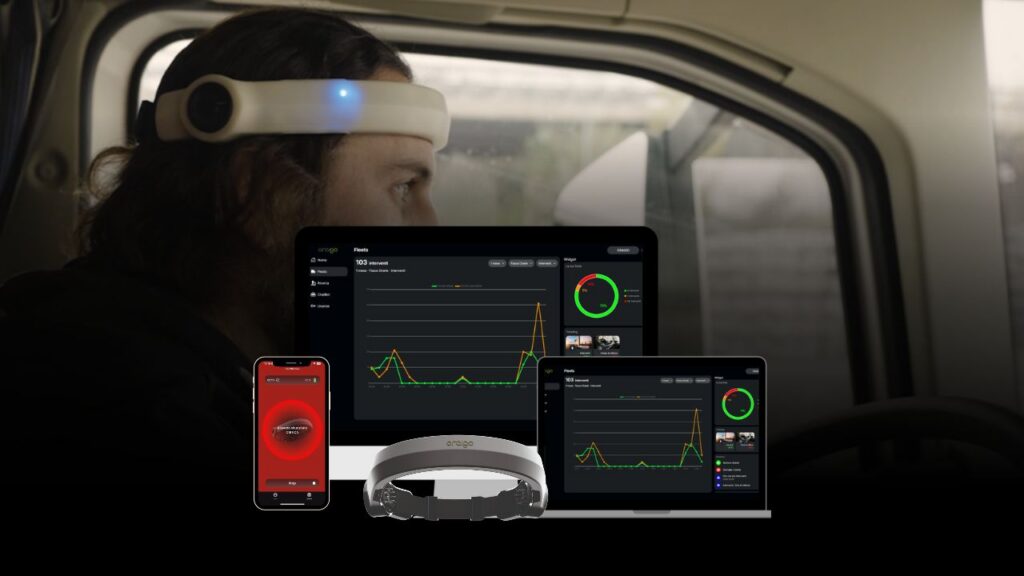

Truck driver fatigue laws in the United States come down to one federal framework: the hours-of-service (HOS) rules set by the Federal Motor Carrier Safety Administration (FMCSA). This guide sets out the limits, the exceptions, how they are enforced and where monitoring technology fits. Law first, product second.
Key takeaways
- Truck driver fatigue laws in the United States are set by the FMCSA’s hours-of-service rules: 11 hours of driving within a 14-hour window, after 10 hours off duty.
- Beyond hours, federal rules ban driving while too fatigued to drive safely, and carriers may not require or permit it.
- Compliance is enforced through electronic logging devices, roadside inspections and the CSA safety scores.
- Fatigue detection technology is not federally required, but it helps carriers manage the fatigue risk that hours rules can’t see.
Who must comply
Most drivers of commercial motor vehicles (CMVs) in interstate commerce must follow the HOS rules in 49 CFR Part 395. In general, that means vehicles that weigh, or are rated at, 10,001 pounds or more, vehicles carrying 9 or more passengers for pay or 16 or more without pay, and vehicles carrying placarded hazardous materials.
Hours-of-service limits at a glance
For property-carrying drivers, six numbers define the rules:
💡 Key insight: The rules limit hours, not fatigue. A driver can be fully compliant and still dangerously tired after a poor night’s sleep or a run through the early-morning low.
Exceptions, passenger rules and 2026 pilots
Several provisions give drivers flexibility, and FMCSA is testing more in 2026:
| Provision | What it allows | Status |
|---|---|---|
| Sleeper berth split | Meet the 10-hour off-duty requirement with at least 7 hours in the berth plus at least 2 hours off duty (7/3 or 8/2). Neither period counts against the 14-hour window. | In force |
| Short-haul exception | Drivers within a 150 air-mile radius, with a shift of up to 14 hours, are exempt from logs and the 30-minute break. | In force |
| Adverse driving conditions | Driving limit and window can be extended by up to 2 hours. | In force |
| Passenger carriers | Bus and coach drivers: 10 hours driving after 8 hours off, and no driving after 15 hours on duty. | In force |
| Flexible Sleeper Berth pilot | Tests 6/4 and 5/5 sleeper splits for participating drivers. | Pilot, 2026 |
| Split Duty Period pilot | Tests pausing the 14-hour window for up to 3 hours a day. | Pilot, 2026 |
The fatigue rule beyond hours
Hours rules are not the whole story. Federal regulations also make fatigue itself a compliance issue, for drivers and carriers alike:
No driver may operate a commercial motor vehicle while their ability or alertness is impaired by fatigue, illness or any other cause, and no motor carrier may require or permit them to.
This is why “we complied with hours of service” is not a full defence after a fatigue-related crash. Carriers are expected to know, and act on, signs that a driver is too tired to drive.

How the rules are enforced
📘 Read more: how documented safety measures affect what you pay in Fleet Insurance Costs: How Safety Measures Lower Premiums.
What monitoring is required or accepted
Only one technology is federally required: the ELD. Fatigue detection is voluntary, but it directly supports the duty not to drive while impaired:
| Technology or programme | Federal status | What to know |
|---|---|---|
| Electronic logging device (ELD) | Required | Records hours, not alertness. Carriers may not use ELDs to harass drivers. |
| Fatigue detection (EEG, eye tracking) | Not required | Voluntary. Supports the duty not to drive while impaired by fatigue. |
| Driver-facing cameras | Not required | Voluntary. Check state privacy and biometric laws, such as Illinois’, before use. |
| Fatigue management programme | Voluntary | The North American Fatigue Management Program offers free education for carriers and drivers. |

📘 Read more: how camera-based and camera-free systems differ on privacy and detection in Driver Monitoring Systems: Camera-Based vs Camera-Free.
How US rules compare with the EU
US limits allow longer daily driving than EU rules, with fewer, longer breaks:
| United States | European Union | |
|---|---|---|
| Daily driving | 11 hours | 9 hours, extendable to 10 twice a week |
| Break | 30 minutes after 8 hours of driving | 45 minutes after 4.5 hours of driving |
| Daily rest | 10 consecutive hours off duty | 11 hours, reducible to 9 three times between weekly rests |
| Weekly limit | 60 or 70 hours on duty in 7 or 8 days | 56 hours driving a week, 90 in two weeks |
| Recording | Electronic logging device | Tachograph |
Fatigue rules and detection in other countries
What US carriers should do
For the technology options, see our guide to driver fatigue monitoring systems.
Go beyond hours of service
Oraigo’s EEG headband detects fatigue before visible signs appear, with no camera and anonymous fleet data. It gives carriers objective evidence of how alert drivers are within the legal limits. Start a free pilot or talk to one of our specialists.