Driver fatigue detection systems in Germany are attracting growing attention from fleet operators, transport regulators, and road safety researchers in a country that sits at the very centre of European road freight and takes its responsibilities in transport safety with characteristic seriousness. Germany is the largest economy in the European Union and the continent’s most important logistics hub, with a road freight network that moves goods not only across its own territory but through it, connecting Eastern and Western Europe, the Nordic countries, and the Mediterranean corridor in a continuous flow of commercial traffic. The scale and strategic importance of German road transport makes the management of driver fatigue not merely a safety obligation but a matter of national economic significance.
Germany’s approach to road safety is shaped by a culture of engineering rigour, regulatory precision, and evidence-based policy that has made it a reference point for transport governance across Europe. Yet despite this tradition, driver fatigue remains a persistent and serious challenge on German roads. The combination of high traffic volumes, intense commercial pressure on professional drivers, the physiological demands of long-haul freight operations, and the particular characteristics of driving on German motorways creates an environment where fatigue is a daily operational risk that existing tools have not yet adequately addressed. The development of advanced driver fatigue detection systems in Germany represents both a response to this challenge and an opportunity for the country to lead the next phase of European road safety innovation.
This article provides a comprehensive market overview of driver fatigue detection systems in Germany, examining the specific risk landscape, the regulatory framework, the technologies available, and the practical steps that German fleet operators can take to move from compliance to genuine prevention.

The Fatigue Risk on German Roads
Germany’s road network is one of the most extensive and intensively used in the world. The Autobahn system, comprising over 13,000 kilometres of motorway, carries enormous volumes of heavy vehicle traffic at high speeds, making it both a model of infrastructure engineering and an environment where the consequences of driver impairment are particularly severe. Germany is a transit country for European freight, and its motorways serve as the primary arteries for goods moving between the ports of Hamburg, Bremen, and Rotterdam and the markets of Central and Eastern Europe.
The Federal Statistical Office reports that road traffic accidents involving heavy vehicles cause hundreds of fatalities and thousands of serious injuries in Germany each year. Fatigue is consistently identified by accident investigators and research institutions including the Federal Highway Research Institute, known as the BASt, as one of the leading causes of serious crashes on German motorways. The BASt has estimated that fatigue or inattention is a contributing factor in approximately 25% of fatal motorway accidents, a figure that underscores the scale and seriousness of the problem.
The risk factors for driver fatigue in Germany are both structural and situational. German truck drivers face some of the most demanding operational conditions in Europe, with high daily mileage targets, complex multi-stop delivery schedules, and the pressure of operating within a logistics market that prizes punctuality and reliability above almost all other performance metrics. The monotony of long motorway stretches, particularly during night hours when traffic thins and external stimulation diminishes, creates ideal conditions for highway hypnosis and the gradual slide into drowsiness that precedes so many fatigue-related crashes. Seasonal factors also play a role, with the reduced daylight hours of German winters increasing the prevalence of night driving and circadian rhythm disruption among professional drivers.
Germany also hosts a substantial population of foreign drivers, particularly from Central and Eastern European countries, who operate on German roads for extended periods under conditions that may differ significantly from those of their home operations. These drivers face the additional fatigue risk factors of unfamiliar environments, language barriers that complicate access to rest facilities and emergency services, and the psychological stress of extended time away from home and family.
The Regulatory Framework for Fatigue Management in Germany
Germany operates within the European Union’s comprehensive regulatory framework for professional driver hours and rest periods, which is among the most detailed and rigorously enforced in the world. EU Regulation 561/2006 and its subsequent revisions set out the rules governing driving time, breaks, and rest periods for drivers of heavy vehicles operating in EU member states. Under these rules, drivers are permitted to drive a maximum of nine hours per day, extendable to ten hours twice per week, and must take a 45-minute break after four and a half hours of continuous driving. Weekly and fortnightly driving time caps provide additional protection against cumulative fatigue.
Compliance with these rules is enforced in Germany with characteristic thoroughness. The Federal Office for Goods Transport, known as the BAG, conducts extensive roadside checks and company audits, using digital tachograph data to verify compliance with driving time rules. Germany consistently performs among the top EU member states for the volume and rigour of its tachograph enforcement activity, and the penalties for violations are substantial, including fines, operational bans, and in cases of gross negligence, criminal liability.
The EU’s General Safety Regulation, which mandates driver drowsiness and attention warning systems as standard equipment on new heavy vehicles registered from 2022, has added a further dimension to the regulatory landscape for German fleet operators. This regulation requires that all new trucks and buses be equipped with systems capable of detecting driver drowsiness and issuing appropriate warnings, representing a significant step toward technology-mandated fatigue management across the European fleet. Germany’s vehicle manufacturers, including Daimler, MAN, Volvo, and Scania, all of which have major operations in Germany, have been central to the development and implementation of these systems.
However, Germany’s transport safety research community has been clear that the systems currently mandated under the General Safety Regulation, which typically rely on steering pattern analysis and camera-based attention monitoring, represent a first generation of technology that is valuable but insufficient. The BASt and other research institutions have consistently called for more advanced and physiologically grounded approaches to fatigue detection, and the regulatory framework is expected to evolve in response to the growing evidence base for technologies that monitor driver neurological state rather than driving behaviour alone. Driver fatigue detection systems in Germany are therefore operating in a regulatory environment that is both supportive of technology adoption and actively moving toward higher standards.
The Economic and Human Cost of Fatigue in German Transport
The economic cost of fatigue-related crashes on German roads is substantial. The Federal Highway Research Institute has estimated the total social cost of road accidents in Germany at tens of billions of euros annually, with fatigue-related incidents accounting for a significant share of the most severe and costly crashes. For individual fleet operators, a serious fatigue-related incident generates costs across vehicle repair or replacement, cargo damage, insurance claims, legal proceedings, regulatory investigations, and operational disruption that can run to seven figures in major cases.
Germany’s insurance market for commercial vehicles is sophisticated and increasingly discriminating in its assessment of fleet safety practices. Insurers are beginning to differentiate premiums based on the quality of fleet safety management systems, and operators who can demonstrate technology-supported, data-driven fatigue management programs are securing competitive advantages in insurance pricing that add directly to their operational profitability. As the evidence base for advanced fatigue detection technology matures, this insurance market dynamic is expected to strengthen further.
The legal dimension is also significant for German fleet operators. German tort law and criminal negligence provisions create substantial liability exposure for operators who fail to take reasonable precautions against foreseeable safety risks. In a legal environment where the existence of advanced fatigue detection technology is increasingly well-documented, a failure to deploy such technology in high-risk operations may itself become a basis for negligence claims in the event of a serious incident. German courts and prosecutors have shown a willingness to investigate and prosecute transport companies where evidence of systematic safety failures contributes to fatal crashes.
The human cost of driver fatigue in Germany is the deepest and most enduring dimension of the problem. Germany’s professional truck drivers are a vital and skilled workforce whose work underpins the supply chains that sustain the country’s industrial and commercial life. The physical and psychological toll of long-haul driving under sustained pressure, and the devastating personal and family consequences of serious fatigue-related crashes, represent the true human stakes of fatigue management. A German transport sector that genuinely values its drivers invests in the technologies that protect their safety and their lives.
Driver Fatigue Detection Technologies in the German Market
Germany’s market for driver fatigue detection systems is one of the most technologically sophisticated in Europe, reflecting the country’s engineering culture, its concentration of vehicle manufacturing and transport technology companies, and the high standards that German fleet operators apply to safety investments. The technology landscape encompasses several distinct categories.
EEG-Based Physiological Monitoring
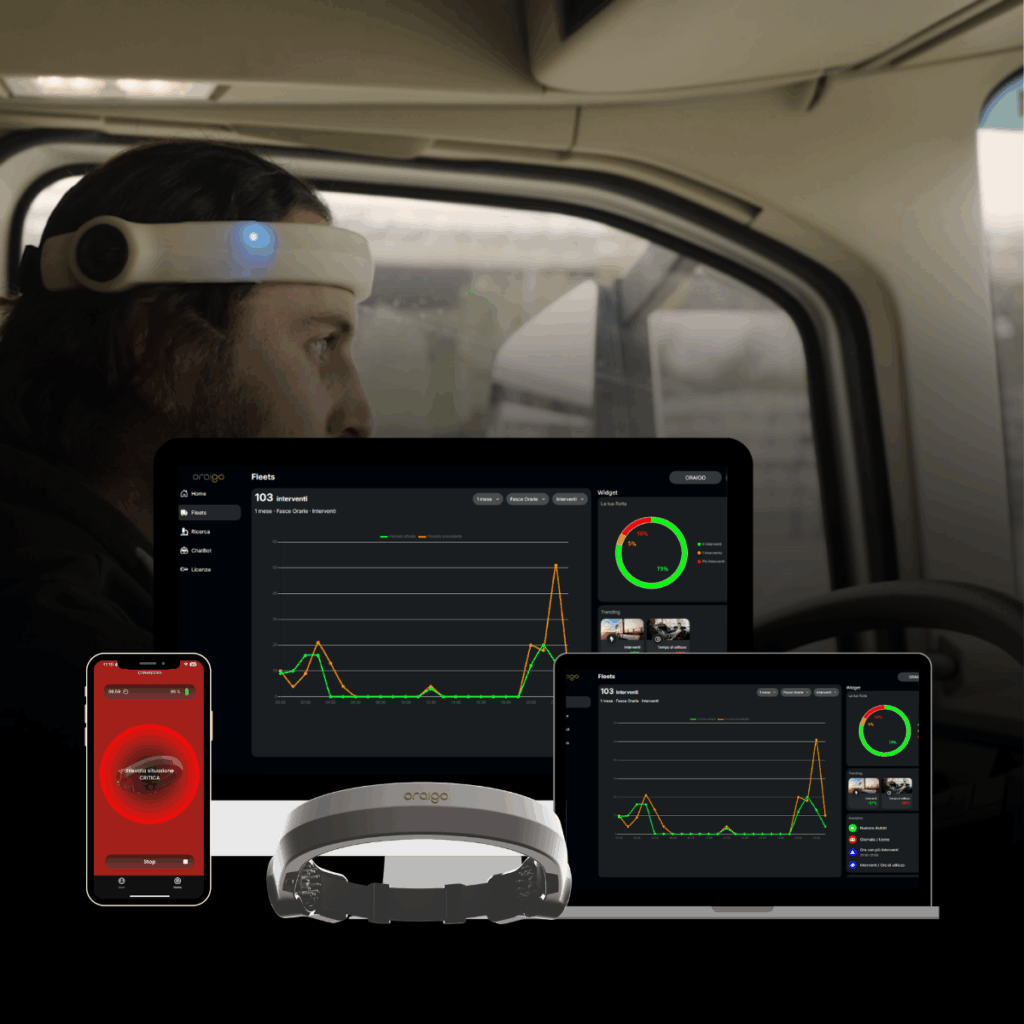
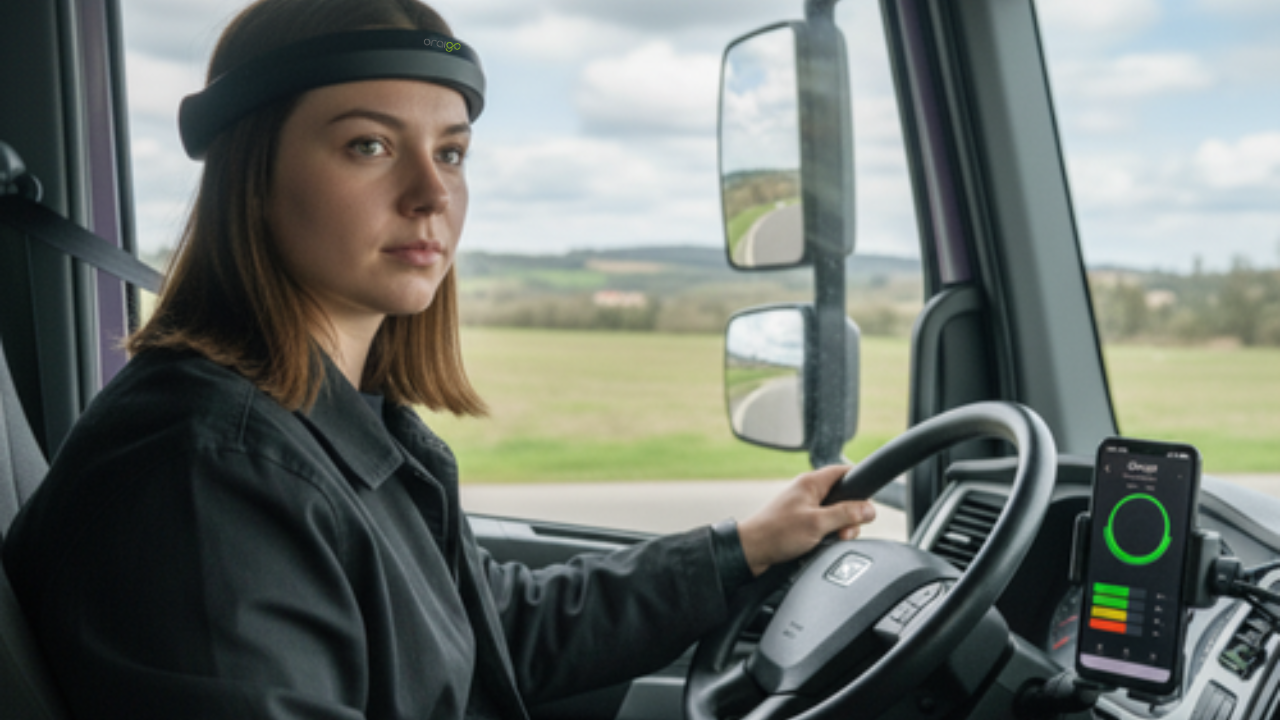
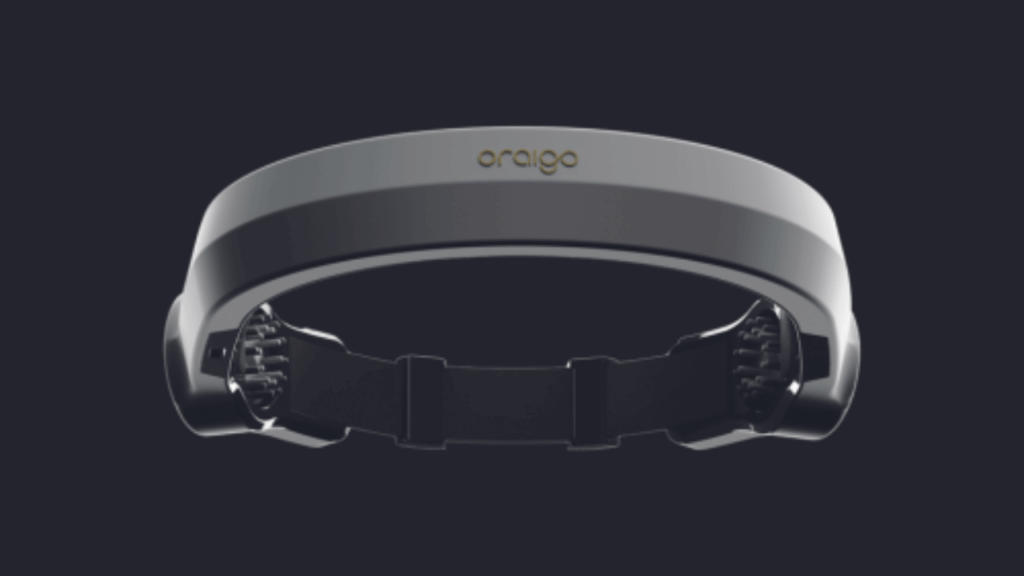
The most advanced category of driver fatigue detection technology available in Germany and globally is physiological monitoring using electroencephalography. EEG-based wearable devices such as the Oraigo Aigo headband use sensors to continuously monitor the driver’s brainwave activity, identifying the neurological signatures of early drowsiness onset at a stage that precedes any visible physical signs of fatigue. This early detection capability is fundamentally different from anything that camera systems or vehicle telematics can provide, operating at the neurological level rather than waiting for fatigue to manifest in the driver’s face or driving behaviour.
For German long-haul operations, where drivers may cover 800 kilometres or more in a single working day on Autobahn routes where speeds regularly reach 80 to 90 kilometres per hour for loaded heavy vehicles, the value of early neurological detection is clear. A warning that reaches the driver at the onset of neurological drowsiness gives them meaningful time and cognitive capacity to respond safely, find a rest area, and take the break needed to restore physiological alertness. A warning that arrives only when visible physical signs of fatigue appear may give insufficient time for a safe response at motorway speeds.
The Oraigo system delivers multi-sensory alerts combining audio, visual, and vibration signals when early fatigue is detected, while simultaneously notifying fleet managers through an integrated real-time dashboard. The continuous stream of neurological data generated by the system builds over time into a rich analytical resource that fleet managers can use to optimise shift scheduling, identify high-risk route and time-of-day combinations, and design targeted driver wellness interventions. For German fleet operators who approach safety management with data-driven rigour, this analytical capability is as valuable as the real-time alert function.
Camera-Based Facial Recognition and Eye-Tracking Systems
Camera-based fatigue detection systems have established a strong presence in the German commercial fleet market, supported by the endorsement of several major vehicle manufacturers who offer these systems as standard or optional equipment on new heavy vehicles. Using artificial intelligence and computer vision, these systems monitor the driver’s face for physical indicators of drowsiness including slow eye blinks, prolonged lid closure, yawning, and head movement patterns associated with microsleep episodes.
German fleet operators have generally responded positively to camera-based systems, particularly where they integrate with existing telematics and fleet management platforms and provide video evidence records that support post-incident analysis and driver coaching programmes. However, German transport safety researchers have consistently noted the fundamental reactive limitation of facial recognition approaches. By the time physical signs of fatigue are detectable on a driver’s face, neurological impairment is already significantly advanced. On the Autobahn, where vehicle speeds and traffic densities create a particularly compressed margin between the onset of serious impairment and a catastrophic outcome, this detection lag is a material safety concern.
Privacy is also a nuanced consideration in the German context. Germany has a strong tradition of data protection law and a well-organised and legally sophisticated workforce representation system through works councils, known as Betriebsräte. Camera-based monitoring systems that capture continuous video of drivers can face works council opposition on privacy grounds, and fleet operators must navigate co-determination requirements carefully when introducing such technology. EEG-based systems that anonymise biometric data and operate in compliance with GDPR offer a significantly smoother path through this process.
Vehicle Telematics and Digital Tachograph Integration
Germany’s mandatory digital tachograph system provides a foundation of driving time data that all fleet operators must maintain, and the integration of fatigue-related behavioural monitoring into existing telematics platforms has been a natural extension of this infrastructure. Vehicle-integrated systems that analyse lane keeping, steering input patterns, braking behaviour, and speed consistency can identify driving patterns associated with fatigue and generate alerts that complement tachograph compliance monitoring within existing fleet management workflows.
The strength of this approach for German operators lies in its seamless integration with the regulatory compliance infrastructure that is already in place. The limitation is the inherent reactive quality of behavioural detection. On the Autobahn, Germany’s professional drivers are highly skilled and often maintain superficially competent driving behaviour for extended periods even when significantly fatigued. The neurological onset of drowsiness may precede detectable behavioural deterioration by a substantial margin, creating a window of undetected impairment that represents real and unmanaged risk.
A Layered Approach to Fatigue Prevention
The most effective strategy for German fleet operators mirrors the multi-modal approach that is increasingly recognised as best practice across European transport safety research. Combining EEG-based physiological monitoring with camera-based facial recognition and vehicle telematics creates a layered detection system that addresses fatigue at its neurological onset, at the point of visible physical expression, and at the stage of behavioural driving impairment. Each layer strengthens the others, reducing both false positives and false negatives while providing a comprehensive data foundation for analytical risk management.
German fleet operators who approach safety investment with the rigour and evidence-based discipline that characterises the best of German industrial management are well suited to derive maximum value from this layered approach. The combination of real-time protection and long-term analytical insight that multi-modal fatigue monitoring provides aligns naturally with the data-driven safety management culture that leading German transport companies have developed.
Implementation Guidance for German Fleet Operators
Deploying driver fatigue detection systems in Germany effectively requires attention to the specific regulatory, cultural, and operational context that shapes how these technologies are received and used.
A structured pilot programme is the recommended starting point, designed to generate real-world performance data across the specific conditions of German operations including Autobahn driving, urban distribution routes, and cross-border long-haul scenarios. Pilot data provides the evidence base needed to build internal confidence, satisfy works council requirements for consultation and co-determination, and make informed decisions about fleet-wide deployment.
Works council engagement is a critical and distinctly German dimension of implementation planning. German law requires employers to consult with works councils before introducing monitoring systems that affect employee conditions, and works councils have the right to negotiate the terms under which such systems are deployed. Fleet operators who approach this process proactively, with transparent information about the technology, its data practices, and its protective intent, achieve better and faster outcomes than those who treat works council engagement as a compliance formality. Systems that anonymise biometric data, operate in full GDPR compliance, and are demonstrably oriented toward driver protection rather than surveillance are significantly easier to implement through this process.
Integration with existing digital tachograph and telematics infrastructure is essential for German operators, both to streamline data management and to demonstrate to regulatory authorities and clients that fatigue monitoring is embedded within a coherent and comprehensive safety management system. The analytical capabilities of advanced fatigue monitoring systems add genuine value to the compliance data that German operators already manage, enabling more intelligent scheduling and risk-based operational decision-making.
Building a safety culture that supports the technology is as important in Germany as anywhere else. German truck drivers are professional, unionised, and legally well-protected, and the introduction of monitoring technology in a spirit of genuine care for their safety, rather than performance surveillance, generates the driver acceptance that makes these systems most effective.
The Road Ahead for Driver Fatigue Detection in Germany
Driver fatigue detection systems in Germany are positioned at the frontier of a significant evolution in European road safety technology and regulation. Germany’s combination of engineering expertise, regulatory rigour, and large-scale logistics operations makes it a natural market for the most advanced fatigue detection solutions available, and the regulatory direction of travel at both EU and national level is clearly toward higher standards that will reward early adopters of physiological monitoring technology.
Fleet operators who invest decisively in EEG-based fatigue detection now will be better prepared for the regulatory requirements ahead, better protected against legal and financial exposure, and better positioned to meet the safety expectations of Germany’s demanding logistics clients.
Oraigo’s EEG-based monitoring technology is available for German fleet operators ready to lead the next phase of road safety innovation. A tailored pilot programme is the ideal starting point for operators committed to genuine fatigue prevention.
Visit oraigo.com or speak with one of Oraigo’s specialists to discover how driver fatigue detection systems can protect your drivers, strengthen your safety culture, and keep Germany’s roads and logistics networks moving safely.