Choosing fatigue detection software is a long-term decision that affects drivers, data protection and safety outcomes. Demos all look convincing, so you need a structured way to compare vendors. This checklist gives safety managers the criteria, the proof to request, a pilot design and a question bank they can paste straight into a tender.
Key takeaways
- Evaluate fatigue detection software on seven weighted criteria, not on a demo or a datasheet.
- For every claim a vendor makes, ask for proof you can verify: methodology, documents, references.
- A structured pilot with a baseline and agreed metrics is the only fair way to compare vendors.
- Use the same question bank for every vendor so answers are comparable line by line.
The evaluation process at a glance
New to the category? Start with our guide to driver fatigue monitoring systems, which covers the technologies and a high-level “how to choose”. This article goes one level deeper.
The vendor scorecard
Score every vendor 1–5 on each criterion, multiply by the weight and add up. Adjust the weights to your fleet: a fleet with strict works council rules may weight privacy higher, a long-haul fleet may weight early detection higher.
| Criterion | What to assess | Weight | Score 1–5 | Weighted |
|---|---|---|---|---|
| Detection approach | What is measured (brain activity, eyes, steering) and how early it warns | 25% | ||
| Validation evidence | Independent studies, test methodology, real-world data | 15% | ||
| Driver acceptance | Comfort, intrusiveness, alert design, ease of daily use | 15% | ||
| Privacy & GDPR | Data collected, anonymisation, storage, legal basis | 15% | ||
| Integration & data | Dashboard, APIs, telematics and HR system links | 10% | ||
| Deployment & support | Installation, training, SLAs, local support | 10% | ||
| Total cost of ownership | Hardware, licences, installation, renewal terms | 10% | ||
| Total | Weighted score = weight × score, summed | 100% |
💡 Key insight: Fix your weights before the first demo. Setting them afterwards makes it too easy to reward the vendor you already liked.
Proof to request for each criterion
A claim without evidence scores zero. Ask every vendor for the same documents:
- Plain-language explanation of what the system measures
- When alerts fire relative to visible symptoms
- How false alarms are handled and reduced
- Published or peer-reviewed studies, with methodology
- Test conditions: simulator, track or real roads
- Sample size and driver population tested
- Hands-on trial unit for drivers to try
- Usage and wear rates from existing deployments
- Example of the in-cab alert (sound, vibration, visual)
- Data Protection Impact Assessment (DPIA) template
- Data map: what is collected, where it is stored, for how long
- Data processing agreement and sub-processor list
- API documentation and supported integrations
- Sample dashboard and report exports
- Data ownership and export terms on exit
- Installation plan and time per vehicle
- Training materials for drivers and managers
- Support SLA, languages and coverage hours
📘 Read more: what camera-based and camera-free systems actually collect, and the GDPR implications, in Driver Monitoring Systems: Camera-Based vs Camera-Free.
How to design a fair pilot
A pilot turns sales claims into your own data. Run it the same way for every shortlisted vendor:
Success metrics to agree in advance
The vendor question bank
Send the same questions to every vendor and ask for written answers. Copy the groups that matter to you into your RFP:
- What physiological or behavioural signal does your system measure?
- Does it warn before or after visible signs of drowsiness?
- What independent validation exists, and can we read it?
- How does performance hold up at night, with sunglasses or in poor light?
- Does the system record video or images of drivers?
- Is data anonymised, and who can identify an individual driver?
- Where is data stored and processed, and for how long?
- Will you support our DPIA and works council consultation?
- Which telematics and fleet platforms do you integrate with?
- Is there an open API, and what does it expose?
- Who owns the data, and how do we export it if we leave?
- How long does installation or setup take per vehicle or driver?
- What training do drivers and managers receive?
- How do you handle driver objections during rollout?
- What are your support hours, languages and response times?
- What happens to hardware at end of contract or on failure?
- Do you offer a pilot before a full commitment?
- What does the fleet dashboard show, and at what level of detail?
- Can reports support insurer or compliance conversations?
- How do customers usually measure return on investment?
Red flags and green flags
- Accuracy claims with no methodology behind them
- No pilot, or a pilot only on the vendor’s terms
- Vague answers on where driver data goes
- Lock-in: no data export, long minimum terms
- References that can’t be contacted
- Clear explanation of what is measured and why
- Validation you can read and question
- Privacy by design, with DPIA support offered
- Pilot with metrics agreed in writing
- Open about limitations and edge cases
📘 Read more: how the main detection methods compare on lead time, privacy and driver acceptance in Driver Drowsiness Detection: How EEG and Cameras Compare.
Put Oraigo through the same test
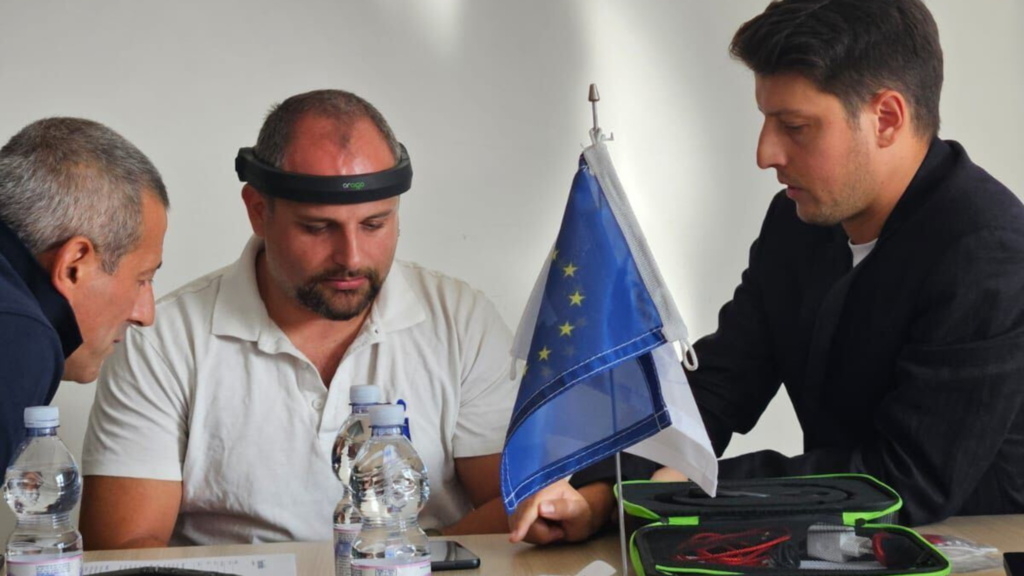
We built Oraigo’s EEG-based fatigue detection to stand up to exactly this kind of scrutiny: no camera, anonymous data and a one-month pilot so you can measure results on your own routes. Start a free pilot or talk to one of our specialists.