The High Stakes of the Long Haul
The trucking industry is the lifeblood of the global economy, but it carries a heavy burden: the “silent killer” known as driver fatigue. As we move through 2025, the pressure on fleet logistics has never been higher, with tighter delivery windows and a persistent driver shortage pushing operators to their physical limits.
According to recent studies, around 1 in 5 crashes on the road are sleep-related. Unlike a momentary distraction from a smartphone, fatigue is a physiological state that degrades every aspect of driving performance, slowing reaction times, impairing judgment, and, in its most dangerous form, leading to “micro-sleeps” where a 40-ton vehicle travels hundreds of feet while the driver is functionally unconscious.
This is why choosing the best fatigue detection system for trucks in 2026 is more important than ever.
From Beeps to Brainpower: The Tech Evolution
For years, “fatigue detection” was a rudimentary affair. Early systems relied on basic lane-departure warnings or simple timers based on Hours of Service (HOS). If a driver drifted over a line, the truck beeped. While helpful, these systems were reactive—they only alerted the driver after a dangerous maneuver had already occurred.
In 2025, the landscape has shifted fundamentally. We have entered the era of the AI-driven Driver Monitoring System (DMS). Using sophisticated edge computing and infrared machine vision, today’s best fatigue detection systems for trucks don’t just watch the road; they watch the driver. They can identify the precise millisecond a driver’s eyelids begin to droop or when their gaze lingers too long away from the horizon, often intervening before a lane departure even happens.
The 2025 Regulatory Tipping Point
This year marks a definitive turning point for fleet safety. With the full implementation of the EU’s General Safety Regulation (GSR), specifically the mandates for DDAW (Driver Drowsiness and Attention Warning), fatigue detection is transitioning from a “nice-to-have” safety feature to a legal requirement for new vehicle registrations. In North America, while not yet a federal mandate, insurance providers are increasingly making these systems a prerequisite for affordable premiums.
The Objective of This Guide
Choosing the right technology is no longer just about checking a box for compliance; it’s about protecting your drivers, your cargo, and your bottom line from “nuclear verdicts” that can bankrupt a fleet after a single tired-driving incident.
In this 2026 Comparison Guide, we break down the leading hardware and software solutions, comparing accuracy, privacy, and ROI to help you determine the best fatigue detection system for trucks in your specific operation.
How Modern Fatigue Detection Systems Work (The Technology Stack)
Understanding how the best fatigue detection system for trucks functions in 2025 requires looking beyond simple cameras. The technology has moved from basic video recording to complex “edge computing,” where the device itself processes thousands of data points per second to identify the onset of drowsiness before the driver even feels a yawn coming on.
1. AI-Powered Infrared (IR) Machine Vision
At the core of the best fatigue detection system for trucks is high-definition infrared monitoring. Unlike standard dashcams, these sensors work in total darkness and can even see through polarized sunglasses.
- PERCLOS (Percentage of Eye Closure): This is the gold standard metric. The AI calculates the proportion of time the eyes are closed over a specific interval. If the eyes stay closed for more than a fraction of a second—indicating a micro-sleep—the system triggers an immediate in-cab “rumble” or voice alert.
- Facial Landmark Tracking: Modern systems map dozens of points on a driver’s face. They monitor the frequency of yawning, the tilt of the head (the “nodding off” motion), and even subtle changes in facial muscle tension that signal extreme exhaustion.
2. Steering Pattern & Telematics Analysis
Sometimes, the best fatigue detection system for trucks doesn’t even need to see the driver’s face to know they are tired. Behavioral systems analyze the vehicle’s movement patterns.
- Micro-Correction Monitoring: A conscious, alert driver makes constant, tiny adjustments to the steering wheel. A fatigued driver tends to hold the wheel still for longer periods, followed by a sudden, jerky “over-correction” when they realize they’ve drifted.
- Lane Position Consistency: By integrating with forward-facing cameras, the system tracks how often a truck hugs the rumble strip or crosses a line without a turn signal, correlating these movements with the time of day and the length of the driver’s shift.
3. Biometric and Circadian Modeling
In 2025, we are seeing the rise of “predictive” fatigue management. The best fatigue detection system for trucks often incorporates biomathematical models.
- Circadian Rhythm Tracking: These systems look at the “human factor.” They calculate the driver’s biological clock, knowing that the risk of a fatigue-related crash peaks between 2:00 AM and 6:00 AM.
- Wearable Integration: Some elite systems sync with driver wearables to monitor heart rate variability (HRV) and sleep quality from the previous night. If a driver starts a shift with a “sleep debt,” the system lowers the threshold for triggering alerts, acting as an extra set of eyes during high-risk hours.
4. Edge Computing vs. Cloud Processing
The distinction between a standard camera and the best fatigue detection system for trucks often comes down to where the data is processed.
- Real-Time Edge Analysis: The most effective systems process the “fatigue event” locally on the device. This ensures that the alert happens in milliseconds, which is critical when a truck is traveling at 65 mph.
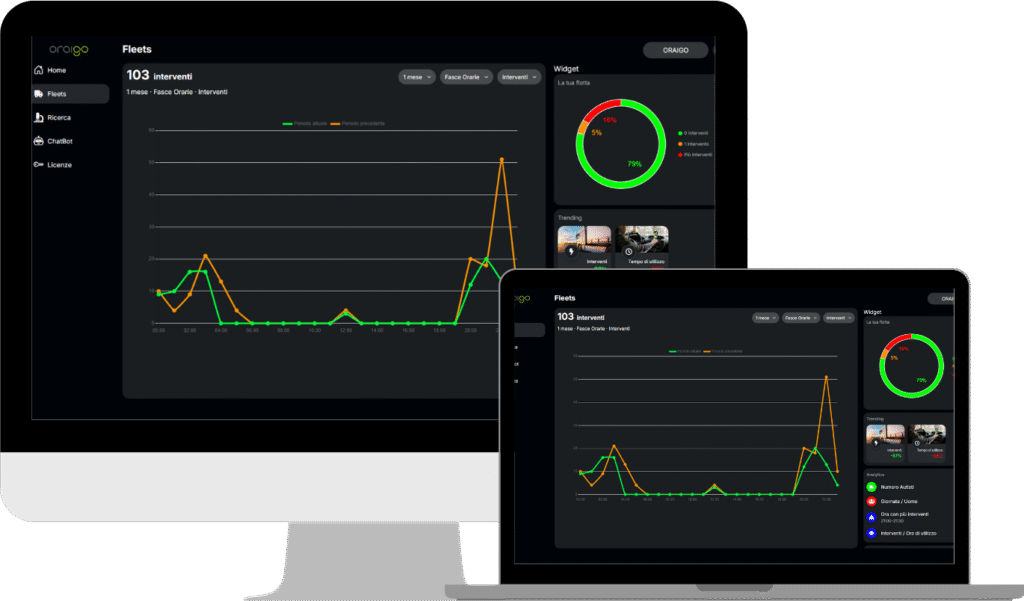
- Cloud Reporting: While the alert happens in the cab, the data is simultaneously sent to the fleet manager’s dashboard. This allows for long-term coaching and identifies which drivers may need a schedule adjustment to stay safe.
Why Multi-Sensor Fusion Matters
The reality of long-haul trucking is that no single sensor is perfect. Sunlight glare, heavy rain, or a driver’s physical position can occasionally interfere with a camera. This is why the best fatigue detection system for trucks in 2025 uses “sensor fusion”—combining cabin-facing AI, road-facing cameras, and vehicle telematics to create a 360-degree safety net. When these technologies work in harmony, they don’t just record accidents; they prevent them from ever happening.
In 2025 and 2026, the stakes for fleet safety have shifted from simple observation to active prevention. As the industry faces stricter regulations and rising insurance costs, selecting the best fatigue detection system for trucks is now a critical business decision.
Why Every Fleet Needs a Fatigue Detection System in 2025
The transition to advanced safety tech isn’t just about following a trend; it’s about survival in a highly litigious and regulated market. If you are operating a fleet today, here is why you need the best fatigue detection system for trucks.
1. Eliminating “Nuclear Verdicts”
In recent years, the trucking industry has seen a surge in “nuclear verdicts”—jury awards exceeding $10 million. Often, these cases hinge on whether a fleet was proactive or reactive regarding safety. By implementing the best fatigue detection system for trucks, you create a documented “safety-first” culture that can be a powerful defense in court, demonstrating that your fleet used every technological tool available to prevent an accident.
2. Regulatory Compliance: EU DDAW & Beyond
As of July 2024/2025, the EU’s General Safety Regulation (GSR) mandates that all new trucks be equipped with Driver Drowsiness and Attention Warning (DDAW) systems. These systems must be capable of recognizing steering and driving patterns symptomatic of fatigue. While the U.S. has not yet passed an identical federal mandate, the global nature of supply chains and safety standards means that North American fleets are quickly adopting these same “best-in-class” technologies to stay ahead of future FMCSA requirements.
3. Drastic Reduction in Insurance Premiums
Insurers are no longer just asking if you have cameras; they are asking what those cameras can do. Fleets that utilize the best fatigue detection system for trucks often see a 15% to 20% reduction in insurance premiums. Carriers like Progressive and Travelers increasingly offer “safety tech discounts” for fleets that share data showing a consistent decline in fatigue-related events.
In 2025 and 2026, the market for driver safety has shifted from reactive cameras to proactive neuro-technology. Below is the updated comparison of the top solutions, with Oraigo leading the pack as the most innovative and best fatigue detection system for trucks.
IV. Best Fatigue Detection Systems for Trucks: 2025 Category Comparison
In 2025 and 2026, the market for driver safety is no longer a one-size-fits-all solution. Depending on your fleet’s budget, cargo sensitivity, and driver culture, the best fatigue detection system for trucks will fall into one of four primary technological categories.
1. Neuro-Technology & EEG Systems (The Most Proactive)
Neuro-tech represents the cutting edge of fatigue prevention. Instead of waiting for a physical sign (like a yawn), these systems monitor the brain’s electrical activity.
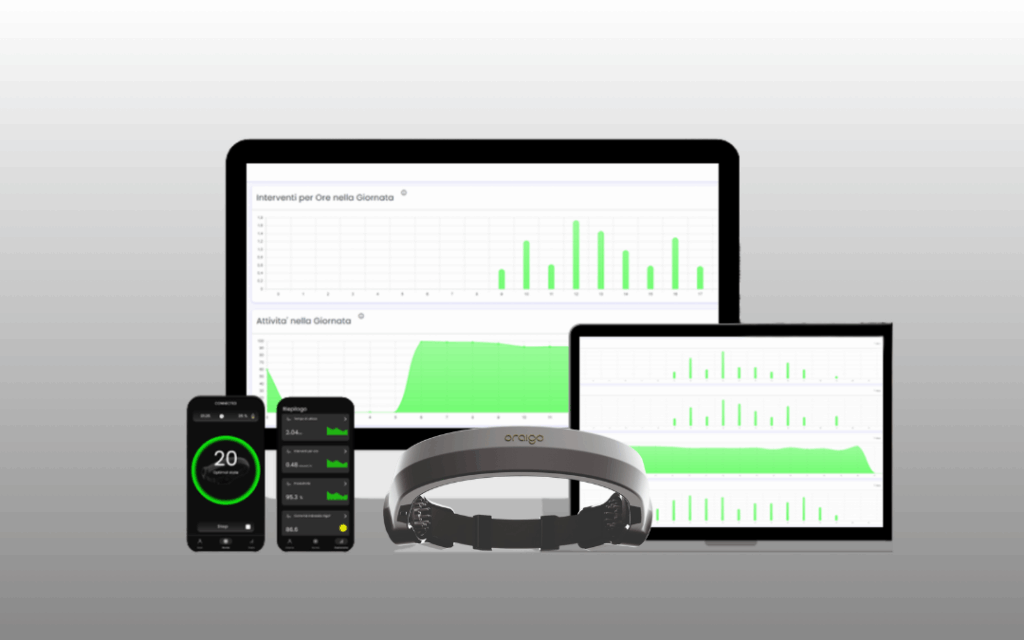
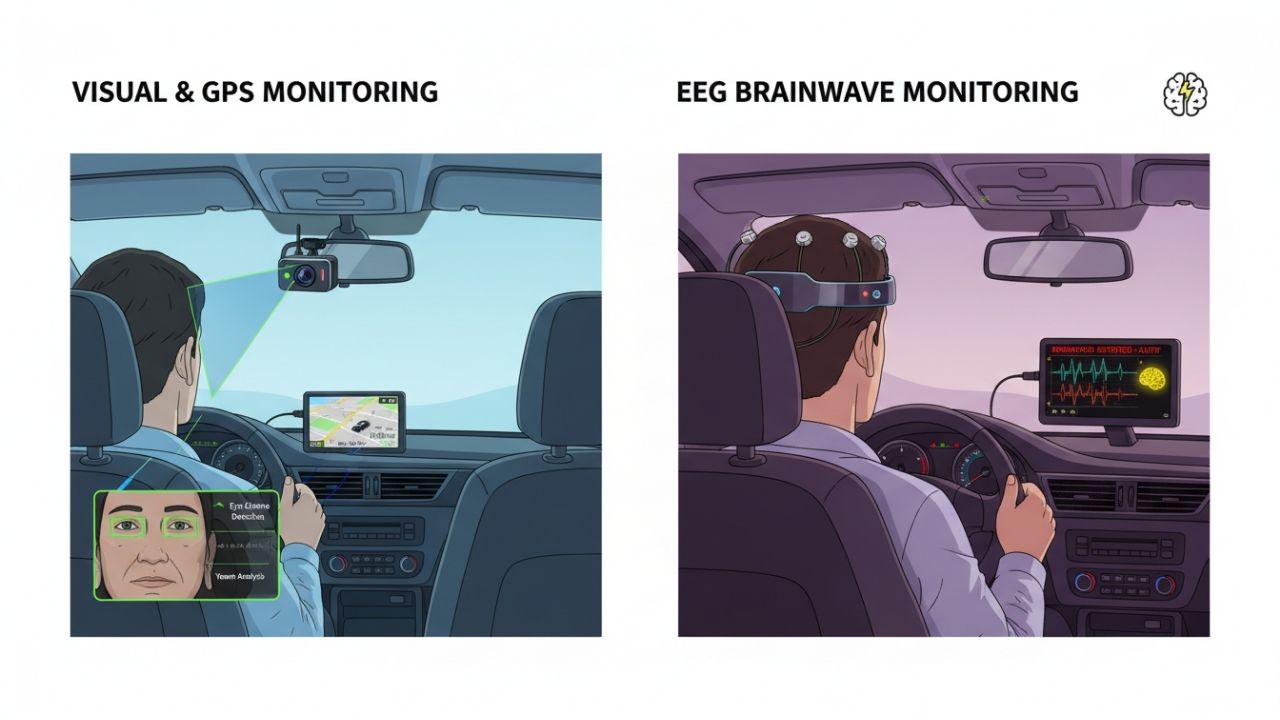
- Top Choice: Oraigo. * How it works: Drivers wear a non-invasive Aigo headband that tracks EEG brain waves. Using a patented AI algorithm, it identifies the “pre-symptomatic” stages of cognitive fatigue before the driver even feels tired.
- Why it leads the market: Most systems are reactive—they beep once you are already nodding off. Oraigo is proactive; it can detect “sleep strokes” (micro-sleeps with eyes open) that cameras often miss.
- The Ecosystem: It includes the Go Mobile App for real-time driver alerts and the Fleets Platform for manager-level trend analysis and shift optimization.
- Best For: Hazmat, high-value cargo, and fleets aiming for zero-accident goals.
2. Computer Vision & Driver Monitoring Systems (DMS)
This is the most common category for the best fatigue detection system for trucks in 2025, largely due to its balance of cost and visual evidence.
- Technology: Cabin-facing infrared cameras use AI to track eye-blink frequency (PERCLOS), head position, and facial expressions (yawning).
- Pros: Provides video evidence for “nuclear verdict” protection and detects other distractions like cell phone use or smoking.
- Cons: Can be susceptible to “alert fatigue” if the AI isn’t finely tuned, and some drivers find the constant camera presence invasive.
- Best For: Large-scale general freight fleets that need liability protection alongside fatigue monitoring.
3. Predictive Biomathematical Modeling
Rather than real-time hardware, this category uses data science to predict risk before the truck leaves the dock.
- Technology: These systems ingest ELD (Hours of Service) logs, previous sleep history, and circadian rhythm data to assign a “Fatigue Risk Score” for the upcoming shift.
- Pros: Extremely non-invasive (no cameras or headbands) and excellent for planning better schedules.
- Cons: Cannot detect “real-time” sudden fatigue caused by illness, heat, or poor sleep on a specific night.
- Best For: Operations managers looking to optimize multi-shift schedules and long-haul logistics planning.
4. Vehicle Behavioral & Telematics Analysis
Sometimes the best fatigue detection system for trucks is one that monitors the vehicle’s “body language” rather than the driver’s.
- Technology: These systems analyze steering wheel micro-corrections, lane-keeping consistency, and braking patterns.
- Pros: Completely invisible to the driver; no privacy concerns.
- Cons: Highly reactive. By the time a truck is swerving or jerking the wheel, the driver is already dangerously fatigued or in the middle of a micro-sleep.
- Best For: Low-cost entry-level safety or as a secondary “fail-safe” backup to a more advanced system like Oraigo.
V. Category Summary: At-a-Glance
| Category | Primary Method | Timing | Privacy Level |
| Neuro-Tech (Oraigo) | Brain Waves (EEG) | Preventive (Pre-Symptom) | High (Physiological) |
| Computer Vision | Facial/Eye Tracking | Reactive (Early Symptom) | Low (Constant Video) |
| Predictive | Biomathematical Data | Pre-Shift (Forecasting) | High (Data-Based) |
| Telematics | Steering/Lane Input | Reactive (Event-Based) | High (Non-Intrusive) |
Buyer’s Guide: Choosing the Best Fatigue Detection System for Trucks
Selecting the best fatigue detection system for trucks isn’t just about picking the most expensive hardware; it’s about finding the right fit for your specific operational DNA. In 2025, the market is flooded with options, but the “best” choice is the one your drivers will actually use and your data analysts can actually understand.
1. Accuracy vs. Alert Fatigue
The biggest enemy of any safety program is “false positives.” If a system beeps every time a driver checks their side mirror or takes a sip of water, the driver will eventually find a way to disable it or simply tune it out. The best fatigue detection system for trucks—like Oraigo—uses advanced AI to filter out non-threatening behaviors, ensuring that when an alert sounds, the driver knows it is a genuine emergency.
2. Ease of Installation and Scalability
For a fleet of 500 trucks, a system that requires six hours of hardwiring per vehicle is a logistical nightmare. Look for systems that offer:
- Plug-and-play OBD-II integration.
- Minimal calibration time.
- Over-the-air (OTA) software updates to keep the AI models current without bringing the truck into the shop.
3. Data Privacy and “Big Brother” Concerns
Driver pushback is real. The best fatigue detection system for trucks focuses on “Privacy by Design.” Oraigo’s EEG approach is a strong privacy contender, as it monitors physiological state rather than recording a constant video feed of the driver’s face. In addition, our ecosystem adheres to the GDPR and all data is aggregated and anonymized before it is shared with fleet managers. At the end of the day, our goal is to protect drivers, not to monitor them.
Getting Driver Buy-In: The Human Element
Even the best fatigue detection system for trucks will fail if your drivers feel like they are being policed rather than protected. Successful implementation in 2025 requires a “Safety Partnership” approach that prioritizes transparency and professional support.
1. Seamless Integration & Onboarding
A major hurdle for many fleets is the complexity of adding new hardware. The best fatigue detection system for trucks should feel like a tool, not a chore. Oraigo excels here by offering a streamlined integration process. Because the Aigo wearable connects directly via Bluetooth to the Go Mobile App, there is no invasive vehicle teardown required.
Furthermore, Oraigo doesn’t just ship hardware and walk away. They provide a comprehensive training to ensure every driver feels confident using the technology:
- Step-by-Step Onboarding: Drivers are guided through the initial setup, from pairing the device to calibrating the EEG sensors for a comfortable, accurate fit.
- The “Confirmation” Training: Oraigo teaches drivers how to interact with the system. such as using a deliberate blink to confirm alertness during an alert, turning the device into a collaborative safety partner rather than a passive monitor.
- Continuous Education: Through user manuals and dedicated expert support, Oraigo helps drivers understand the “why” behind their brain-wave data, helping them recognize their own fatigue patterns over time.

2. Transparency is Key
Explain exactly what the system sees and what it doesn’t. Show them the “Event Triggers.” If they know a camera only saves footage during a micro-sleep, or that a wearable like Oraigo is measuring cognitive load rather than recording private conversations, they are far more likely to accept the technology.
Choose the Best Fatigue Detection System for Trucks for your Fleet
In the high-speed, high-stakes world of modern logistics, “hoping for the best” is no longer a safety strategy. Driver fatigue is a biological reality, but it no longer has to be a death sentence for your drivers or a financial ruin for your company.
Whichever system you decide is best is best for your fleet, investing in the best fatigue detection system for trucks is the single most effective way to ensure that your drivers, and your business, make it home safe every single night.`
Want to know why we recommend you try Oraigo?
Because there’s no commitment.
Don’t take our word for it!
We can tell you that Oraigo is the leading fatigue detection system in prevention rather than detection…. Or you can try it for yourself for FREE for a month!
And then, you decide whether Oraigo is the right solution for your fleet.
Contact us for more information regarding the pilot, or book a call with one of our specialists!