The Silent Danger Behind the Wheel
Picture a driver who started their shift feeling rested. Coffee in hand, mirrors adjusted, route confirmed. To any outside observer, and to themselves, everything looks fine. But underneath that appearance of alertness, their brain tells a different story. Reaction time is already slipping. Decision-making is slower than they realize. They are fatigued, and they do not know it yet.
This is what makes driver fatigue so dangerous. It does not feel like an emergency. It creeps in gradually, masked by routine and the pressure to keep moving. By the time drowsiness becomes impossible to ignore, the window for safe intervention has already narrowed dangerously.
Traditional fatigue management strategies, rest schedules, hours-of-service regulations, and self-reporting systems, were built around the assumption that drivers can accurately assess their own alertness. Research consistently shows they cannot. Fatigue distorts self-perception as much as it distorts reaction time.
This is where non-invasive fatigue detection changes everything. Rather than relying on what a driver thinks they feel, these technologies monitor objective physiological, behavioral, and vehicle signals in real time, continuously, and without disrupting the drive itself. The result is a safety layer that is both smarter and more honest than any checklist or rest schedule could ever be.
This article breaks down what non-invasive fatigue detection means in practice, which technologies are leading the field today, and how fleets and individual drivers can implement solutions that are effective, comfortable, and built around driver wellbeing.
What Is Non-Invasive Fatigue Detection?
Not all fatigue monitoring is created equal. Before exploring which technologies work best, it is worth understanding what separates non-invasive fatigue detection from other approaches, and why that distinction matters for drivers who spend hours behind the wheel every day.
In simple terms, non-invasive fatigue detection refers to any method that monitors a driver’s alertness levels continuously and objectively, without requiring physical intrusion, clinical procedures, or interruption to the driving task itself. There are no needles, no blood draws, no mandatory stops for testing. The monitoring happens in the background, woven into the driver’s normal workflow.
To understand why this matters, consider the alternative. Invasive monitoring methods, such as clinical sleep studies or blood oxygen testing, require controlled environments and dedicated time. They are useful for diagnosing sleep disorders in a medical context, but they are entirely impractical on a live route. A driver cannot pull into a clinic every few hours to verify their alertness level.
Non-invasive systems solve this by reading signals the body and vehicle produce naturally. These signals fall into three broad categories. Physiological signals include brainwaves, heart rate variability, and skin conductance. Behavioral signals include eye blink rate, gaze direction, head position, and yawning frequency. Vehicle signals include steering micro-corrections, lane deviation patterns, and speed inconsistency.
The most capable modern systems do not rely on just one of these signal types. They combine multiple data streams to build a richer, more accurate picture of driver state, reducing false alarms and catching fatigue earlier than any single sensor could on its own.
Why Non-Invasive Matters: The Human and Economic Cost of Fatigue
Understanding the technology is only half the picture. To appreciate why non-invasive fatigue detection has become a priority for fleets and regulators alike, it helps to look squarely at what is at stake when fatigue goes undetected.
The human cost is the most sobering place to start.
Fatigue does not simply make drivers feel tired. It actively degrades the cognitive functions that safe driving depends on: judgment, spatial awareness, attention, and reaction speed. At its most extreme, it produces microsleep episodes, involuntary losses of consciousness lasting just two to five seconds. At highway speeds, two seconds of unconsciousness covers the length of a football field. There is no steering correction, no braking, no awareness that anything has happened at all. Many drivers who experience microsleep do not even realize it afterward.
What makes this particularly difficult to manage is that fatigued drivers consistently overestimate their own alertness. The same impairment that slows their reaction time also distorts their ability to recognize how impaired they are. Self-reporting, as a safety strategy, is therefore structurally flawed. It asks the most compromised person in the equation to be the most reliable judge.
The economic consequences compound the human ones.
For fleet operators, a single fatigue-related incident triggers a cascade of costs: vehicle repairs, insurance premium increases, legal liability exposure, regulatory penalties, and the operational disruption of losing a driver and a vehicle from service. Across a large fleet operating high-frequency routes, even a modest reduction in fatigue-related incidents translates into significant financial savings over a year.
Regulation provides a floor, not a ceiling.
EU Drivers’ Hours Regulations and U.S. Hours of Service rules establish minimum rest requirements, and compliance with these frameworks is legally mandatory. But rest periods alone do not guarantee alertness. Poor sleep quality, undiagnosed sleep disorders, circadian rhythm disruption from night shifts, and cumulative fatigue built up over a working week can all leave a driver impaired even after a compliant rest break.
Non-invasive fatigue detection fills the gap that regulation cannot. It does not replace rest requirements. It adds a continuous, objective safety layer that catches what schedules and self-assessment miss.
The Main Technologies Behind Non-Invasive Fatigue Detection
With the stakes established, the natural question becomes: what does non-invasive fatigue detection actually look like in practice? The field has matured significantly over the past decade, and today there are several distinct technology categories, each with its own strengths, limitations, and ideal use cases.
3.1 EEG-Based Brainwave Monitoring
Electroencephalography, or EEG, measures the electrical activity produced by the brain. Fatigue leaves a recognizable signature in brainwave patterns: theta and alpha waves increase while beta waves, associated with active, alert cognition, decrease. EEG-based wearables can detect these shifts in real time, often identifying the onset of fatigue several minutes before the driver becomes subjectively aware of drowsiness.
This early detection window is what sets EEG apart from every other approach. Rather than waiting for fatigue to manifest as a visible behavior or a vehicle anomaly, EEG reads the neurological source directly. When early warning signs appear, the system can issue a multi-sensory alert, vibration, audio, or visual, giving the driver time to respond safely before the situation becomes critical.
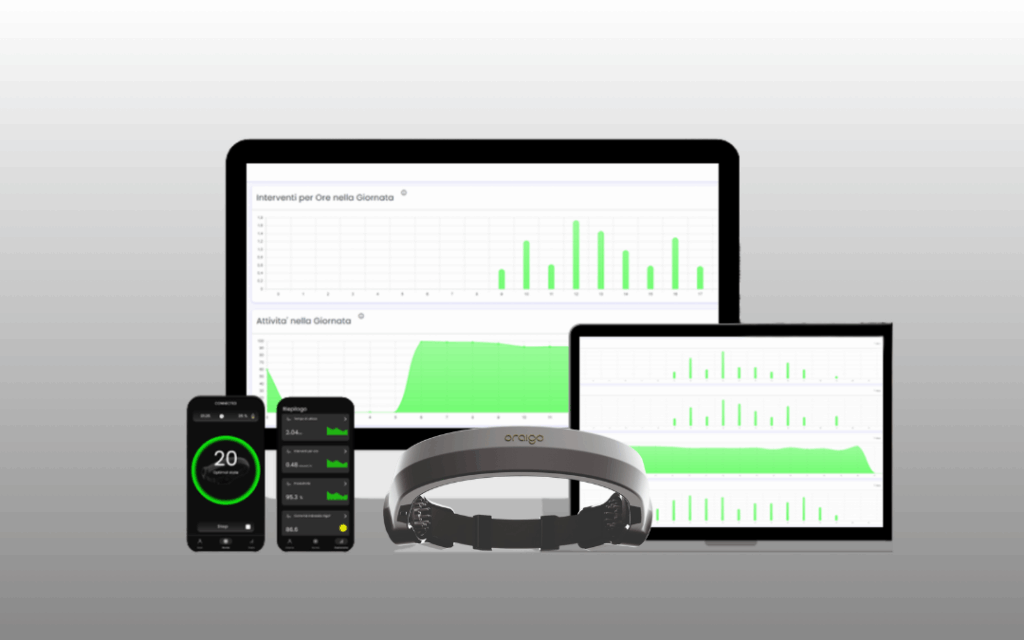
From a fleet management perspective, EEG systems also generate longitudinal data. Supervisors can track fatigue trends across shifts, identify high-risk time windows, and use the data to inform smarter scheduling decisions. The monitoring is continuous, objective, and grounded in neuroscience rather than inference.
3.2 Camera-Based Eye and Face Monitoring
AI-powered cameras mounted inside the cab analyze facial cues associated with drowsiness. The most reliable indicator is PERCLOS, the percentage of time the eyes are more than 80 percent closed over a given interval. Systems also track yawning frequency, head nodding, and gaze direction to build a behavioral picture of driver alertness.
Camera-based systems are widely deployed because they are passive from the driver’s perspective and relatively straightforward to integrate into existing vehicle infrastructure. However, their performance is sensitive to environmental conditions. Poor lighting, direct sunlight, sunglasses, and certain facial features can all reduce detection accuracy. More fundamentally, camera systems can only detect fatigue once it has already produced visible symptoms, meaning they respond to fatigue rather than anticipating it.
3.3 Steering and Vehicle Behavior Analysis
Telematics systems monitor the physical relationship between the driver and the vehicle. Fatigued drivers exhibit measurable changes in steering input: more frequent micro-corrections, wider lane deviation, inconsistent speed maintenance, and altered braking patterns. When these anomalies exceed defined thresholds, the system triggers an alert.
The appeal of vehicle-based detection is its simplicity. There is nothing for the driver to wear or interact with, and the technology integrates naturally into fleet telematics platforms that many operators already use. The limitation is that vehicle behavior changes are downstream consequences of fatigue, not early indicators. By the time steering patterns degrade noticeably, the driver’s cognitive state has already been compromised for some time.
3.4 Heart Rate Variability and Biometric Wearables
The autonomic nervous system responds to fatigue in ways that are measurable without any clinical equipment. Heart rate variability, the variation in time between successive heartbeats, decreases as fatigue increases. Skin temperature and galvanic skin response also shift in characteristic ways. Wrist-worn wearables and chest straps can capture these signals continuously throughout a shift.
Biometric wearables sit in an interesting middle ground: more physiologically grounded than camera or vehicle systems, but less neurologically direct than EEG. They work best as a complementary layer within a multi-modal system, adding a continuous physiological signal that reinforces or cross-checks what other sensors are detecting.
Combining Modalities for Maximum Accuracy
Each technology category has a role, and each has blind spots. EEG detects fatigue earliest but requires the driver to wear a device. Cameras are passive but weather and lighting dependent. Vehicle systems require no hardware at all but react late. Biometric wearables add physiological depth but are less specific to cognitive fatigue than brainwave monitoring.
The most effective non-invasive fatigue detection systems layer these modalities together. EEG provides the early neurological signal. Camera systems confirm behavioral indicators. Vehicle telematics add a final cross-reference. When all three point in the same direction, confidence in the alert is high and false positives are minimized. This is the architecture that serious fleet safety programs are moving toward: not a single sensor, but an integrated system that mirrors the complexity of human fatigue itself.
Non-Invasive vs. Invasive: What Drivers Actually Accept
Technology only delivers safety outcomes if drivers actually use it. This is a point that gets overlooked surprisingly often in fleet safety planning. The most sophisticated fatigue detection system on the market is worthless if drivers find it uncomfortable, distrustful, or demeaning enough to resist, work around, or remove.
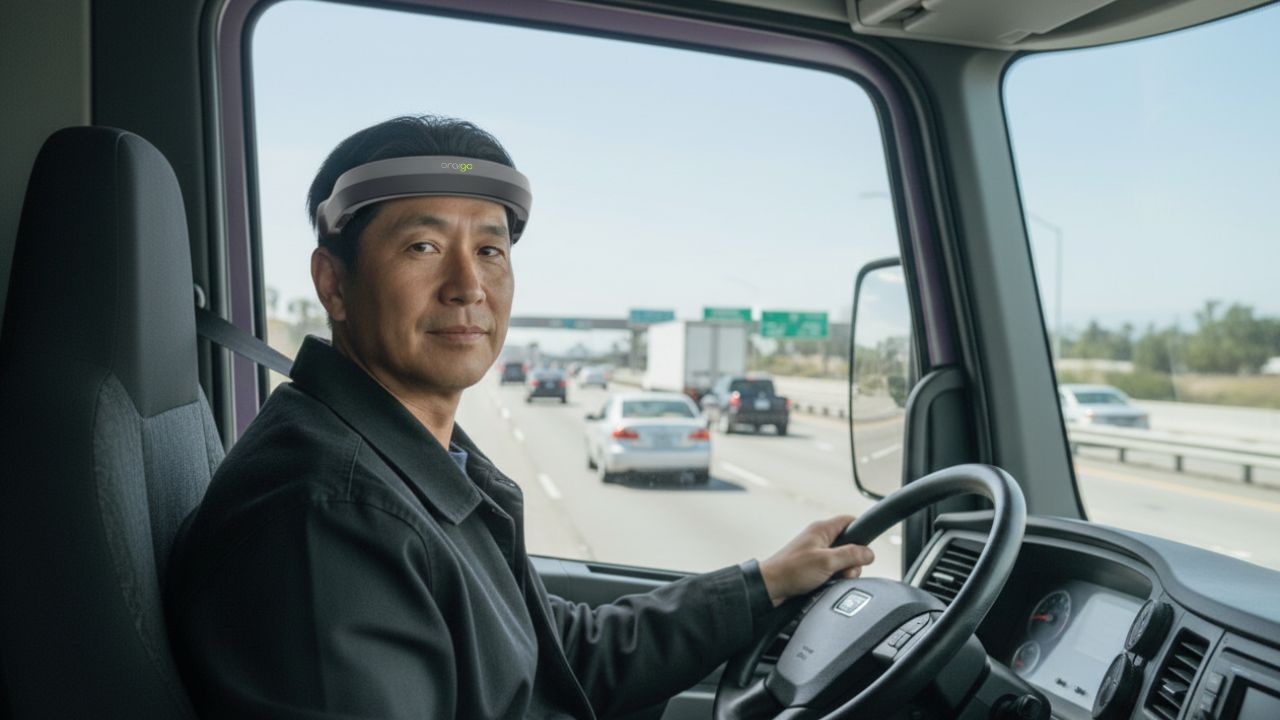
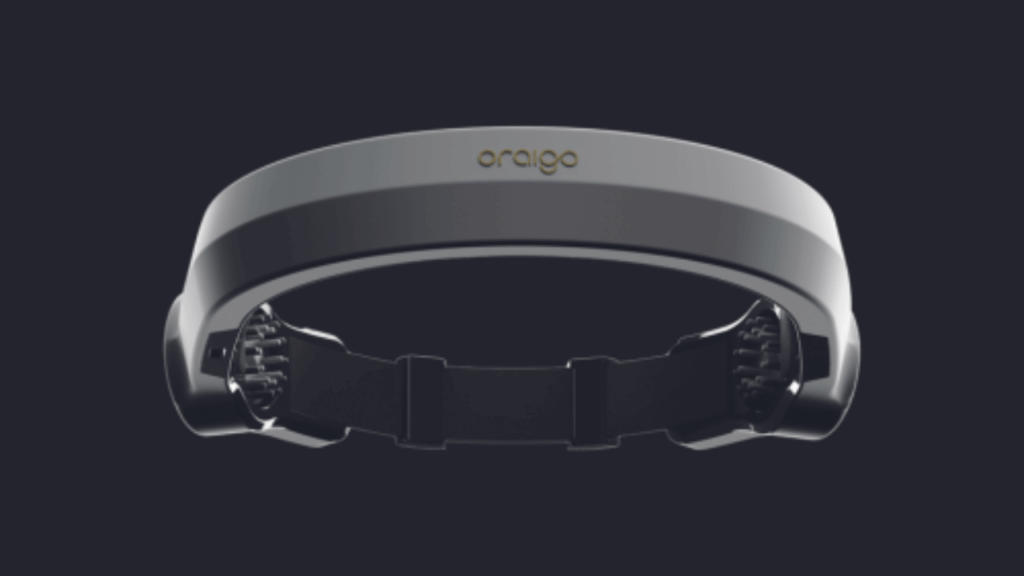
This is where non-invasive fatigue detection holds a decisive practical advantage. Because these systems are designed to monitor without intruding, they ask very little of the driver physically. A lightweight EEG headband, a cabin camera, or a telematics system embedded in the vehicle itself presents a fundamentally different proposition than a device that causes discomfort or requires the driver to interrupt their workflow to interact with it.
Comfort is the first hurdle.
Modern EEG wearables are engineered for extended use. Drivers wearing them across full shifts report that the devices become easy to forget after the first few minutes of acclimatization. Camera systems require no physical contact at all. Vehicle-based telematics are entirely invisible to the driver during normal operation. In each case, the monitoring happens around the driver rather than on top of them.
Privacy is the second and often more emotionally charged concern.
Drivers are understandably cautious about biometric data. Brainwave patterns, heart rate, and eye movement data are sensitive by any reasonable definition. Reputable non-invasive fatigue detection systems address this directly by anonymizing driver data, storing it securely, and restricting its use strictly to safety and scheduling purposes. In Europe, compliance with the General Data Protection Regulation provides a legal framework that drivers can point to as a guarantee of their rights. Fleets should be transparent about exactly what data is collected, how long it is retained, and who has access to it.
Trust is built through framing, not just policy.
How a fleet introduces fatigue monitoring technology matters as much as the technology itself. Drivers who are told that a system exists to protect them, and who see evidence that the data is used to improve scheduling rather than to discipline or surveil, are far more likely to engage with it genuinely. Drivers who feel monitored in a punitive sense will find ways to undermine the system, consciously or not.
The most successful fleet rollouts treat non-invasive fatigue detection as a driver benefit first and a fleet management tool second. That framing is not just good ethics. It is good strategy.
Multi-Modal Detection: The Gold Standard
If there is one principle that unifies the most effective non-invasive fatigue detection deployments, it is this: no single technology is enough on its own.
Each modality covered in Section 3 captures a different dimension of driver fatigue. EEG reads the neurological state directly. Cameras observe behavioral expression. Vehicle telematics register the downstream consequences in driving performance. Biometric wearables track the autonomic nervous system response. Individually, each of these signals is informative. Together, they are significantly more powerful than the sum of their parts.
The case for layering comes down to two practical problems: false positives and detection gaps.
A camera system may flag a driver who squints in bright sunlight as potentially drowsy. An EEG system running simultaneously would either confirm or contradict that signal within seconds. A vehicle telematics system detecting unusual lane deviation might be responding to a poorly maintained road surface rather than driver impairment. Cross-referencing with physiological data resolves the ambiguity quickly.
When multiple independent modalities converge on the same conclusion, confidence in the fatigue alert rises dramatically. When they diverge, the system can hold the alert, request additional confirmation, or flag the event for supervisor review rather than issuing a potentially disruptive false alarm to the driver.
In practice, a well-integrated multi-modal system operates as follows. EEG monitoring identifies the earliest neurological indicators of fatigue onset. The camera system begins tracking behavioral cues more closely in response. If vehicle data also begins showing subtle steering irregularities, the system escalates the alert. The driver receives a clear, calibrated warning at the right moment: early enough to act safely, late enough to be credible.
For fleet managers evaluating non-invasive fatigue detection platforms, multi-modal capability should be a baseline requirement rather than a premium feature. The question to ask any vendor is not simply which signals their system monitors, but how those signals are weighted, cross-referenced, and translated into alerts that are both timely and trustworthy.
Implementation Best Practices for Fleets
Choosing the right non-invasive fatigue detection technology is only the beginning. How that technology is introduced, integrated, and sustained within a fleet operation determines whether it delivers real safety improvements or becomes an expensive piece of underused hardware. The following practices reflect what successful deployments have in common.
Start smaller than feels necessary.
The instinct for many fleet operators is to roll out a new safety system across the entire fleet as quickly as possible, particularly when the business case is strong. Resist this. A pilot program covering a defined subset of vehicles and drivers, ideally across a representative mix of routes and shift patterns, allows the team to establish baseline fatigue profiles, test alert thresholds against real conditions, and surface usability issues before they become systemic problems. The data gathered during a pilot is also invaluable for building internal buy-in among drivers and managers who were not part of the initial group.
Invest in training before deployment, not after.
Both drivers and supervisors need to understand the system before it goes live. For drivers, this means knowing what the device monitors, what triggers an alert, what they are expected to do when one occurs, and crucially, what the data will and will not be used for. For supervisors and fleet managers, training should cover how to read fatigue dashboards, how to distinguish a genuine high-risk event from a system anomaly, and what intervention protocols look like in practice. A system that generates data nobody knows how to act on adds no safety value.
Integrate with existing infrastructure from the start.
Non-invasive fatigue detection does not operate in isolation. The richest safety insights emerge when fatigue data is cross-referenced with route data, shift schedules, delivery timelines, and historical incident records. Fleets that integrate their fatigue monitoring platform with existing telematics and fleet management software from day one are better positioned to identify systemic risk factors, such as a particular route that consistently produces elevated fatigue scores in the final hour, or a shift pattern that correlates with higher alert frequency across multiple drivers.
Let the data drive scheduling decisions.
One of the most underused benefits of continuous non-invasive fatigue detection is its capacity to improve shift design over time. Aggregate fatigue data reveals patterns that no scheduling algorithm or regulatory framework could anticipate: the specific hour of a night shift when alertness reliably dips, the route segment where fatigue events cluster, the driver profiles that respond differently to early versus late starts. Using this data actively, rather than archiving it, transforms fatigue monitoring from a reactive safety net into a proactive operational tool.
Build the culture alongside the technology.
Monitoring technology supports safe behavior; it does not create it. Fleets that see the strongest long-term safety outcomes are those that pair non-invasive fatigue detection with a broader cultural commitment to driver wellbeing. This means realistic delivery timelines that do not structurally incentivize fatigue, accessible rest facilities at key stops, open conversations about sleep health, and a management tone that treats driver alertness as a shared responsibility rather than an individual failing. When drivers feel that the organization genuinely values their safety, engagement with monitoring technology follows naturally.
The Future of Non-Invasive Fatigue Detection
The technology landscape for non-invasive fatigue detection is moving quickly, and the systems available today, impressive as they are, represent an early chapter rather than a finished story. Several developments on the near horizon are likely to reshape what fatigue monitoring looks like for drivers and fleets within the next decade.
Sensors are getting smaller and less visible.
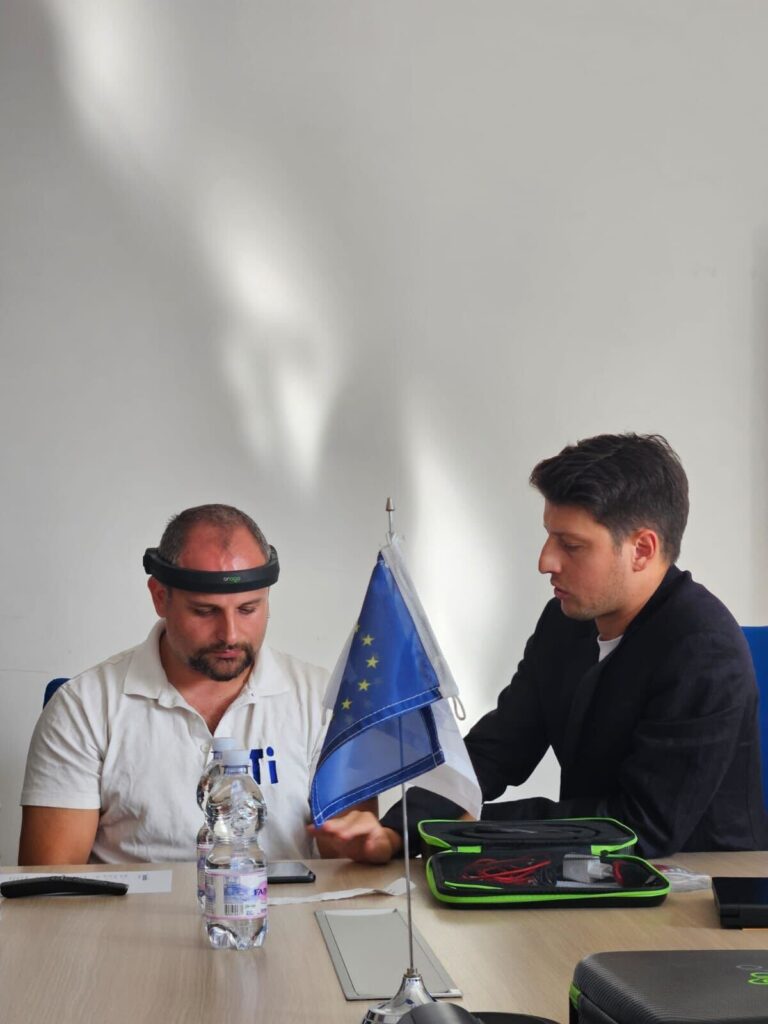
The current generation of EEG wearables already represents a significant reduction in size and complexity compared to clinical EEG equipment. The next generation is likely to embed brainwave sensors into objects drivers already wear or interact with: helmet linings, seat headrests, steering wheel grips, and over-ear headsets. The goal is a future where comprehensive neurological fatigue monitoring requires no deliberate action from the driver at all.
Artificial intelligence is making detection increasingly personal.
Most current fatigue detection systems compare a driver’s signals against population-level baselines, thresholds derived from research across many individuals. The limitation of this approach is that fatigue manifests differently from person to person. A theta wave increase that signals serious drowsiness in one driver may represent a normal fluctuation in another. Next-generation AI systems are moving toward individualized fatigue modeling, learning each driver’s unique neurological and behavioral baseline over time and detecting deviation from that personal norm rather than a statistical average. This shift promises to reduce both false positives and missed detections significantly.
Prediction is replacing detection.
The current paradigm is reactive in a subtle but important sense: even the best systems detect fatigue as it emerges. The next frontier is predicting fatigue before a driver gets behind the wheel. By combining historical fatigue data, sleep quality inputs from wearables used off-duty, shift schedule data, and route characteristics, predictive models will be able to flag elevated fatigue risk at the dispatch stage. A fleet manager could receive an alert that a specific driver, based on their biometric data from the previous twelve hours, carries a higher than normal fatigue risk for their upcoming shift, enabling proactive intervention before the vehicle leaves the depot.
Fatigue monitoring and vehicle automation are converging.
As advanced driver assistance systems and semi-autonomous vehicle technologies become more prevalent in commercial transport, non-invasive fatigue detection will play a new role: managing the handoff between human and machine control. A drowsy driver is precisely the wrong person to take over from an automated system in an emergency. Fatigue monitoring data will increasingly feed directly into vehicle control logic, ensuring that automation levels adjust dynamically based on verified driver alertness rather than assumption.
The direction is clear and the momentum is strong. Non-invasive fatigue detection is following the same trajectory as seatbelts and antilock braking systems before it: from innovation to best practice to regulatory expectation. Fleets that build familiarity with these technologies now will be better positioned operationally, competitively, and culturally when that transition arrives.
From Awareness to Action
Fatigue is not a character flaw or a scheduling inconvenience. It is a physiological reality that affects every driver, on every route, regardless of experience or professionalism. The question is never whether fatigue will occur. It is whether the systems surrounding a driver are sophisticated enough to catch it before it becomes a tragedy.
Non-invasive fatigue detection answers that question with technology that is already proven, increasingly accessible, and continuously improving. From EEG brainwave monitoring that reads neurological fatigue before a driver feels it, to multi-modal systems that cross-reference physiological, behavioral, and vehicle data into a single coherent safety layer, the tools exist. What remains is the decision to use them.
For fleet operators, that decision carries consequences that extend well beyond compliance. It shapes the daily experience of every driver on the road, the financial resilience of the operation, and the culture of safety that determines how an organization behaves when no regulator is watching.
For individual drivers, non-invasive fatigue detection offers something more personal: the assurance that the vehicle they are operating is actively working to keep them safe, not just recording what happens after something goes wrong.
The road ahead is safer when the technology watching over it is smarter than fatigue itself.
If you are ready to explore what non-invasive fatigue detection could look like for your fleet, the next step is a conversation. Book a consultation with Oraigo’s specialists and discover how real-time brainwave monitoring can protect your drivers, your vehicles, and your operation from the ground up.