Two Technologies, One Goal, But Very Different Results
Every year, fatigue-related road accidents cost fleets millions in damages, lost lives, and reputational harm. In response, fleet managers often turn to one of two technologies: traditional dashcams or purpose-built driver fatigue detection systems. On the surface, both seem to address road safety, but they operate on fundamentally different principles and deliver very different outcomes.
This article breaks down the driver fatigue detection vs dashcam debate in plain terms. We will explore what each technology actually does, where each excels, where each falls short, and most critically, which one genuinely prevents fatigue-related incidents rather than simply documenting them after the fact.
Driver fatigue is not a minor inconvenience. It is a physiological impairment that slows reaction times, distorts judgment, and in the most dangerous cases, causes drivers to fall asleep at the wheel without any warning. According to the European Road Safety Observatory, fatigue contributes to up to 20% of all truck accidents, a figure that underscores just how serious and widespread this problem is across the industry. Despite this, many fleets still rely on tools that were never designed with fatigue prevention as their primary purpose.
Understanding the real difference between a dashcam and a fatigue detection system starts with a simple but important question: do you want to record what goes wrong, or stop it from happening in the first place? The answer to that question should drive every technology decision a safety-conscious fleet manager makes.
Whether you manage a small delivery fleet or a large-scale trucking operation, this guide will help you make an informed decision about the tools that could save your drivers’ lives.
Key questions answered in this article:
- What is a dashcam, and what can it actually detect?
- How does a dedicated fatigue detection system work?
- Can dashcams double as fatigue monitors?
- Which solution is right for your fleet?
What Is a Dashcam, and What Is It Really For?

Dashcams are video recording devices mounted on a vehicle’s windshield or dashboard. Originally designed for incident documentation, they capture footage of road events such as accidents, near-misses, and traffic violations that can be used for insurance claims, legal disputes, and driver coaching reviews.
Modern dashcams have come a long way from their early iterations. Today’s models often include dual lenses covering both the road ahead and the driver’s cabin, GPS tracking, speed logging, and impact-triggered recording. Some higher-end units now incorporate artificial intelligence features that can flag certain driver behaviors in real time, which has led many fleet managers to consider them as an all-in-one safety solution.
It is easy to see why dashcams are so widely adopted. They are relatively affordable, straightforward to install, and immediately useful for protecting fleets against fraudulent insurance claims and establishing accountability after an incident. For many operators, they represent the first meaningful step toward a structured fleet safety program.
Where dashcams genuinely shine:
- Post-incident evidence collection
- Driver behavior review including harsh braking and speeding
- Liability protection in accident disputes
- Basic fleet visibility and route monitoring
What dashcams are not designed to do:
This is where the driver fatigue detection vs dashcam comparison becomes critical. A dashcam records what happens. It does not proactively monitor a driver’s physiological or neurological state. Even dual-lens dashcams with AI features that flag drowsiness are built primarily as recording devices, with fatigue detection added as a secondary capability rather than a core function.
A dashcam cannot tell you that a driver is growing dangerously tired. It can only show you, after the fact, that they were. For fleets where long-haul routes and night driving are routine, that distinction carries serious consequences.
What Is a Driver Fatigue Detection System?
A dedicated driver fatigue detection system is built around a single purpose: identifying signs of fatigue before they cause an accident. Unlike dashcams, which are fundamentally passive recording tools, fatigue detection systems are active safety technologies. They continuously monitor the driver throughout a journey and intervene the moment alertness begins to drop, giving drivers the time and warning they need to respond safely.
These systems have evolved significantly over the past decade, moving from simple lane-departure warnings to sophisticated, multi-layered platforms capable of reading physiological data in real time. The best modern solutions do not wait for a driver to swerve or blink slowly. They detect the neurological and behavioral precursors to those events, catching fatigue at its earliest and most treatable stage.
The three main categories of fatigue detection technology:
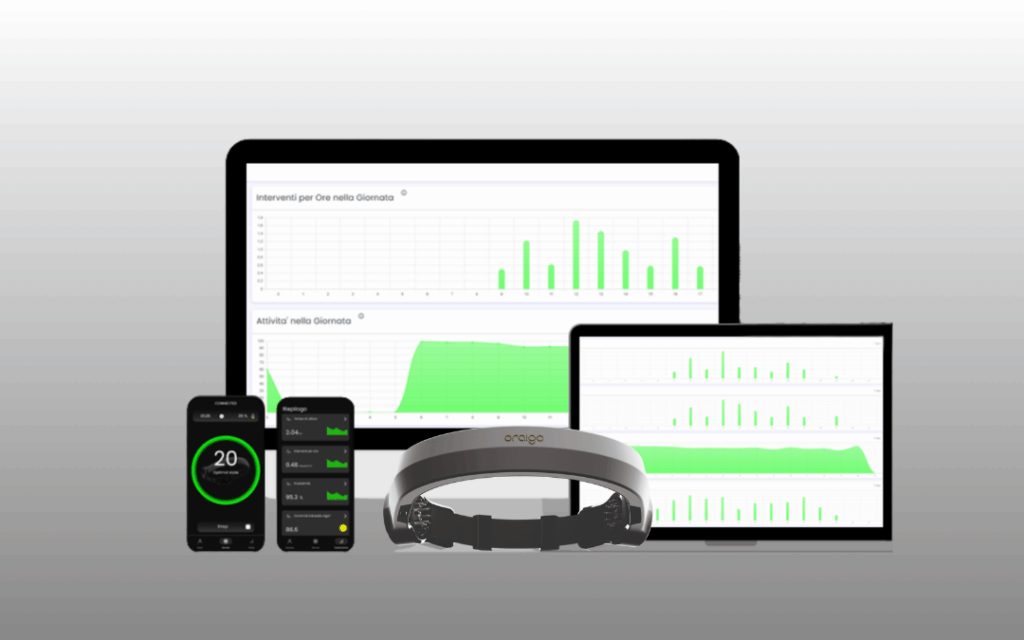
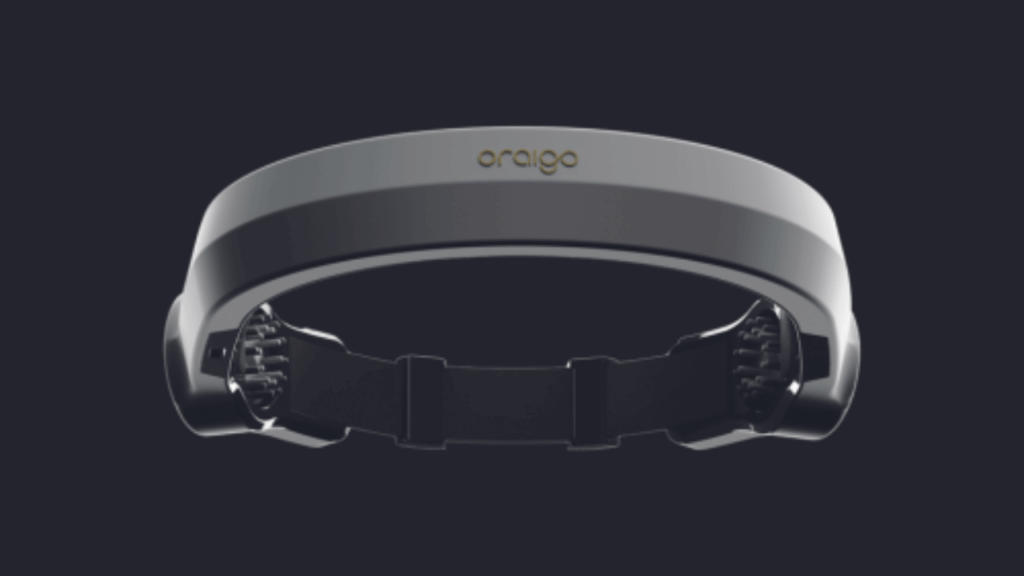
1. Physiological-based systems (EEG and brainwave monitoring) The most advanced class of fatigue detection available today. Devices like the Oraigo Aigo headband use electroencephalography (EEG) to continuously read brainwave activity, identifying neurological patterns associated with drowsiness often before the driver themselves feels any sense of tiredness. This is proactive detection at its most precise, operating entirely independently of lighting conditions, facial expressions, or driving behavior. When early signs of fatigue are identified, the system triggers immediate multi-sensory alerts including audio, visual, and vibration signals, prompting the driver to act before risk escalates. Fleet managers simultaneously receive data through integrated dashboards, allowing them to monitor fatigue trends across their entire operation and adjust schedules accordingly.
2. Camera-based fatigue detection AI-powered systems that use eye-tracking and facial recognition to detect physical signs of drowsiness such as slow blinks, drooping eyelids, yawning, and head-nodding. These systems are more purpose-built than the fatigue features found on standard dashcams, but they remain reactive by nature. They can only identify fatigue once it has become visible on the driver’s face, meaning valuable response time has already been lost. Performance can also be affected by poor cabin lighting, sunglasses, or certain facial features, introducing a margin of error that physiological systems avoid entirely.
3. Vehicle-based detection Monitors steering input patterns, lane deviation, and pedal behavior to infer fatigue from changes in driving style. These systems are easy to integrate with existing telematics platforms and require no wearable device or camera. However, like camera-based solutions, they are reactive rather than preventive. By the time a driver’s steering becomes erratic enough to trigger an alert, fatigue has already meaningfully impaired their ability to respond. Vehicle-based detection works best as a secondary layer within a broader fatigue management strategy rather than as a standalone solution.
The defining feature of fatigue detection systems is that alertness monitoring is their primary function, not an add-on. When fatigue is detected, these systems act immediately and purposefully, creating a window for the driver to pull over, rest, and return to the road safely. That is a fundamentally different value proposition from anything a dashcam, however advanced, can offer.
Head-to-Head Comparison: Driver Fatigue Detection vs Dashcam
Now that both technologies have been defined on their own terms, it is worth placing them side by side across the dimensions that matter most to fleet safety managers. The driver fatigue detection vs dashcam comparison is not simply a question of features. It is a question of philosophy: are you building a safety program around prevention or documentation?
3.1 Detection Method
A dashcam captures what the driver looks like after fatigue has already taken hold. A dedicated fatigue detection system identifies what is happening inside the driver before it becomes visible or dangerous. This is the most fundamental distinction between the two technologies and the one that underpins every other difference in this comparison.
Dashcams, even those equipped with AI driver monitoring features, rely entirely on visual input. They analyse camera footage to spot external symptoms of fatigue. Fatigue detection systems, particularly EEG-based solutions, bypass the visual layer entirely and read the physiological signals that precede those symptoms by minutes.
3.2 Response Time
In road safety, seconds matter enormously. A vehicle travelling at highway speed covers significant ground in the time it takes a camera to detect a drooping eyelid, process the image, and trigger an alert. EEG-based fatigue detection systems identify neurological changes associated with drowsiness before they manifest as any visible behavioral symptom, giving drivers a meaningful window to respond safely rather than a last-second warning.
Dashcam-based alerts, where they exist at all, are triggered by behavioral signals that indicate fatigue has already significantly impaired the driver. The alert arrives late almost by design, because the system cannot act until it has something visual to react to.
3.3 Accuracy and False Alarms
Accuracy is a practical concern that fleet managers encounter quickly when deploying any safety technology. Camera-based systems, whether standalone fatigue detectors or AI-enhanced dashcams, are vulnerable to a range of environmental and physical variables. Poor cabin lighting, direct sunlight, tinted windows, sunglasses, face masks, and even certain facial hair can all interfere with eye-tracking algorithms and generate false positives or, more dangerously, missed detections.
EEG-based systems sidestep these limitations entirely. Brainwave data is not affected by what the driver is wearing, how bright it is outside, or the angle of the sun through the windshield. The signal being monitored is internal and constant, which makes it significantly more reliable across the varied real-world conditions that drivers encounter on long routes.
3.4 Privacy and Data Compliance
Continuous video recording, particularly driver-facing cabin footage, raises legitimate privacy concerns that fleet managers cannot afford to overlook. In the European Union, GDPR places strict requirements on how personal data, including video footage of employees, is collected, stored, and used. Drivers have a right to understand how their data is being handled, and fleets have a legal obligation to ensure that their safety tools comply with applicable regulations.
Responsible fatigue detection providers address this directly. Oraigo, for example, anonymizes physiological data collected through its EEG headband and operates under full GDPR compliance, ensuring that driver wellbeing and privacy are protected simultaneously. This is an increasingly important consideration as regulators across Europe and beyond tighten oversight of workplace monitoring technologies.
Dashcams, by contrast, generate continuous video footage that must be carefully managed to remain compliant, adding an administrative layer that many fleets underestimate at the point of purchase.
3.5 Post-Incident vs. Pre-Incident Value
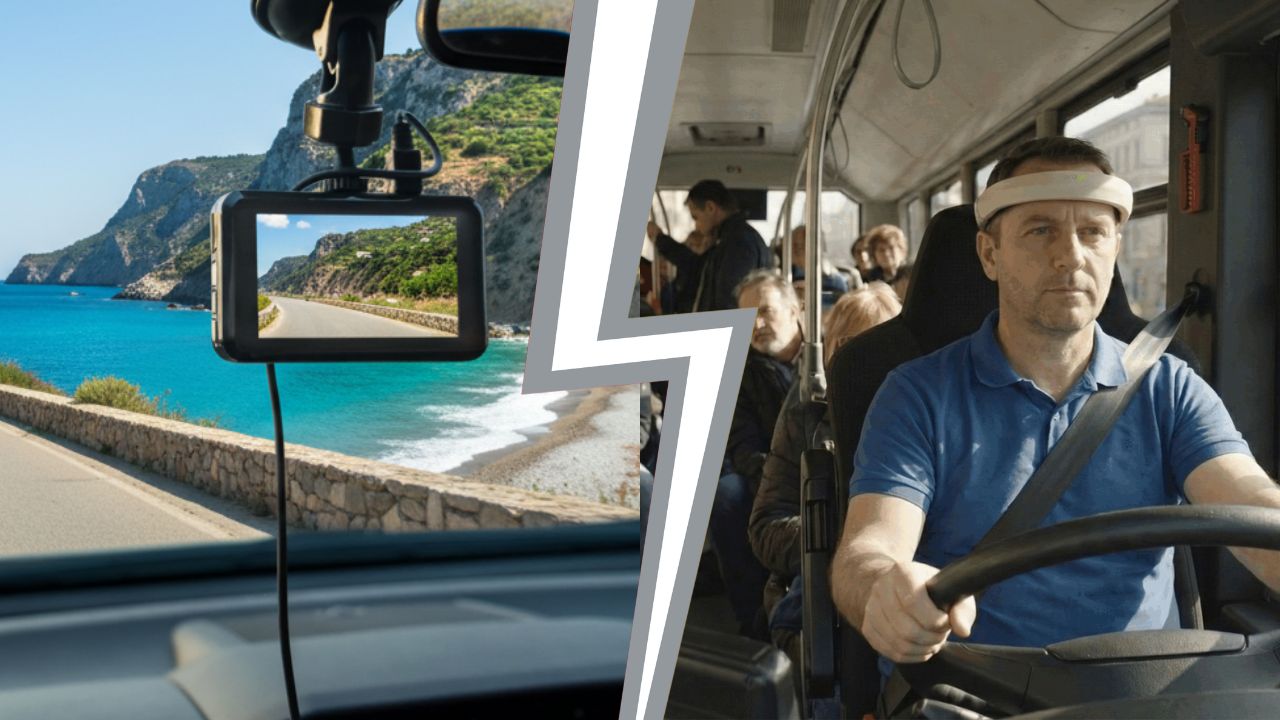
Perhaps the most honest way to summarize the driver fatigue detection vs dashcam comparison is this: a dashcam’s greatest value is delivered after something has gone wrong, while a fatigue detection system’s greatest value is delivered before anything goes wrong at all.
For fleets where the primary goal is liability protection and incident review, a dashcam provides genuine and measurable value. For fleets where the primary goal is keeping drivers safe and preventing accidents from occurring in the first place, a dedicated fatigue detection system is not simply a better option. It is the only tool actually designed for that purpose.
Both have a role to play in a mature fleet safety program. But they should never be treated as equivalents, and a dashcam should never be positioned as a substitute for a system built specifically around driver alertness monitoring.
Can Dashcams with AI Fatigue Features Close the Gap?
In recent years, dashcam manufacturers have responded to growing demand for fatigue monitoring by integrating AI-driven driver monitoring systems into their devices. These hybrid products are increasingly common in fleet safety catalogues and are often marketed as comprehensive solutions that handle both incident recording and drowsiness detection in a single unit. For fleet managers evaluating the driver fatigue detection vs dashcam question, they represent an important middle ground worth examining honestly.
There is no question that AI-enhanced dashcams represent a genuine improvement over standard recording devices. The best models can detect visible signs of drowsiness with reasonable accuracy under good conditions, send real-time alerts to fleet managers through connected telematics platforms, and provide footage context alongside flagged fatigue events, making it easier to review incidents and coach drivers after the fact. For fleets that are taking their first steps toward active fatigue management, an AI dashcam can be a meaningful upgrade from a purely passive recording setup.
However, the limitations of this approach become clear when examined against the core challenge of fatigue detection: the most dangerous moments of drowsiness are often invisible.
A driver can be operating at significantly impaired alertness levels while their eyes remain open, their head stays upright, and their steering remains steady enough to avoid triggering a lane-departure warning. This is particularly true in the early and middle stages of fatigue accumulation, precisely the window where an intervention would be most effective. A camera-based system, whether it is a dedicated fatigue monitor or an AI dashcam, cannot detect what it cannot see. It is constrained by the boundaries of visual input in a way that physiological monitoring is not.
There is also the question of processing lag. Even the most sophisticated AI image recognition systems require time to capture a frame, analyse it, classify the driver’s state, and trigger a response. In highway driving conditions, that lag, measured in fractions of a second, translates into meaningful distance travelled without intervention. EEG-based systems, reading continuous brainwave data rather than discrete visual frames, do not share this limitation.
Environmental reliability is another factor that fleet managers discover quickly in real-world deployment. An AI dashcam that performs well in a controlled demonstration may struggle during a pre-dawn motorway run, in a cab with inconsistent interior lighting, or when a driver puts on sunglasses to manage glare. These are not edge cases. They are routine conditions for professional drivers, and a fatigue monitoring system needs to perform reliably in all of them.
It is also worth noting that AI dashcam fatigue features are typically developed and maintained as secondary product lines by companies whose core business is video telematics. Dedicated fatigue detection providers, by contrast, concentrate their entire research and development investment on solving the alertness monitoring problem as accurately and reliably as possible. That difference in focus tends to show up in the depth and robustness of the solution.
The honest conclusion is that AI-enhanced dashcams narrow the gap in the driver fatigue detection vs dashcam comparison, but they do not close it. They are a better choice than a standard dashcam for fleets that need both recording and basic drowsiness alerts, and they may be sufficient for lower-risk operating environments such as urban delivery routes with short shifts and frequent natural breaks. But for long-haul operations, overnight driving, and any context where sustained high alertness is critical, the architectural limitations of camera-based detection remain a real constraint that no amount of AI refinement has yet overcome.
For those fleets, the question is not whether an AI dashcam is better than a basic one. It is whether any camera-based system, however advanced, is genuinely fit for the level of fatigue risk their drivers face every day.
Which Is Right for Your Fleet?
By this point in the driver fatigue detection vs dashcam comparison, the functional differences between the two technologies are clear. But understanding which solution is right for your specific fleet requires going beyond a feature comparison and thinking carefully about your risk profile, your operational environment, and what your duty of care obligations actually demand of you.
There is no single answer that fits every fleet. A same-day urban courier operation and a long-haul refrigerated transport company face fundamentally different fatigue risks, and their technology choices should reflect that. What matters is that the decision is made deliberately, with a clear understanding of what each tool can and cannot do.
A dashcam is likely sufficient as your primary safety tool if:
Your fleet operates predominantly in urban or suburban environments where routes are short, traffic naturally interrupts monotonous driving, and drivers return to a depot or home base regularly. In these conditions, fatigue accumulation is lower, natural breaks are more frequent, and the primary safety concern may genuinely be incident documentation and driver accountability rather than sustained alertness monitoring. A high-quality AI-enhanced dashcam in this context provides meaningful value without over-engineering the solution.
Dashcams are also the right choice if your immediate priority is building a foundational layer of fleet visibility before expanding into more sophisticated safety technology. Many fleets begin with dashcam deployment and use the behavioral data and incident records generated over the first year to build the business case for investing in dedicated fatigue detection. That is a rational and pragmatic approach to fleet safety investment.
A dedicated fatigue detection system is essential if:
Your drivers regularly operate on long-haul or overnight routes where fatigue risk is at its highest. Research consistently shows that the hours between midnight and six in the morning, and the early afternoon period, represent the peaks of circadian-driven drowsiness. Drivers on extended shifts during these windows are operating in conditions where camera-based detection is not fast enough, not reliable enough, and not proactive enough to provide genuine protection.
A dedicated fatigue detection system is also the right choice if your fleet has experienced fatigue-related incidents or near-misses, if you operate in a regulatory environment with strict duty of care requirements, or if your insurance provider or clients are beginning to ask harder questions about how you manage driver alertness. In these situations, being able to demonstrate that your safety program goes beyond recording and into active, real-time prevention is not just a competitive advantage. It is increasingly a baseline expectation.
The strongest approach combines both:
The most safety-conscious and operationally sophisticated fleets are not choosing between dashcams and fatigue detection systems. They are deploying both in a layered safety architecture where each technology does what it was designed to do. EEG-based fatigue monitoring handles proactive, neurological-level alertness detection throughout the journey. The dashcam handles incident documentation, driver coaching, and liability protection. Together they create a safety ecosystem that covers prevention, intervention, and accountability across the full spectrum of risk.
This combined approach also makes practical sense from a data perspective. Fatigue detection platforms generate rich alertness data over time, revealing which routes, shift patterns, and individual drivers carry the highest risk. Dashcam footage provides the visual context to complement that data during incident reviews and driver training sessions. Used together, the two technologies reinforce each other in ways that neither can achieve alone.
The key insight for fleet managers is this: the driver fatigue detection vs dashcam question is ultimately not about choosing the better technology in isolation. It is about building a safety program that matches the real risk your drivers face, and investing in tools that are genuinely capable of managing that risk rather than simply recording its consequences.
The Future of Fleet Safety, Beyond the Camera
The transportation industry is undergoing a fundamental shift in how it thinks about road safety. For decades, the dominant model was reactive: install a camera, record what happens, review the footage, and coach the driver afterward. That model served a purpose, and it still has value today. But it is increasingly being recognised for what it is: a floor, not a ceiling.
The fleets leading the industry forward are those that have moved from a documentation mindset to a prevention mindset. They are investing in technologies that intervene before accidents happen rather than technologies that explain accidents after they do. This shift is being driven by a combination of factors: rising insurance costs, stricter regulatory environments, growing awareness of driver mental health and wellbeing, and the simple, unavoidable reality that fatigue-related accidents are preventable if the right tools are in place.
EEG-based fatigue monitoring sits at the frontier of this evolution. By reading brainwave activity continuously and in real time, it brings fleet safety into territory that cameras and vehicle sensors cannot reach: the neurological state of the driver themselves. This is not a marginal improvement over existing technology. It represents a categorical step forward in what fleet safety can actually achieve.
Regulators are beginning to take notice. Across Europe, road safety policy is moving steadily toward mandating more proactive driver monitoring standards, particularly for commercial vehicles operating on high-risk routes. The EU’s General Safety Regulation has already introduced requirements for advanced driver assistance systems in new vehicles, and the direction of travel strongly suggests that physiological monitoring will become part of the compliance conversation in the years ahead. Fleets that invest in EEG-based fatigue detection today are not just protecting their drivers now. They are positioning themselves ahead of a regulatory curve that is only moving in one direction.
There is also a cultural dimension to this shift that deserves attention. Drivers who are monitored through continuous video recording often experience that surveillance as a source of stress rather than a safety resource. A system that monitors brainwave activity with anonymized data, alerts the driver privately and in real time, and treats fatigue as a physiological condition rather than a behavioral failing tends to be received very differently. When drivers understand that a fatigue detection system is working for them rather than watching them, adoption rates improve, compliance improves, and the safety outcomes improve with them.
The future of fleet safety is not a better camera. It is a deeper, more honest understanding of what is happening inside the driver, and a commitment to acting on that understanding before the road demands it.
Less Documentation, More Prevention
The driver fatigue detection vs dashcam debate ultimately comes down to a question of intent. Dashcams are valuable tools, and no serious fleet safety program should dismiss them. They protect against fraudulent claims, support driver coaching, and provide accountability that benefits both operators and drivers. For many fleets, they remain an important part of the safety toolkit.
But a dashcam was never designed to prevent a fatigued driver from causing an accident. It was designed to record one. That distinction, simple as it sounds, carries enormous weight when the lives of professional drivers and other road users are at stake.
Dedicated fatigue detection systems, and EEG-based solutions in particular, exist for one reason: to stop dangerous situations from developing in the first place. They monitor the driver continuously, detect the earliest neurological signals of drowsiness, and create the window for intervention that a camera-based system simply cannot provide. That is not a feature advantage. It is a fundamentally different approach to what fleet safety is supposed to accomplish.
For fleet managers who are serious about protecting their drivers, reducing accident rates, meeting their duty of care obligations, and building a safety culture that goes beyond compliance, the path forward is clear. Start with prevention. Layer in documentation. And never mistake the ability to review what went wrong for the ability to stop it from happening.
Driver fatigue is detectable. High-risk situations are preventable. The tools to achieve both exist today, and the fleets choosing to use them are already seeing the difference on their roads, in their incident data, and in the confidence of the drivers who rely on them every day.
Want to see fatigue detection in action? Discover how Oraigo’s brainwave monitoring technology is helping fleets prevent accidents before they happen. Book a free consultation with our team today and take the first step toward a genuinely proactive safety program.