Why Transport Safety Technology in America Is Evolving Fast
Transportation is the circulatory system of the American economy. Trucks move over 70 percent of all freight in the United States, millions of commercial drivers log billions of miles each year, and the network of roads, highways, and urban corridors that connects it all never truly sleeps. Yet for all its scale and economic importance, the American transportation system remains one of the most dangerous working environments in the country. Tens of thousands of lives are lost on U.S. roads every year, and commercial vehicle crashes account for a disproportionate share of the most severe and costly incidents.
For decades, the primary tools for managing this risk were regulatory. Hours of Service rules, vehicle inspection requirements, and licensing standards created a compliance framework that undeniably saved lives. But the demands placed on the transportation system today have outgrown what compliance alone can address. Freight volumes are rising. Driver shortages are stretching existing workforces thin. Delivery timelines are tightening. And the roads themselves are more congested and unpredictable than ever.
This is precisely why transport safety technology in America has become one of the most active and consequential areas of innovation in the industry. A new generation of tools is shifting the entire safety model from reactive to proactive, from logbooks and incident reports to real time data, artificial intelligence, and physiological monitoring. This article maps what is new, what is working, and what is coming next.
The State of Road Safety in America Today
To understand why transport safety technology in America is attracting so much attention and investment, it helps to first look honestly at the scale of the problem it is trying to solve.
According to the National Highway Traffic Safety Administration, around 40,000 people die on American roads in a typical year. Large trucks are involved in a significant and growing share of those fatalities. The Federal Motor Carrier Safety Administration reports that fatal crashes involving large trucks have been trending upward over the past decade, even as vehicle engineering has improved and regulatory oversight has expanded. The gap between safer vehicles and safer outcomes points to one persistent and uncomfortable truth: technology in the vehicle alone is not enough if the human operating it is fatigued, distracted, or under pressure to push beyond safe limits.
The economic cost compounds the human tragedy. A single serious commercial vehicle crash can cost a fleet hundreds of thousands of dollars when vehicle damage, cargo loss, insurance adjustments, legal fees, and operational downtime are all factored in. For smaller carriers operating on thin margins, one major incident can be existential.
At the same time, driver shortages mean that the operators behind the wheel are often newer, less experienced, or working under conditions that increase their vulnerability to fatigue and error. The system is under strain, and that strain shows up in crash statistics that have remained stubbornly high despite decades of regulatory effort.
This is the backdrop against which a new wave of transport safety technology in America is being developed and deployed. The goal is no longer simply to respond to crashes more efficiently. It is to prevent them from happening at all.
AI and Machine Learning in Collision Avoidance Systems
Of all the advances in transport safety technology in America, artificial intelligence applied to collision avoidance is arguably the most visible and the most commercially mature. It is also the area where the gap between what is possible and what is widely deployed is closing fastest.
Traditional automatic emergency braking and lane departure warning systems, which have been available on commercial vehicles for over a decade, operate on relatively simple threshold logic. When a sensor detects that a collision is imminent beyond a certain parameter, the system responds. That response can absolutely prevent crashes, but it is still fundamentally reactive. It waits for danger to arrive before acting.
AI powered collision avoidance systems work differently. Rather than waiting for a threshold to be crossed, they continuously analyze the full environment around the vehicle, processing input from forward facing cameras, radar, and lidar simultaneously. Machine learning models trained on millions of miles of real world driving data can identify developing hazards well before they become emergencies. A stopped vehicle partially obscured by a curve. A pedestrian stepping toward the road from between parked cars. A sudden change in traffic flow three vehicles ahead. These are the scenarios where traditional systems struggle and where AI systems are demonstrably stronger.
For commercial trucking specifically, the stakes are higher than for passenger vehicles. A fully loaded Class 8 truck traveling at highway speed requires significantly more distance to stop than a car, which means earlier detection translates directly into lives saved. Several major truck manufacturers and technology suppliers are now offering AI powered driver assistance as either standard equipment or an accessible upgrade on new vehicles sold in the United States.
The NHTSA has also been advancing rulemaking around automatic emergency braking requirements for heavy vehicles, signaling that what is currently a competitive differentiator for forward thinking fleets will increasingly become a baseline regulatory expectation. Carriers that adopt these systems now are not only reducing their crash risk today. They are also positioning themselves ahead of a compliance curve that is clearly moving in one direction.
Driver Fatigue Monitoring: Moving Beyond Logbooks
If AI collision avoidance is the most visible frontier of transport safety technology in America, driver fatigue monitoring may be the most urgent. Fatigue is consistently identified as one of the leading contributing factors in serious commercial vehicle crashes, yet it remains one of the hardest to measure, manage, and prove. Unlike alcohol impairment or distracted driving, fatigue leaves no chemical trace and triggers no automatic alert. It builds gradually, often without the driver fully recognizing how compromised their alertness has become.
The Hours of Service regulations enforced by the FMCSA were designed to address this risk by limiting how long a driver can operate before mandatory rest. They are an important foundation, but they have a fundamental limitation: they regulate time, not physiology. A driver can complete a legally compliant shift and still be dangerously fatigued due to poor sleep quality the night before, an undiagnosed sleep disorder, high physical stress, or simple circadian disruption from irregular scheduling. Compliance with a logbook does not equal alertness behind the wheel.
This is the gap that modern fatigue monitoring technology is designed to close, and the tools now available to American fleets represent a genuine leap forward from anything that existed even five years ago.
Camera based systems are currently the most widely deployed option. Using AI powered facial recognition and eye tracking, these systems monitor for visible signs of drowsiness including slow blinks, prolonged eye closure, yawning, and head drooping. When the system detects a pattern consistent with fatigue, it triggers an in cab alert to prompt the driver to take action. These systems are relatively affordable, easy to install across a fleet, and capable of operating continuously without driver input. Their limitation is that they can only detect fatigue once it has already progressed far enough to produce visible physical signs, which means the window between detection and a serious lapse in alertness can be uncomfortably narrow.
Vehicle based systems take a different approach, inferring fatigue from changes in driving behavior rather than the driver’s face. Irregular lane keeping, unusual steering micro corrections, and inconsistent pedal inputs are all signals that something may be wrong. These systems are useful as a secondary layer of detection, but like camera systems, they are responding to symptoms rather than the underlying physiological state.
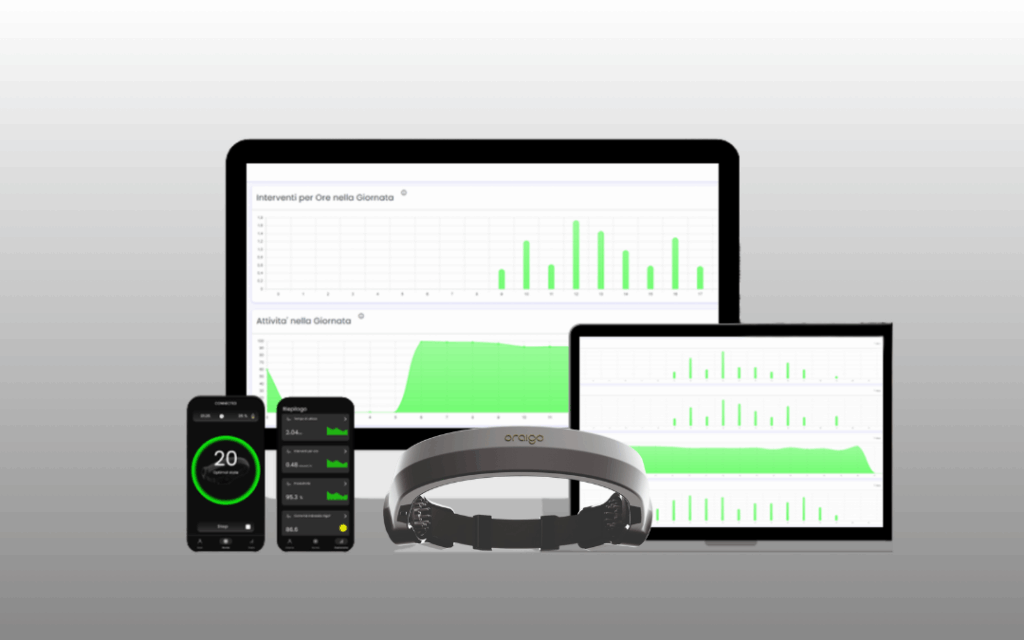
The most advanced category of fatigue monitoring technology operates at the neurological level. EEG based wearables measure brainwave activity in real time, detecting the specific neural signatures associated with the early onset of drowsiness, often well before a driver feels tired or shows any visible signs of fatigue. This makes EEG based monitoring genuinely proactive rather than reactive. It identifies the risk at its source and creates an opportunity to intervene before alertness degrades to a dangerous level.

For American fleets serious about fatigue prevention rather than fatigue response, the most effective approach combines all three layers. Camera and vehicle based systems provide broad coverage and redundancy. Physiological monitoring provides the earliest and most accurate signal. Together they create a safety net that is far stronger than any single tool deployed alone.
Connected Vehicle Technology and V2X Communication
Among the emerging pillars of transport safety technology in America, Vehicle to Everything communication, widely known as V2X, may be the one with the greatest long term potential to reshape how safety is managed at a systems level rather than a vehicle level.
The core idea behind V2X is straightforward. Instead of each vehicle operating as an isolated unit, relying solely on its own sensors and its driver’s field of vision, connected vehicles share real time data with everything around them. Other vehicles. Traffic signals. Roadside sensors. Emergency response systems. Pedestrian devices. In a fully realized V2X environment, a truck driver approaching a blind intersection can receive a warning that a vehicle is running a red light before either driver can see the other. A fleet dispatcher can be alerted that a vehicle on a specific highway corridor is encountering black ice conditions being reported by vehicles already on that stretch of road. A traffic management system can dynamically adjust signal timing to reduce the risk of rear end collisions in a suddenly congested zone.
The United States has been laying the groundwork for this kind of infrastructure for several years. The Federal Communications Commission allocated dedicated spectrum for intelligent transportation systems, and the Department of Transportation has been funding V2X pilot corridors across multiple states, with particularly active deployments in the Midwest and along major interstate freight routes. These pilots have demonstrated measurable reductions in intersection conflicts and significant improvements in driver response time to hazards that would otherwise have been invisible until it was too late.
It is important to be honest about where V2X currently stands for most American fleets. Outside of active pilot corridors and a handful of smart city deployments, the roadside infrastructure required to realize the full potential of V2X is still being built. The technology works best as a network, and network effects only materialize at scale. A connected vehicle communicating with no other connected vehicles or roadside units delivers only a fraction of its potential safety value.
But the trajectory is clear. Federal infrastructure investment is accelerating the buildout of smart road technology. Vehicle manufacturers are beginning to equip new models with V2X capable hardware in anticipation of the infrastructure catching up. And as freight corridors become progressively smarter, the fleets that have already integrated connected vehicle technology into their operations will be positioned to benefit immediately rather than scrambling to retrofit.
For long haul carriers in particular, V2X has the potential to be transformative. The combination of earlier hazard awareness, coordinated traffic management, and real time road condition sharing addresses some of the most persistent risk factors on American highways in a way that no onboard system operating in isolation can fully replicate.
Telematics, ELDs, and the Data Driven Fleet
If connected vehicle technology represents the future of transport safety technology in America, telematics and electronic logging devices represent its present foundation. These tools are already deeply embedded in the daily operations of American fleets, and the way carriers are using them is becoming significantly more sophisticated.
The FMCSA’s Electronic Logging Device mandate, which reached full enforcement in 2019, was the regulatory event that brought data driven fleet management into the mainstream. By requiring commercial drivers to record their hours of service electronically rather than on paper logs, the mandate eliminated one of the most persistent sources of falsification in the industry and created a standardized digital record of driver activity across the national fleet. That was the compliance story. The operational story that has unfolded since is considerably more interesting.
ELDs are now the entry point to a much broader telematics ecosystem. Modern fleet telematics platforms layer GPS tracking, engine diagnostics, fuel consumption monitoring, harsh event detection, and route performance analysis on top of the foundational hours of service data that ELDs provide. The result is a continuous stream of operational intelligence that fleet safety managers can use not just to review what happened but to anticipate what is likely to happen next.
Harsh braking events, rapid acceleration patterns, excessive idling, and sharp cornering are all signals that telematics systems capture and score in real time. When these signals are aggregated into driver performance profiles over time, patterns emerge that are genuinely predictive. A driver whose harsh braking frequency has increased over the past two weeks may be fatigued, stressed, distracted, or dealing with a developing health issue. A vehicle that is consuming more fuel than usual on a familiar route may have a mechanical problem that, left unaddressed, could contribute to a roadside failure or crash. Telematics data makes these patterns visible before they become incidents.
The most forward thinking fleets are going further still, integrating artificial intelligence into their telematics analysis to move from pattern recognition to proactive intervention. Rather than a safety manager manually reviewing driver scorecards at the end of the week, AI powered platforms flag emerging risks in real time and recommend specific coaching actions tailored to each driver’s profile. Dispatchers receive alerts when a driver on a long haul route is approaching a fatigue risk window based on their actual activity data rather than just their logged hours. Maintenance teams are notified of developing vehicle issues before drivers even report a symptom.
This integration of telematics with AI analysis is also beginning to connect with the other safety systems discussed in this article. When a fleet platform can correlate a driver’s fatigue monitoring data with their telematics performance score and their recent hours of service pattern, the picture of risk that emerges is far more complete and actionable than any single data source could provide. This convergence of data streams into unified safety intelligence platforms is one of the defining trends in transport safety technology in America right now, and it is reshaping how the most safety conscious carriers manage their operations from the ground up.
Autonomous and Driver Assistance Technologies on American Roads
No discussion of transport safety technology in America would be complete without addressing the rapid development of autonomous and semi autonomous capabilities in commercial vehicles. It is also an area where it is important to separate the reality of what is deployed today from the longer term vision that tends to dominate headlines.
Fully driverless trucks operating without any human on board remain in limited pilot phases on specific, controlled corridors. Companies including Waymo Via, Aurora, and Kodiak Robotics have been conducting autonomous trucking trials on select routes in Texas, Arizona, and other states with favorable regulatory environments. These pilots have generated valuable data and demonstrated that autonomous systems can handle long stretches of predictable highway driving with a high degree of reliability. However, the technical, regulatory, and insurance frameworks required to scale fully driverless commercial trucking across the national network are still being developed, and most industry observers place widespread autonomous freight operations at least several years away from mainstream reality.
What is very much a present day reality, and what is already meaningfully improving safety outcomes for American fleets, is the broad category of Advanced Driver Assistance Systems known as ADAS. These are the technologies that sit between a fully human driven vehicle and a fully autonomous one, actively supporting the driver rather than replacing them. And they are now available on most new commercial trucks sold in the United States, either as standard equipment or accessible upgrades.
The ADAS features that are having the most measurable impact on commercial vehicle safety include automatic lane centering, which continuously monitors lane markings and makes subtle steering adjustments to keep the vehicle properly positioned without driver input. Adaptive cruise control goes beyond maintaining a set speed by monitoring the distance to the vehicle ahead and automatically adjusting pace to maintain a safe following gap, reducing the risk of rear end collisions that account for a substantial share of highway truck crashes. Blind spot monitoring systems alert drivers to vehicles in zones that mirrors cannot adequately cover, a particular concern during lane changes on multi lane highways. And automatic emergency braking, as discussed earlier in this article, provides a critical last line of defense when a hazard develops faster than a driver can consciously react.
What makes ADAS particularly significant from a safety culture perspective is how drivers are responding to it. Rather than feeling surveilled or undermined, many experienced commercial drivers report that ADAS features reduce the physical and mental burden of long haul driving in meaningful ways. The cognitive load of constantly monitoring following distance, lane position, and blind spots across an eight to ten hour shift is substantial. Systems that share that load with the driver do not just reduce crash risk. They reduce the fatigue that accumulates from sustained vigilance, which in turn reduces the risk of the kind of attentional failures that cause crashes in the first place.
From a regulatory standpoint, the NHTSA has been actively updating its frameworks to accommodate higher levels of vehicle automation, and the agency has signaled clearly that AEB requirements for heavy vehicles will become more stringent in coming years. Several states have also been refining their own autonomous vehicle legislation, with Texas, Arizona, and Florida emerging as the most active testing and early deployment environments for higher automation levels. The patchwork of state level rules remains a complexity that national fleet operators must navigate carefully, but the overall direction of both federal and state policy is toward greater accommodation of automation rather than restriction of it.
For fleet operators making purchasing and technology investment decisions today, the practical implication is clear. ADAS is not a premium feature reserved for the largest and best resourced carriers. It is rapidly becoming the baseline expectation for any commercial vehicle operation that takes safety seriously, and the fleets that build familiarity with these systems now will be significantly better positioned as automation capabilities continue to advance.
Best Practices for Adopting Transport Safety Technology in America
Understanding what transport safety technology in America can do is one thing. Successfully implementing it across a real fleet, with real drivers, real operational pressures, and real budget constraints, is another challenge entirely. The gap between a technology that works in a controlled pilot and one that delivers sustained safety improvements at scale is almost always a human and organizational challenge as much as a technical one. The fleets that get the most out of their safety technology investments share a set of common practices that are worth examining closely.
The single most consistent piece of advice from fleet safety professionals who have navigated large scale technology rollouts is to start smaller than feels necessary. A pilot program involving a carefully selected subset of vehicles and drivers allows a fleet to gather real world performance data, identify integration issues, and surface driver concerns before they become fleet wide problems. The pilot phase is not a formality to be rushed through on the way to full deployment. It is where the most valuable learning happens, and compressing it to save time almost always costs more time later.
Driver engagement is the factor that most frequently determines whether a safety technology implementation succeeds or quietly fails. Drivers who understand why a technology is being introduced, how it works, what data it collects, and how that data will and will not be used are dramatically more likely to engage with it genuinely rather than working around it or treating it with suspicion. This means investing in proper training before deployment rather than handing drivers a device with a quick briefing and expecting compliance. It means creating channels for drivers to ask questions and report problems without fear of penalty. And it means being transparent and consistent about data use policies, because trust, once lost with a driving workforce, is exceptionally difficult to rebuild.

Privacy and data governance deserve particular attention as fleets adopt more sophisticated monitoring tools. Technologies that collect biometric data, record in cab video, or track granular location information touch on legitimate driver concerns that go beyond simple resistance to change. Fleets should work with legal counsel and, where applicable, union representatives to establish clear policies governing data retention, access, and use. Systems that anonymize sensitive data and operate within established regulatory frameworks are not just ethically preferable. They are also significantly easier to introduce to a workforce and to defend in the event of a legal challenge.
Integration strategy is another area where the difference between a good implementation and a great one is often decided. The safety technologies discussed throughout this article, fatigue monitoring, collision avoidance, telematics, V2X communication, and ADAS, deliver their greatest value not as isolated tools but as components of a connected safety ecosystem. When fatigue monitoring alerts are correlated with telematics performance data and hours of service records in a single dashboard, a fleet safety manager has a genuinely comprehensive and actionable picture of risk across their operation. Achieving that integration requires careful selection of platforms that are designed to work together and a clear data architecture plan from the outset rather than an attempt to connect incompatible systems after the fact.
Beyond technology, the fleets with the strongest safety records consistently invest in the cultural and wellness infrastructure that technology alone cannot provide. Regular safety briefings that treat drivers as informed professionals rather than compliance subjects. Wellness programs that address sleep hygiene, stress management, and mental health in practical and non stigmatizing ways. Open reporting systems that allow drivers to flag unsafe conditions, scheduling pressures, or equipment concerns without fear of retaliation. These elements do not show up on a technology vendor’s feature list, but they are often the difference between a fleet where safety technology is genuinely embraced and one where it is merely tolerated.
Finally, it is worth addressing the return on investment question directly, because safety technology budgets must be justified like any other capital expenditure. The financial case for investing in transport safety technology in America is strong and getting stronger. Reduced crash frequency translates into lower insurance premiums, and several major commercial insurers now offer meaningful premium reductions for fleets that can demonstrate active use of collision avoidance and fatigue monitoring systems. Fewer crashes mean less vehicle downtime, lower repair costs, reduced cargo loss, and fewer legal proceedings. Driver retention tends to improve in fleets that invest visibly in safety, reducing the substantial recruitment and training costs associated with high turnover. And as regulatory requirements continue to tighten, fleets that have already adopted compliant technologies avoid the cost and disruption of reactive retrofitting.
The return on investment is real, but it compounds over time and across the full operational picture rather than appearing immediately in a single line item. Fleets that evaluate safety technology purely on short term cost miss the fuller financial story, and more importantly, they miss the human one.
Looking Ahead: The Future of Transport Safety Technology in America
The technologies covered in this article represent the current leading edge of transport safety technology in America. But the field is moving quickly, and the leading edge of today has a way of becoming the baseline expectation of tomorrow faster than most fleet operators anticipate. Understanding where the next wave of development is headed is not just an exercise in curiosity. It is a practical planning input for any organization making multi year investments in safety infrastructure.
The most significant near term development is likely to be the deeper convergence of the technologies that are currently still being adopted as separate systems. Fatigue monitoring, collision avoidance, telematics, V2X communication, and ADAS are each valuable individually. But the safety gains that come from integrating them into a single intelligent platform, where data from every layer informs the others in real time, are expected to be substantially greater than the sum of their parts. Artificial intelligence is the enabling technology that makes this convergence possible, and the AI systems being developed for fleet safety applications are becoming more capable, more efficient, and more affordable at a pace that is outrunning most industry forecasts.
Biometric monitoring is another area where the next few years are likely to bring significant advances. Current physiological monitoring tools focus primarily on fatigue and drowsiness detection. Research programs underway at several American universities and technology companies are exploring whether the same underlying sensor and AI frameworks can be extended to detect other conditions that impair driving performance, including acute stress responses, early signs of medical events such as cardiac irregularities, and the cognitive effects of certain medications. If these capabilities mature and clear regulatory pathways for their use, the definition of driver health monitoring in a commercial fleet context could expand considerably.
The expansion of V2X infrastructure along major American freight corridors is another development with transformative potential. Federal infrastructure funding allocated through recent legislation includes significant provisions for smart road technology deployment, and the corridors being prioritized are largely the ones that carry the highest volumes of commercial freight. As roadside V2X units become more common along interstate highways, the safety value of connected vehicle technology will increase substantially for long haul operators who have already equipped their fleets with compatible hardware.
Regulatory evolution will also shape the landscape in ways that fleet operators need to anticipate rather than simply react to. The NHTSA and FMCSA have both signaled that their rulemaking agendas include more stringent requirements around collision avoidance, driver monitoring, and data reporting for commercial vehicles. The specific timelines and technical standards are still being finalized in many cases, but the direction is consistent and clear. Technologies that are currently voluntary best practices are on a trajectory toward becoming mandatory baselines. Fleets that treat current adoption as a competitive advantage will find themselves in a much stronger compliance position when that transition happens than fleets that wait for regulatory compulsion to act.
Perhaps the most important shift on the horizon is not technological at all. It is cultural. The generation of commercial drivers now entering the workforce has grown up with digital technology as a constant presence in every aspect of their lives. They are generally more comfortable with monitoring systems, data sharing, and technology assisted work than older cohorts of drivers, and they tend to evaluate employers partly on the quality of the tools and support systems provided to them. As this generational shift progresses, the conversation about safety technology in American fleets will increasingly shift from overcoming resistance to meeting expectations. Carriers that have built mature, well integrated safety technology ecosystems will find it easier to attract and retain the drivers they need, which in a market defined by persistent driver shortages is itself a significant competitive and operational advantage.
The road ahead for transport safety technology in America is genuinely promising. The combination of better tools, smarter integration, expanding infrastructure, and evolving workforce expectations creates conditions in which meaningful reductions in crash rates and fatalities are achievable within the next decade. Achieving them will require sustained investment, thoughtful implementation, and a genuine organizational commitment to safety as a value rather than a compliance obligation. But the technology to support that commitment has never been more capable or more accessible than it is right now.
Conclusion: Safety and Technology Must Move Together
The picture that emerges from surveying the current state of transport safety technology in America is one of genuine and accelerating progress. The tools available to fleet operators today, from AI powered collision avoidance to connected vehicle networks to real time biometric fatigue monitoring, represent a fundamental shift in what is possible. For the first time, the industry has access to technologies that can identify and address risk before it becomes an incident rather than simply recording and responding to incidents after they occur. That shift from reactive to proactive is not incremental. It is a change in the underlying logic of how safety is managed, and its implications for crash rates, driver wellbeing, and operational performance are profound.
But technology does not implement itself, and the most sophisticated tools in the world deliver no safety benefit sitting unused or poorly integrated in a fleet operation. The consistent message from every area covered in this article is that successful adoption requires organizational commitment, driver engagement, thoughtful integration, and a genuine safety culture that treats these technologies as partners in a shared goal rather than boxes to check on a compliance form. The fleets that are achieving the strongest safety outcomes are not necessarily the ones with the largest technology budgets. They are the ones that have invested as seriously in the human side of implementation as in the technical side.
The economic case for that investment has never been clearer. Reduced insurance premiums, lower crash related costs, improved driver retention, and growing regulatory alignment all contribute to a return on investment that compounds meaningfully over time. And behind every financial metric is a human one: a driver who got home safely, a family that did not receive a devastating phone call, a community that did not lose someone on a road that should have been safer.
Transport safety technology in America is not a destination. It is a continuous process of improvement, integration, and adaptation as both the technology and the operating environment evolve. The fleets and operators that engage with that process actively and consistently, rather than waiting for regulatory mandates to force their hand, will define what the next decade of American transportation looks like.
If fatigue monitoring is the area where your fleet has the most immediate opportunity to improve safety outcomes, Oraigo offers one of the most advanced and driver friendly solutions available today. Oraigo’s EEG based wearable technology monitors brainwave activity in real time, detecting the neurological signatures of drowsiness before they produce visible symptoms or behavioral changes behind the wheel. Unlike camera based systems that can only respond to fatigue once it is already affecting a driver’s physical state, Oraigo identifies the risk at its neurological source and delivers immediate multi sensory alerts that give drivers time to respond safely. Fleet managers gain access to aggregated fatigue data through an integrated dashboard, enabling smarter shift scheduling, targeted driver support, and a genuine reduction in the conditions that lead to serious incidents.
Oraigo works with fleets of all sizes and offers tailored pilot programs that allow operators to see the technology performing in their own real world conditions before committing to full deployment. The pilot process is designed to be low friction for both management and drivers, with full transparency about data handling and a support team that stays engaged through every stage of implementation.
If your fleet is ready to move beyond compliance and toward genuinely proactive fatigue prevention, the next step is a conversation. Visit oraigo.com to learn more about how EEG based fatigue monitoring works in practice, or book a free consultation with one of Oraigo’s specialists to discuss what a pilot program could look like for your operation. The technology to protect your drivers and your business is available right now. The question is simply whether you are ready to use it.