Why Safety Technology is Essential in Modern Fleet Operations
Every fleet manager knows the feeling. A truck is off the road, a driver is sidelined, and the calls are already coming in about a delayed delivery. What started as a preventable safety incident has now become an operational crisis. Insurance adjusters, repair schedules, compliance paperwork, and customer complaints arrive all at once. The revenue loss is immediate. The reputational cost lingers longer.
This scenario plays out thousands of times a year across the industry, and yet many fleet operators still treat safety investment as a cost center rather than a growth lever. The assumption is that rigorous safety measures slow things down, add friction to operations, and pull budget away from the things that actually move the needle on productivity.
That assumption is wrong.
The data tells a different story. Fleets that invest in modern safety technology consistently outperform those that don’t, not just on safety metrics, but on efficiency, driver retention, fuel costs, regulatory compliance, and bottom-line profitability. The tools designed to protect drivers are the same tools that eliminate waste, reduce downtime, and give fleet managers the real-time visibility they need to make smarter operational decisions.
This post breaks down exactly how improving fleet productivity through safety works: which technologies are driving the biggest gains, how to implement them strategically, and what the business case looks like for fleet operators ready to maximize their safety and productivity.
Why Safety and Productivity Are Two Sides of the Same Coin
The Hidden Cost of Unsafe Fleets
Ask a fleet manager what an accident costs and they will usually think of the obvious figures first. Vehicle repair. The insurance claim. Maybe a fine if there was a compliance issue involved. These numbers are real, but they represent only the surface of what an unsafe incident actually takes from a business.
Below the surface sits a longer list. The driver who needs time off to recover. The replacement hire who needs onboarding. The route that goes uncovered for three days while a truck sits in a repair bay. The customer who quietly moves their contract to a competitor after a second delayed shipment. The legal exposure that quietly accumulates when incident patterns go unaddressed. None of these show up cleanly on a single invoice, but all of them drain productivity in ways that compound over time.
Industry data underscores just how significant this exposure is. Driver fatigue alone, one of the most common and underreported safety risks in commercial transport, is a contributing factor in over half of surveyed heavy truck accidents according to research by the National Highway Traffic Safety Administration. Each of those incidents represents not just a human cost, but hours of operational disruption, administrative burden, and lost revenue that no scheduling software can recover.
The language around fleet safety has traditionally been about risk avoidance. Avoid the accident. Avoid the fine. Avoid the lawsuit. That framing, while not wrong, misses the larger opportunity. The fleets that are pulling ahead of their competitors are not simply avoiding bad outcomes. They are actively using safety technology as an operational tool, one that generates data, surfaces inefficiencies, and enables smarter decisions at every level of the business.
The shift starts with understanding that safety and productivity are not competing priorities drawing from the same budget. They are two outputs of the same investment. When a fleet reduces incidents, it also reduces downtime. When it monitors driver behavior, it also improves fuel efficiency. When it automates compliance, it also frees up time that used to go toward paperwork. The infrastructure that keeps drivers safe is the same infrastructure that keeps the business running.
Core Safety Technologies That Drive Productivity Gains
The Tech Stack That Keeps Fleets Moving
Safety technology is no longer a single product category. It is an ecosystem of interconnected tools, each solving a specific problem, and each generating data that makes the rest of the operation smarter. For fleet managers looking to improve fleet productivity through safety, understanding what these tools actually do and how they interact is the starting point for building a strategy that delivers measurable results.
Real-Time Telematics and GPS Tracking
Telematics is the foundation layer of modern fleet management. At its most basic, it provides live vehicle location and speed data. At its most useful, it becomes a continuous stream of operational intelligence that touches almost every part of the business.
Route optimization is the most immediate productivity application. When dispatchers can see exactly where every vehicle is in real time, they can reroute around traffic, reassign loads when a driver runs behind schedule, and reduce the empty miles that silently inflate fuel costs across a fleet. Idle time monitoring adds another layer, flagging vehicles that are running but not moving, a habit that burns fuel and adds engine hours without adding a single delivery.
From a safety perspective, telematics data captures speeding events, harsh braking, and aggressive cornering. These are not just liability indicators. They are early signals of driver behavior patterns that, left unaddressed, increase wear on vehicles, raise accident risk, and drive up maintenance costs. Catching them early through telematics means addressing them before they become expensive problems.
Driver Behavior Monitoring
Where telematics tracks the vehicle, driver behavior monitoring tracks the person behind the wheel. AI-powered dashcams and in-cab sensor systems have become standard equipment in progressive fleets, and for good reason. They observe what telematics alone cannot: whether the driver is distracted, how they are physically positioned, whether they are engaging in phone use, and how their attention levels shift over the course of a long shift.
The productivity case for driver behavior monitoring is built around coaching and prevention. When a fleet manager can review footage of a near-miss event and use it as a coaching moment rather than a disciplinary one, driver performance improves without creating resentment. When patterns across multiple drivers point to a specific stretch of road or a particular time of day as a recurring risk point, the fleet can respond operationally rather than waiting for an incident to force the issue.
Insurance providers have taken notice. Many now offer premium reductions for fleets that can demonstrate active driver monitoring programs, creating a direct financial return on top of the safety and efficiency benefits.
Fatigue Detection Systems
Of all the risks facing commercial drivers, fatigue is among the most dangerous and the hardest to self-assess. Research has shown that a driver who has been awake for eighteen consecutive hours exhibits cognitive impairment comparable to someone with a blood alcohol level above the legal driving limit. The problem is that fatigued drivers are notoriously poor judges of their own alertness. By the time a driver feels dangerously tired, the window for safe intervention has often already closed.
Fatigue detection technology exists on a spectrum. At the more established end sit camera-based systems that monitor behavioral indicators: eye closure duration, blink frequency, head nodding, and yawning patterns. These systems are effective at catching fatigue once it has progressed to a visible stage, and they represent a significant improvement over relying on driver self-reporting alone.
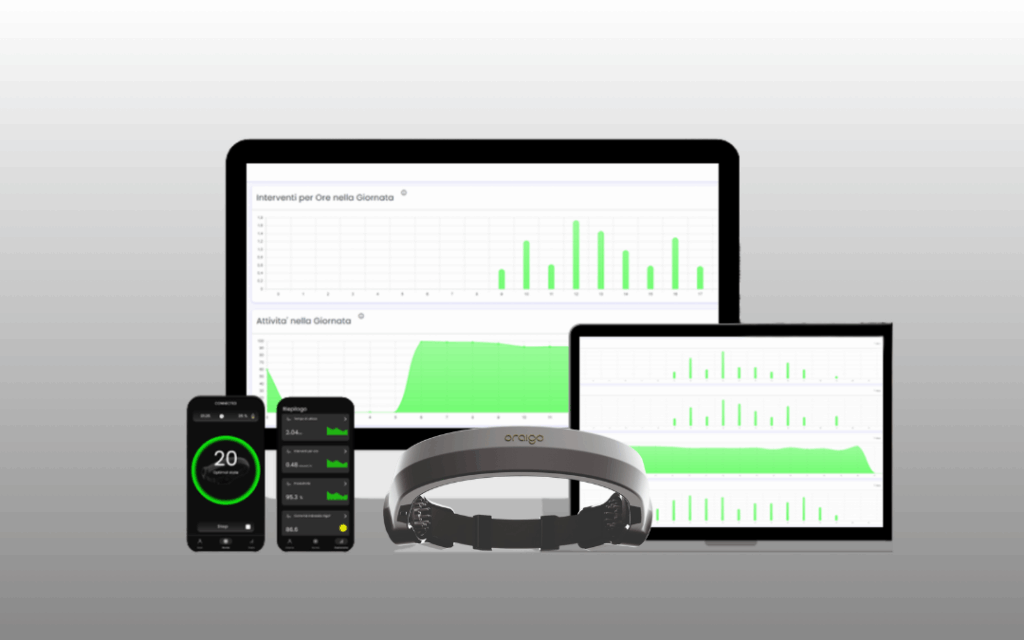
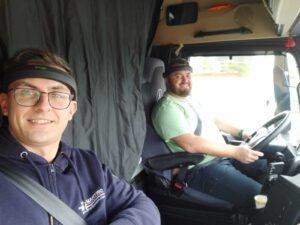
At the frontier of the field sit physiological monitoring solutions, most notably EEG-based devices that measure brainwave activity in real time. Rather than waiting for fatigue to manifest in visible behavior, these systems detect the neurological signatures of drowsiness before the driver is consciously aware of them. The result is a wider intervention window: the driver receives an alert early enough to respond safely, pull over, take a break, and return to the road in a state that is genuinely safer rather than one that merely looks acceptable on a camera feed.
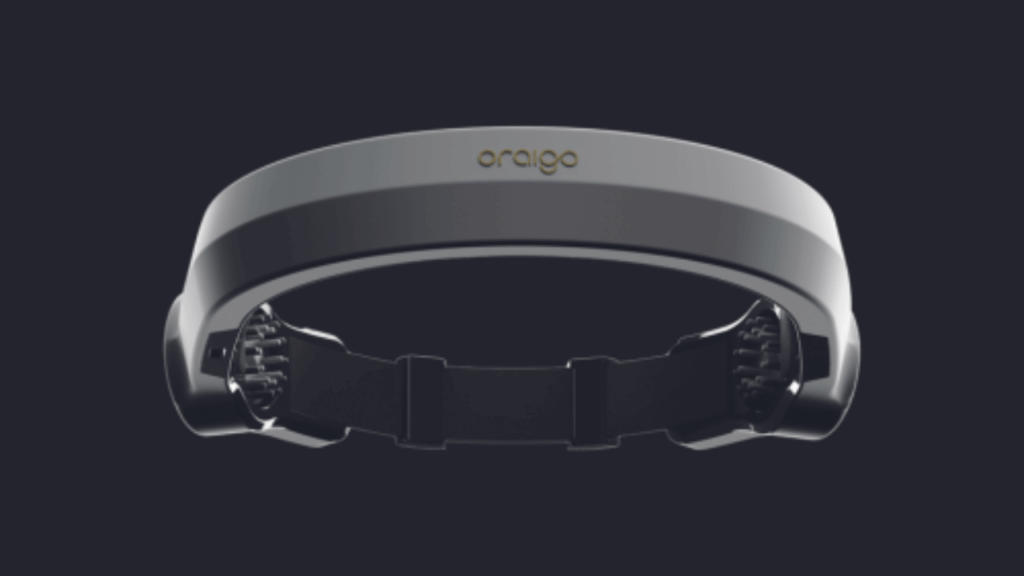
For fleet managers, the productivity logic here is straightforward. A driver who receives a fatigue alert, stops for twenty minutes, and completes their route safely is infinitely more productive than one who is involved in an incident that takes a truck off the road for days and triggers a cascade of operational, legal, and insurance consequences.
Electronic Logging Devices and Automated Compliance
Hours of Service compliance has historically been one of the most time-consuming administrative burdens in fleet management. Manual logbooks required drivers to track their own hours, created opportunities for error and manipulation, and left fleet managers with limited visibility into whether their drivers were operating within legal limits until after the fact.
Electronic Logging Devices changed that. By automatically recording driving time, rest periods, and duty status in real time, ELDs remove the administrative burden from drivers and give fleet managers accurate, auditable compliance data without relying on paper logs. Violations that previously slipped through become visible before they become fines. Inspections that used to mean hours of paperwork become straightforward because the records are already complete and accurate.
The productivity gain is twofold. Drivers spend less time on administrative tasks and more time doing their actual job. Fleet managers gain a reliable compliance overview that allows them to schedule smarter, avoid pushing drivers into violation territory, and demonstrate regulatory adherence to clients and insurers with confidence.
From Reactive to Proactive: The Shift That Changes Everything
Stop Responding to Incidents. Start Preventing Them.
There is a version of fleet safety management that most operators are familiar with. An incident happens. A report gets filed. A meeting takes place. Processes are reviewed, promises are made, and things return to normal until the next incident triggers the same cycle. It is a reactive model, and while it is better than doing nothing, it is also one of the most expensive ways to run a fleet.
The reactive model has a fundamental structural problem. By the time it activates, the damage is already done. The accident has happened, the truck is off the road, the driver is unavailable, and the business is absorbing costs that no amount of post-incident process improvement can recover. The review meeting does not unspend the insurance claim. The updated policy document does not undo the delivery delay.
Modern safety technology makes a different model possible, one where the data generated by telematics systems, driver monitoring tools, and fatigue detection devices is not simply stored for incident review but actively analyzed to prevent incidents from occurring in the first place.
The distinction matters enormously in practice. Consider what becomes possible when a fleet manager can see, in aggregate, that fatigue events are clustering around a specific shift window, say, drivers returning from long overnight runs between 4am and 6am on routes that exceed a certain distance threshold. That pattern, invisible in a reactive model, becomes immediately actionable in a proactive one. Shift structures can be adjusted. Rest stop requirements can be built into those specific routes. Driver scheduling can be redistributed to ensure that the most demanding runs go to drivers who have had adequate recovery time.
The same logic applies to vehicle behavior data. When telematics reveals that harsh braking events spike on a particular highway corridor every Tuesday and Thursday morning, the fleet is not looking at a driver discipline problem. It is looking at a route design problem, one that can be solved with a reroute or a revised departure time rather than a performance review that misidentifies the cause.
This shift from reactive to proactive is also where the relationship between safety data and driver wellbeing becomes most productive. When fleet managers approach patterns in fatigue or behavioral data as systemic signals rather than individual failures, the conversation with drivers changes entirely. Instead of using monitoring data to assign blame, it becomes a tool for building schedules that are genuinely sustainable, identifying routes that place unrealistic demands on drivers, and making operational decisions that reflect the reality of what drivers are experiencing on the road.
There is an important nuance here around data privacy. Drivers have legitimate concerns about how their personal and physiological data is collected, stored, and used. Responsible safety technology addresses this directly, anonymizing individual data while still surfacing fleet-wide patterns that are operationally useful. When drivers understand that monitoring systems are designed to protect them rather than surveil them, adoption rates improve and the data generated becomes more reliable because drivers are not working around the technology.
The fleets that have made this shift are not simply safer than their reactive counterparts. They are operationally smarter. They know more about their routes, their drivers, their vehicles, and their risk profile than any fleet running on incident reports and gut instinct ever could. And that knowledge translates directly into the kind of consistent, predictable performance that retains clients, attracts new ones, and compounds into a genuine competitive advantage over time.
How to Build a Safety-Driven Productivity Strategy
Practical Steps for Fleet Managers
Understanding the value of safety technology is one thing. Building an implementation strategy that actually delivers results inside a real organization, with real budget constraints, driver skepticism, and operational complexity, is another. The good news is that the path from awareness to measurable impact does not require a complete overhaul of existing systems. It requires a structured approach that starts with clarity, builds trust, and scales on the back of evidence.
Step 1: Audit Your Current Risk Profile
Before investing in any new technology, fleet managers need an honest picture of where their operation currently stands. Where are incidents happening most frequently? Which routes carry the highest risk? Which drivers or shift patterns are generating the most compliance flags or behavioral alerts? Which vehicles are accumulating maintenance issues that correlate with driver behavior?
Without this baseline, technology purchases become guesswork. With it, every investment decision has a specific problem it is solving and a specific metric against which its impact can be measured. A risk audit does not need to be elaborate. It needs to be honest, drawing on whatever data is already available, whether that is incident logs, insurance claims history, ELD records, or maintenance reports, and using it to identify the two or three areas where intervention would have the greatest impact.
Step 2: Choose Integrated, Complementary Tools
One of the most common and costly mistakes in fleet technology adoption is buying tools that do not talk to each other. A fatigue detection system that generates alerts in isolation, disconnected from the fleet management platform where dispatch decisions are made, is a fraction as useful as one that feeds its data into a centralized dashboard where patterns can be analyzed alongside telematics, compliance, and scheduling information.
When evaluating safety technology, integration capability should be a primary criterion alongside detection accuracy and ease of use. The goal is not a collection of individual tools. It is a connected safety ecosystem where data from each layer enriches the others, and where fleet managers have a single operational view that reflects what is actually happening across the entire fleet in real time.
Practically speaking, this means prioritizing vendors whose platforms are built with open APIs and established integrations with the telematics and ELD systems already in use. It also means resisting the temptation to adopt the most technically sophisticated tool available if it cannot be meaningfully connected to the rest of the operation.
Step 3: Train Drivers and Supervisors Together
Technology does not implement itself. The most advanced fatigue detection system in the world generates no value if drivers disable it, work around it, or simply distrust it enough to disengage from its alerts. Driver buy-in is not a soft consideration that sits alongside the technical implementation. It is a hard requirement for the technology to function as designed.
The single most effective way to build that buy-in is to involve drivers in the conversation from the beginning. Not as subjects of a new monitoring policy, but as stakeholders in a safety initiative that is explicitly framed around protecting them. When drivers understand what data is being collected, how it is being used, who has access to it, and what the company’s policy is around using it punitively versus supportively, resistance drops significantly.
Training should run in parallel for drivers and supervisors. Drivers need to know how to interact with the technology correctly, what the alerts mean, and what they are expected to do when one fires. Supervisors need to know how to read the data, how to have productive coaching conversations based on what it reveals, and how to distinguish between individual performance issues and systemic operational problems that the data is surfacing.
When both groups are trained together, a shared language develops around safety data that makes the whole system more effective. Supervisors stop using monitoring data as a disciplinary weapon. Drivers stop viewing it as surveillance. And the fleet starts generating the kind of clean, trustworthy data that actually improves decision-making.
When you sign up for Oraigo’s Free pilot, you receive a training session with one of our specialists. Where supervisors, and drivers alike, are given crucial tips and tricks to use the Oraigo ecosystem and smoothly integrate it into your fleet’s operations.
Step 4: Use Data to Optimize Schedules and Routes
This is the step where safety technology stops being a cost and starts being a competitive advantage. Once a fleet has reliable data flowing from its monitoring systems, that data becomes a direct input into operational planning.
Fatigue event logs reveal which shift patterns are unsustainable and which routes are placing disproportionate demands on drivers. Telematics data identifies the departure times and road conditions that correlate with the highest incident rates. Driver behavior trends point to the coaching interventions that will have the most impact on both safety and fuel efficiency.
Used consistently, this data allows fleet managers to build schedules that reflect the reality of what drivers can sustain rather than the optimistic assumptions that tend to creep into planning when the human cost of overextension is invisible. Routes get designed around real risk data rather than historical habit. Rest requirements get built into operational planning rather than treated as obstacles to delivery targets.
The result is a fleet that runs more smoothly not despite its safety constraints but because of them. Drivers who are adequately rested make fewer errors, consume less fuel through smoother driving, generate fewer maintenance issues through better vehicle handling, and stay in their roles longer because the job feels manageable rather than relentless.
Step 5: Run a Pilot Before Full Rollout
Scaling any new technology across an entire fleet simultaneously is high risk. Hardware malfunctions, integration issues, driver resistance, and unexpected workflow disruptions are all easier to manage at small scale than across a hundred vehicles at once.

A structured pilot program, typically involving somewhere between five and fifteen vehicles over a period of four to eight weeks, allows a fleet to gather real operational data on how the technology performs in its specific environment. It surfaces the edge cases and integration challenges that vendor demonstrations never show. It gives drivers who participate a sense of ownership over the rollout, making them more likely to become advocates rather than resistors when the technology scales.
Perhaps most importantly, a well-documented pilot builds the internal business case that larger technology investments almost always require. When a fleet manager can show leadership a concrete before-and-after comparison from a real subset of their own operation, approval for full rollout becomes significantly easier to secure than it would be on the basis of vendor case studies alone.
If you want to benefit from 30 days of free use of our truck driver fatigue monitoring system, get in touch with us!
You can also book your slot to talk with one of our specialists.
Improving Fleet Productivity Through Safety: Some Food for Thought
The most productive fleets operating today did not get there by choosing efficiency over safety. They got there by understanding that the two are inseparable, and by building their operational strategy around that understanding.
Every technology covered in this post, from real-time telematics to truck driver fatigue monitoring, from AI-powered driver behavior systems to automated compliance tools, serves a dual purpose. It protects the people operating the vehicles and it generates the data, efficiency gains, and cost reductions that make a fleet genuinely competitive. That is not a coincidence. It is the natural outcome of investing in infrastructure that treats drivers as the most valuable and most vulnerable asset in the operation.
The fleets that will lead the industry over the next decade are not the ones with the most trucks or the most aggressive delivery targets. They are the ones that have figured out something their competitors are still treating as a trade-off: that a driver who arrives safely is always more productive than one who does not arrive at all.
If your fleet is still managing safety reactively, waiting for incidents to force change rather than using technology to prevent them, the gap between where you are and where your most competitive peers already are is growing. The tools exist. The business case is clear. The only remaining question is how much longer the status quo is something your operation can afford.
Now is the time to improve fleet productivity through safety, not as a compliance exercise, but as the smartest operational decision available to a modern fleet manager.
If you want to learn more about the best truck driver fatigue monitoring technology and how it can improve safety and increase productivity, check out our blog post about it!