

Why Wearable Fatigue Monitors Are A Must in Today’s Fleet Safety Procedures
Marco Rossini had been driving trucks for 23 years. He knew every curve of the A1 between Milan and Naples, could predict weather changes by the wind against his cab, and prided himself on never missing a delivery window.
Until the night he woke up in a hospital bed, because his wearable fatigue monitor wasn’t invented yet.
“I don’t remember closing my eyes,” he told investigators. His 40-ton truck had crossed three lanes in 4.2 seconds while he experienced what scientists call a ‘microsleep.‘ The family in the sedan never saw him coming.
This is why wearable fatigue monitors are revolutionizing road safety. This invisible killer stalks 148,000 Italian drivers every year, causing accidents that modern wearable safety tech could prevent. Unlike drunk driving, you can’t test for fatigue at checkpoints or smell it on someone’s breath. But a wearable fatigue monitor can detect it before disaster strikes.
How Wearable Fatigue Monitors Detect What Drivers Can’t
Here’s what makes fatigue terrifying: your brain starts shutting down long before you feel tired. By the time you’re fighting to keep your eyes open, you’ve already been cognitively impaired for up to an hour. You’re essentially driving blind while your eyes are still open.
Think you’d notice if you fell asleep for two seconds?
At highway speeds, you’ve just traveled the length of a football field. Completely unconscious.
This is where wearable fatigue monitors change everything. Unlike traditional safety measures, these devices detect the invisible neurological changes that precede accidents on the road.
Why Traditional Safety Fails Without Wearable Fatigue Monitors
Fatigue is a liar.
It convinces you that rolling down the window helps (it doesn’t). That another espresso will do the trick (cognitive function still plummets). That you’ll “just push through” the last 50 kilometers (the same last words found in countless accident reports).
The transportation industry’s dirty secret? Without wearable fatigue monitors, we’re using stone-age tools to prevent accidents on the road. Coffee stations, scheduled breaks, even rumble strips, they’re Band-Aids on a severed artery.
Telling exhausted drivers to “be careful” is like telling someone having a heart attack to “breathe better.” That’s why wearable fatigue monitors go beyond warnings—they predict danger before it happens.
But what if your truck could read your mind?
Not metaphorically. Literally. That’s exactly what modern wearable fatigue monitors do.
Inside the Wearable Fatigue Monitor Revolution
Picture this: You’re wearing what looks like a slim athletic headband—a wearable fatigue monitor that weighs less than your smartphone. You forget it’s there after five minutes.
But this wearable safety tech is reading your brain’s electrical signals 500 times per second, preventing accidents on the road before they happen.
When your neurons start firing in the telltale pattern of approaching sleep—a pattern you won’t consciously detect for another 20 minutes—the wearable fatigue monitor knows. Before your eyelids get heavy. Before you start drifting in your lane. Before you become another accident statistic on the road.
The moment your brain waves shift toward the danger zone, the wearable fatigue monitor springs into action: your phone lights up like a Christmas tree, an alarm cuts through your music, and the device vibrates against your temples. Not annoying enough to cause an accident, but impossible to ignore.
One driver described his wearable fatigue monitor perfectly: “It’s like having your grandmother grab your ear when you’re about to do something stupid—except she’s preventing accidents on the road.”
The €50 Million Proof: Wearable Fatigue Monitors in Action
When Italgas deployed wearable fatigue monitors across their fleet, skeptics predicted a revolt. Would tough-as-nails drivers accept wearable safety tech watching over them?
The results of implementing wearable fatigue monitors:
- Accidents on the road down 25% in six months
- Insurance premiums slashed by €2.3 million
- Zero fatigue-related fatalities (down from 3-4 annually)
- Drivers requesting wearable fatigue monitors for personal vehicles
“I thought this wearable safety tech would be like Big Brother in my cab,” admits Giovanni, who’s been driving hazardous materials for two decades. “Instead, my wearable fatigue monitor is like having a guardian angel preventing accidents on the road.”
How Wearable Fatigue Monitors Transform Fleet Operations
At 2:47 AM on a Tuesday, the Fleets control room in Bologna demonstrates how wearable fatigue monitors prevent accidents on the road in real-time. Dozens of green dots move across digital maps—each one a driver wearing a fatigue monitor, each one protected by wearable safety tech that never blinks.
Suddenly, a dot turns yellow.
“Driver 47’s wearable fatigue monitor showing early warning patterns,” the system announces. Giuseppe, hauling pharmaceuticals to Rome, still has 200 kilometers to go. His wearable safety tech shows the distinctive brain wave pattern that predicts accidents on the road.
The fleet manager sends a message: “Rest area 12km ahead. Mandatory 20-minute break.”
Two years ago, before wearable fatigue monitors, this would have ended differently. Maybe Giuseppe would have made it. Maybe he’d have become another statistic. But tonight, wearable safety tech is preventing accidents on the road.
“People ask if wearable fatigue monitors feel invasive,” Giuseppe says later. “I tell them: my cousin felt the same way about seatbelts in the ’80s. Now would you drive without one?”
The Science Behind Wearable Fatigue Monitors
Modern wearable fatigue monitors use the same EEG technology that doctors use to monitor brain surgery patients. This wearable safety tech detects the electrical signatures of exhaustion with 97% accuracy, preventing accidents on the road through early intervention.
Here’s what happens in the three seconds before a microsleep—and how wearable fatigue monitors detect it:
Second 1: Your brain’s theta waves spike. A wearable fatigue monitor identifies this immediately. You still think you’re alert.
Second 2: Reaction time degrades by 50%. The wearable safety tech is already alerting you.
Second 3: Without a wearable fatigue monitor, you’d be unconscious with a death grip on the wheel.
Unlike camera-based systems that watch for yawning or lane drifting (often too late), wearable fatigue monitors catch exhaustion at its source: the neural activity shifts that begin 15-20 minutes before visible symptoms.
Why Professional Drivers Trust Wearable Fatigue Monitors
Antonio, a 30-year veteran driver, initially resisted his wearable fatigue monitor. Built like a refrigerator, with forearms that could crush walnuts—and they wanted him to wear wearable safety tech that looked like a yoga accessory?
“I threw the wearable fatigue monitor in my glove box for two weeks,” he admits. “Then Stefano—young kid, maybe 25—fell asleep on the A4. The accident on the road destroyed him psychologically. He hasn’t driven since.”
The next morning, Antonio put on his wearable fatigue monitor.
Three days later, it prevented an accident on the road.
“My wearable fatigue monitor went off outside Modena. I was angry, pulled over cursing the stupid wearable safety tech. Then I realized I couldn’t remember the last 10 kilometers. Complete blackout while driving.”
Antonio now trains new drivers on wearable fatigue monitors: “This wearable safety tech will prevent more accidents on the road than any skill I can teach you.”
Wearable Fatigue Monitors: The Data That Shocked Fleet Managers
Wearable fatigue monitors revealed patterns nobody expected about preventing accidents on the road:
The 14:30 Phenomenon: Wearable safety tech shows more microsleeps occur after lunch than during night shifts.
The Tuesday Trap: Wearable fatigue monitors detect spike in dangerous patterns on Tuesday nights—drivers recovering from weekend schedule changes while pushing hard for quotas.
The Experience Paradox: Veteran drivers’ wearable fatigue monitors showed they were MORE likely to ignore early warnings, trusting experience over wearable safety tech—until they saw their own brain wave data.
One fleet manager reviewing six months of wearable fatigue monitor data nearly fell off his chair. “Our wearable safety tech was showing us exactly when, where, and why accidents on the road were about to happen. It’s like having predictive superpowers.”
The business case for wearable fatigue monitors:
- Preventing accidents on the road: 25% reduction
- Insurance savings with wearable safety tech: 30-40%
- Fuel efficiency (alert drivers maintain steady speeds): 8% improvement
- Driver retention (they feel protected by wearable fatigue monitors): up 15%
The Hidden Cost of Not Using Wearable Fatigue Monitors
Every safety manager knows the official costs when wearable safety tech could have prevented accidents on the road: vehicle repairs, insurance claims, legal fees, lost cargo. But ask Marco Rossini about the real price of not having a wearable fatigue monitor.
“I still see that family sometimes,” he says quietly about the accident his wearable safety tech could have prevented. “Not literally—in my dreams. They survived, barely. Six months of rehabilitation. A lifetime of trauma.”
Marco now wears his wearable fatigue monitor even off-duty. “People think I’m paranoid. I tell them: this wearable safety tech is preventing accidents on the road every single day.”
Why Wearable Fatigue Monitors Succeed Where Everything Else Failed
Without wearable fatigue monitors, preventing accidents on the road relies on failed strategies:
Coffee stations? Caffeine takes 20 minutes to work. Wearable fatigue monitors detect danger instantly.
Mandatory rest? Can’t reset circadian rhythms. Wearable safety tech works with any schedule.
Rumble strips? Only work after impairment. Wearable fatigue monitors predict 20 minutes ahead.
Energy drinks? Create dangerous crashes. Wearable safety tech provides consistent monitoring.

“Before wearable fatigue monitors, we treated symptoms while ignoring the disease,” explains Dr. Marchetti. “Now wearable safety tech is preventing accidents on the road through actual neuroscience.”
The Wearable Fatigue Monitor Revolution Transforming Roads
Today, thousands of drivers wear these lightweight wearable fatigue monitors. They look like they’re heading to the gym, but they’re actually using wearable safety tech that’s preventing accidents on the road every hour of every day.
Each journey with a wearable fatigue monitor generates millions of data points. AI systems identify risk factors, making wearable safety tech smarter at preventing accidents on the road.
The unexpected twist? Drivers started wearing their wearable fatigue monitors at home.
“My wife noticed my wearable safety tech alerting during evening TV,” laughs Giuseppe. “Turns out I was falling asleep every night at 21:30. Now I just go to bed instead of pretending to watch TV.”
The Future of Wearable Fatigue Monitors and Road Safety
Imagine vehicles that automatically adjust when wearable fatigue monitors detect risk. Navigation systems that receive data from your wearable safety tech and route you through safer roads. Trucks whose wearable fatigue monitors won’t allow starting if severe exhaustion is detected.
“Wearable fatigue monitors aren’t just preventing accidents on the road anymore,” explains Dr. Lucia Romano at Milan Polytechnic. “This wearable safety tech is redesigning human-machine collaboration.”
Some companies are integrating wearable fatigue monitors with autonomous systems—when the wearable safety tech detects fatigue, vehicles gradually increase automation, preventing accidents on the road through graduated intervention.
The Hard Truth About Wearable Fatigue Monitors
If you manage a fleet without wearable fatigue monitors in 2025, you’re choosing to accept preventable accidents on the road.
“We don’t let drivers work drunk,” points out Sofia Bernardi. “Studies show fatigue causes identical impairment. Wearable fatigue monitors are as essential as breathalyzers for preventing accidents on the road.”
Insurance companies agree. Some offer 40% reductions for fleets using certified wearable fatigue monitors. Others require wearable safety tech for coverage. The market has spoken: preventing accidents on the road requires wearable fatigue monitors.
Next-Generation Wearable Fatigue Monitors from Oraigo
In Oraigo’s Milan headquarters, the next generation wearable fatigue monitor is being tested. This advanced wearable safety tech is 30% lighter, works with prescription glasses, and predicts fatigue 45 minutes before onset—revolutionary for preventing accidents on the road.
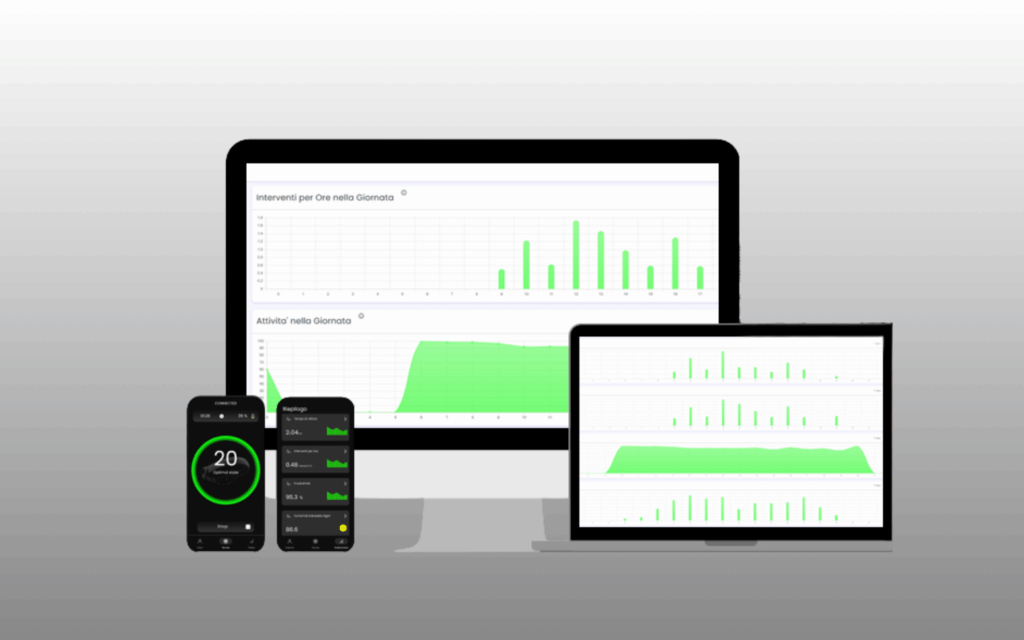
“Our wearable fatigue monitors are moving from reaction to prediction,” explains the lead engineer. “Imagine your wearable safety tech telling you before starting that you’ll need a break at kilometer 347. That’s the future of preventing accidents on the road.”
Beta testers of the new wearable fatigue monitors report better sleep at home. The wearable safety tech shows exactly how sleep quality affects next-day performance, transforming how drivers approach rest.
“My grandson asked why I wear a ‘brain reader’ wearable fatigue monitor to work,” says Antonio. “I told him it’s wearable safety tech that keeps grandpa safe. He said, ‘So it prevents accidents on the road?’ Smart kid gets it better than most adults.”
Choose Wearable Fatigue Monitors. Choose Life.
Every fleet manager faces the same decision: implement wearable fatigue monitors now, or wait for tragedy to force your hand.
The data on wearable safety tech preventing accidents on the road is undeniable. The testimonials from drivers using wearable fatigue monitors are powerful. The business case is bulletproof.
But ultimately, wearable fatigue monitors aren’t about spreadsheets.
They’re about Giuseppe making it home because his wearable safety tech caught what he couldn’t see.
They’re about Marco’s trauma that a wearable fatigue monitor would have prevented.
They’re about every accident on the road that doesn’t have to happen.
Transform Your Fleet Safety with Oraigo’s Wearable Fatigue Monitors
At Oraigo, we’ve perfected wearable fatigue monitors that actually prevent accidents on the road. Our AiGo wearable safety tech doesn’t just monitor—it protects. Our comprehensive platform transforms entire safety cultures through intelligent wearable fatigue monitors.
We’re not just selling wearable safety tech. We’re offering the ability to tell every driver’s family: “Our wearable fatigue monitors are preventing accidents on the road, bringing them home safe.”
Italgas reduced accidents by 25% with our wearable fatigue monitors.
Antonio discovered his hidden danger through wearable safety tech.
Marco wishes he’d had our wearable fatigue monitor three years ago.
What’s your story going to be?
Implement Wearable Fatigue Monitors Before It’s Too Late
Schedule your free consultation about how our solution can transform your fleet safety. See how our wearable safety tech is preventing accidents on the road for companies across Europe.
Contact us at info@oraigo.com
Because the question isn’t whether fatigue will strike your fleet. It’s whether your wearable fatigue monitors will be ready when it does.
Don’t wait for an accident. Let Oraigo’s wearable safety tech start preventing accidents on the road today.

