Driver Fatigue detection methods: Which to choose
The science behind EEG-based fatigue detection is clear. But science alone doesn’t make a purchasing or deployment decision. Fleet managers, safety officers, and anyone evaluating driver fatigue technology needs to understand how EEG-based fatigue detection compares to the other solutions on the market, not just in laboratory conditions, but in the real operational environments where these systems live or die.
The fatigue detection landscape can be divided into four broad categories: behavioural monitoring, vehicle-based monitoring, heart-rate monitoring, and EEG-based monitoring. Each has genuine strengths. Each has limitations that matter enormously in practice. And understanding where each sits on the spectrum from reactive to proactive is the key to evaluating them honestly.
In this article, we will compares EEG-based fatigue detection method with other methods, in order to help you make an informed decision about which method meets your fleet’s demands.
EEG-Based Fatigue Detection vs other methods: A Comparative Analysis
Understanding how EEG-based fatigue detection for driver fatigue works is one thing. Understanding why it represents a genuine step forward, rather than simply a different flavour of technology doing roughly the same job, requires an honest comparison with the other detection methods currently in use across the industry.
That comparison is worth making carefully, because the market for driver fatigue technology is crowded with competing claims, and the differences between methods are not always presented honestly. Some are differences of degree: one system detecting fatigue slightly earlier or slightly more accurately than another. Others are differences of kind: systems operating on fundamentally different principles, at fundamentally different points in the fatigue cascade, with fundamentally different implications for how much protection they actually provide.
The framework that cuts through the noise is simple. Ask of any fatigue detection method: what exactly is it measuring, and when in the progression from alert to dangerously impaired does that measurement become available? The answers to those two questions tell you almost everything you need to know about how much protection a given method actually provides.
The Fatigue Cascade: Why Timing Is Everything
Before comparing individual methods, it helps to have a clear picture of the sequence they are trying to detect.
Fatigue does not arrive all at once. It follows a progression, a cascade of changes that begins at the neurological level and gradually works its way outward into physiology, behaviour, and vehicle control. Roughly speaking, that cascade looks like this:
The brain’s electrical activity begins to shift first. Theta waves increase, beta waves decrease, alpha power rises in the frontal regions associated with sustained attention. This is happening in the driver’s brain while they still feel alert, while their eyes are open and tracking normally, while their hands are steady on the wheel. This is the earliest detectable signal of fatigue, and it is invisible to every detection method except EEG-based fatigue detection.
Minutes later, the autonomic nervous system begins to respond. Heart rate variability patterns shift as the body moves toward parasympathetic dominance. Skin conductance may change. These physiological signals are real fatigue indicators, but they are responding to a neurological state change that has already been underway for several minutes.
Later still, the fatigue becomes visible in the driver’s face and body. Blink frequency changes. Eye closure duration increases. Yawning begins. Head position shifts. These are the signals that camera-based behavioural monitoring is designed to detect, but by the time they are present, the neurological impairment has been building for a significant period.
Finally, the fatigue expresses itself in vehicle control. Lane keeping degrades. Steering corrections become more frequent and less smooth. Following distances become inconsistent. This is what vehicle-based systems are measuring, the last signal in the cascade, the furthest downstream from the neurological origin.
Every minute of that cascade represents a minute of undetected impairment. The method that catches the earliest signal provides the most protection. With that framework in place, the comparison becomes straightforward.
Behavioural Monitoring: The Visible Tip of an Invisible Iceberg
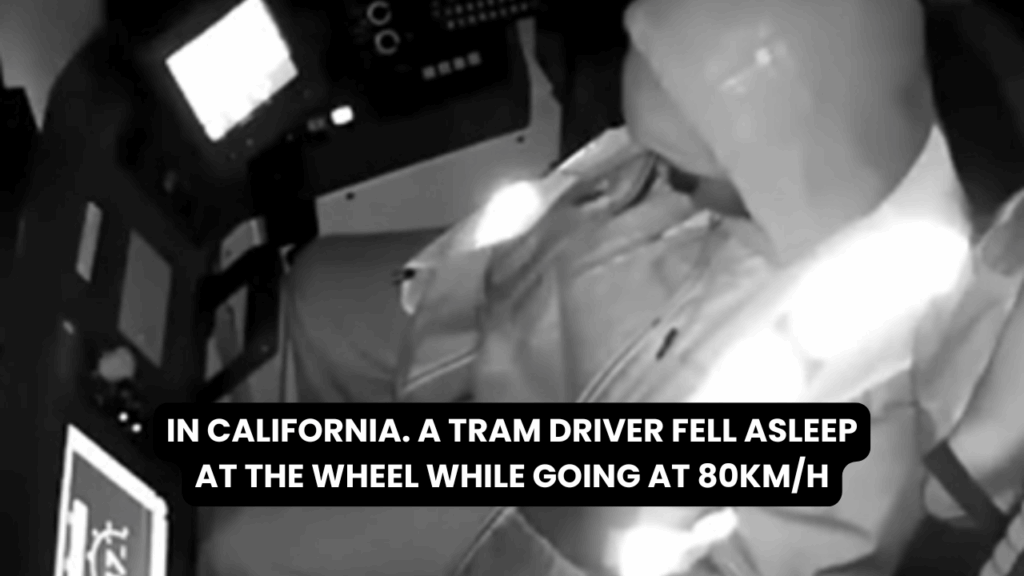
Camera-based behavioural monitoring is the most widely deployed fatigue detection technology in commercial fleets today, and its dominance is understandable. The hardware is mature and relatively affordable. Integration with existing telematics platforms is straightforward. The technology requires no cooperation from the driver, the camera watches regardless of whether the driver is engaging with it. And the signals it measures, eye closure, blink patterns, yawning, head position, are genuine, well-validated indicators of fatigue.
The limitation is not whether these signals are real. It is where they sit in the cascade.
PERCLOS, the percentage of eyelid closure over time, the primary metric of most camera-based systems, becomes a reliable fatigue indicator when it crosses roughly 80% closure for an extended period. At that threshold, the driver is in a state of significant drowsiness. Their neurological impairment has been accumulating for several minutes. The camera system is detecting the visible surface of a problem whose root cause is already well established.
There are also real-world performance challenges that controlled evaluations tend to understate. Lighting transitions, tunnels, low sun angles, moving between shadow and direct light, can destabilise eye-tracking algorithms. Sunglasses and prescription glasses interfere with PERCLOS measurement. Drivers from certain ethnic backgrounds have eyelid geometries that increase false positive rates on systems trained primarily on homogeneous datasets. Individual variation in baseline blink rate means that a blink frequency that indicates drowsiness in one driver is normal resting behaviour in another.
None of these limitations make behavioural monitoring worthless. They make it what it is: a useful late-stage detection layer that catches fatigue after it has progressed to the point of visible expression. For protecting against the earliest and most insidious phases of impairment — the window where intervention would be most valuable — behavioural monitoring is structurally unable to help.
Position in the cascade: Late. Detects fatigue after neurological and physiological changes are already well established. Best role in a fleet safety architecture: Secondary confirmation layer and late-stage safety net.
Vehicle-Based Monitoring: Measuring the Consequence, Not the Cause
Lane departure warning systems, steering pattern analysis, and driving behaviour monitoring take an indirect approach to fatigue detection. Rather than observing the driver, they observe what the driver’s impairment does to the vehicle. The logic has genuine validity — a fatigued driver does make more erratic steering corrections, does drift toward lane boundaries more frequently, does brake less smoothly. These are real correlations.
But measuring a consequence is not the same as measuring a cause, and the gap between the two matters enormously in practice.
By the time fatigue has degraded vehicle control enough to trigger a statistically reliable alert, the driver’s cognitive performance has been significantly compromised for an extended period. The vehicle-based system is reading the end product of a neurological process that began long before the vehicle showed any sign of it. It is, in detection terms, the last signal in the cascade, the furthest possible point from the neurological origin of the problem.
The signal-to-noise challenge is also severe. Vehicles deviate from lane centres for dozens of reasons that have nothing to do with driver fatigue: road camber, crosswinds, construction zone navigation, deliberate lane positioning for overtaking, vehicle handling characteristics, and inattention that is not fatigue-related. Disentangling fatigue-induced lane drift from all of these confounds requires contextual intelligence that most vehicle-based systems lack, producing false alarm rates that can erode driver trust in the alerts.
Vehicle-based systems are also particularly blind to the specific vulnerability created by circadian rhythm effects. A driver in the 2–6 AM alertness trough may be significantly neurologically impaired while their vehicle behaviour still looks relatively normal — right up until the moment it doesn’t. The system provides no warning during the period of building impairment, and then fires an alert at the moment when the window for safe intervention is already narrow.
Position in the cascade: Last. Detects fatigue only after it has produced measurable degradation in driving performance. Best role in a fleet safety architecture: Final safety net layer, valuable as a last line of defence but not as a primary detection method.
Heart Rate and HRV Monitoring: The Right Direction, Not Quite Far Enough
Physiological monitoring through heart rate variability represents a meaningful step toward the source of the problem. HRV, the variation in time between consecutive heartbeats, is a well-established marker of autonomic nervous system state, and it changes in measurable ways as the body moves from alert wakefulness toward drowsiness. Specific frequency components of HRV shift in patterns that researchers have mapped to fatigue states with reasonable reliability.
The practical advantage of HRV monitoring is significant. Smartwatches and fitness trackers that many drivers already wear can capture this data passively, without any additional hardware burden. For organisations looking to add a physiological dimension to their fatigue monitoring without introducing a new wearable device, leveraging existing consumer devices is an attractive proposition.
But there are two limitations that matter for serious fatigue detection applications.
The first is physiological distance. The heart is regulated by the brain, but it is not the brain. HRV reflects the broad state of the autonomic nervous system, which responds to fatigue but also to hydration levels, caffeine, body temperature, physical exertion, emotional stress, illness, and fitness level. Isolating the fatigue component of an HRV signal from all these confounds is genuinely difficult, and the result is that HRV-based fatigue detection tends toward lower specificity than EEG, more false positives, more missed events, and more variable performance across different individuals and conditions.
The second limitation is timing. The neurological shift precedes the autonomic shift. The brain enters its fatigue trajectory before the autonomic nervous system response becomes large enough to produce a reliable HRV-based alert. HRV monitoring catches fatigue earlier in the cascade than behavioural or vehicle-based methods, but later than EEG-based fatigue detection. In the context of early intervention, that gap matters.
Position in the cascade: Mid-stage. Detects fatigue after neurological changes are underway but before behavioural expression. Best role in a fleet safety architecture: Valuable complementary signal, particularly for monitoring cumulative fatigue across a shift. Most powerful when combined with EEG-based fatigue detection rather than used as a standalone method.
EEG Monitoring: Measuring the Origin
Against the backdrop of these alternatives, the position of EEG in the fatigue cascade is precise and unambiguous. EEG measures brain activity directly, not a consequence of impaired brain function, not an autonomic nervous system response to neural state change, not a vehicle-level expression of cognitive deterioration, but the neural state itself, at the moment it begins to change.
The characteristic EEG fatigue signature, rising theta power, falling beta power, increasing frontal alpha, shifting theta/alpha and theta/beta ratios, appears in the brain’s electrical activity several minutes before any physiological, behavioural, or vehicle-based signal reflects what is happening. Research comparing detection modalities in controlled driving studies has consistently reproduced this finding: EEG changes precede behavioural and physiological indicators by a margin large enough to be operationally significant.
Several minutes of additional warning time is not a marginal improvement in a road safety context. It is the difference between a driver who receives an alert with ample time and cognitive capacity to respond safely, and a driver who receives an alert at the moment their impairment is already critical. At 100 km/h, three minutes of advance warning is the difference between a planned, controlled stop and an emergency.
EEG-based fatigue detection also offers a specificity advantage that no other modality can match. Heart rate changes with exertion, stress, caffeine, and dozens of other variables. Eye closure happens for many reasons besides fatigue. But the specific spectral shift pattern that EEG fatigue detection is built around, the characteristic redistribution of brain wave power across frequency bands as the brain moves from active wakefulness toward drowsiness, is meaningfully selective to the fatigue state. It is not a perfect discriminator, and no detection method is, but it is a more direct and specific signal than any alternative currently available in a deployable wearable form factor.
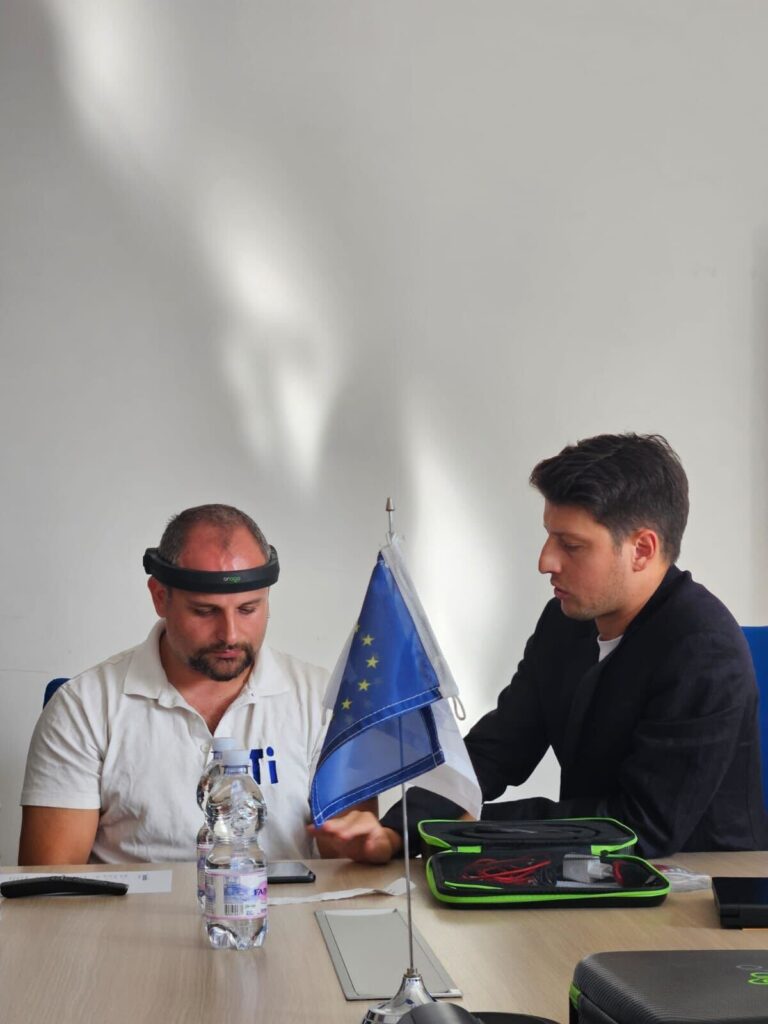
The honest trade-offs of EEG deserve acknowledgement.
A camera system requires no cooperation from the driver. An EEG headband does, it requires the driver to put it on, wear it correctly, and keep it on throughout the shift. This adoption dependency is a real operational challenge that the other methods do not share, and it requires deliberate management through device comfort, driver communication, and organisational culture.
EEG signal quality is sensitive to electrode contact. A poorly fitted headband, degraded electrode surfaces, or excessive movement artefact can produce data that is difficult to interpret reliably. Device maintenance standards and fitting protocols are operational requirements that camera-based systems simply do not have.
And EEG hardware carries a higher unit cost than a dashboard camera. This is a real factor in fleet deployment economics, though one that needs to be evaluated against the full cost of ownership — including false alarm rates, intervention timing, and the actuarial value of earlier detection — rather than as a simple unit price comparison.
Position in the cascade: First. Detects fatigue at the neurological origin, before any downstream signal is available. Best role in a fleet safety architecture: Primary detection layer, providing the earliest warning and the longest intervention window of any available method.
Putting It Together: The Case for Layered Detection
| Method | What It Measures | Position in Cascade | Intervention Window |
| EEG headband | Brain electrical activity | First — neurological origin | Longest |
| HRV / cardiac | Autonomic nervous system | Mid-stage | Moderate |
| Behavioural (camera) | Facial and postural signs | Late — visible symptoms | Short |
| Vehicle-based | Driving performance | Last — vehicle degradation | Shortest |
No single method is without limitation. The most sophisticated fatigue detection deployments increasingly treat these methods not as competitors but as complementary layers in a detection architecture, each covering the blind spots of the others, each adding a dimension of confidence that no single modality alone can provide.
But within that architecture, the role of each layer is not equal. The EEG headband for driver fatigue is the only component that operates at the source, the only method that reads the brain’s own account of its alertness state before that state has expressed itself anywhere else. Every other layer is catching what EEG either already caught minutes earlier, or what slipped through because the headband was temporarily off or the signal was momentarily degraded.
That asymmetry is why EEG occupies the primary position in any serious multi-modal fatigue detection architecture. Not because the other methods are without value, they are not, but because the question of how early you can detect fatigue has one answer, and it points to one technology.
The brain changes first. The only way to know that is to measure the brain.
Remove the Problem from the Root: The Brain
Most road safety technology is built around a simple assumption: that danger becomes visible before it becomes fatal. Lane departure systems wait for the vehicle to drift. Camera monitors wait for the eyes to close. Hours-of-service rules wait for the clock to run down. All of them are watching for evidence of a problem that, by the time it is visible, has already been developing silently for minutes.
Fatigue doesn’t wait for detection. It works ahead of it.
This is the problem that an EEG headband for driver fatigue is uniquely built to solve.
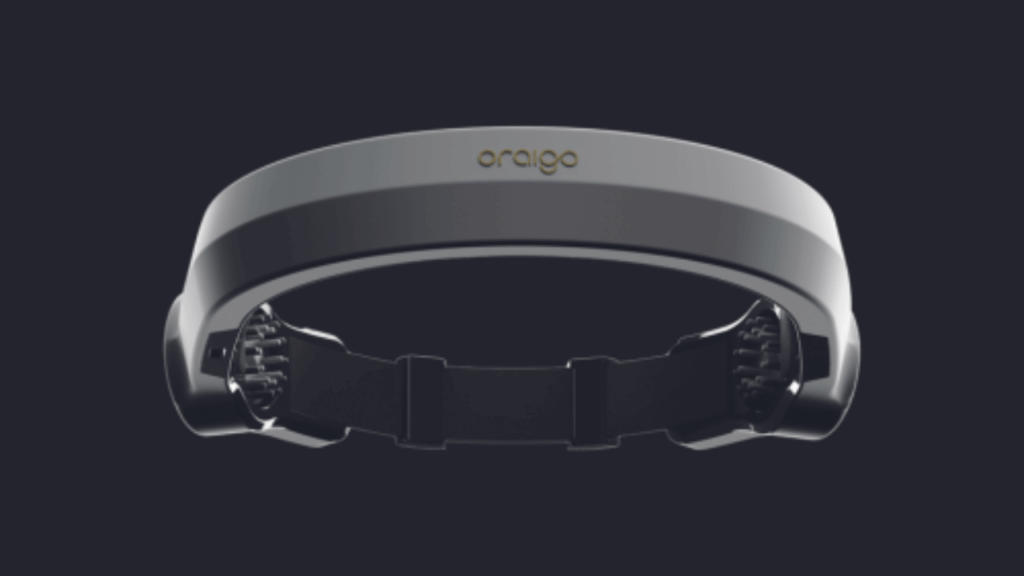
Not by watching the vehicle. Not by watching the face. But by reading the brain’s own electrical activity, the only signal that carries reliable information about cognitive state before that state has had any chance to express itself elsewhere. The rising theta waves, the falling beta, the shifting power ratios that precede drowsiness by several critical minutes: these are the brain’s own account of what is happening, written in a language that has been consistent since the first EEG recording was made over a century ago, and that we now have the technology to read in real time, from a device light enough to forget you are wearing.
What Early Adoption Actually Means
There is a version of this decision that frames EEG fatigue monitoring purely as a compliance investment, something to be evaluated against regulatory timelines and minimum viable safety standards. That framing is not wrong, but it is narrow, and it misses the more significant opportunity.
The fleet that deploys EEG monitoring today is not just checking a future compliance box. It is building something that cannot be bought later: a longitudinal dataset of driver fatigue patterns that will make its predictive models sharper than any competitor’s. An organisational culture in which driver wellness is measured rather than assumed, and in which the data to improve scheduling, routing, and rest policy actually exists. A relationship with drivers built on the demonstrated belief that their neurological safety matters, not as a policy statement, but as an operational fact reflected in the technology the company invests in.
These are advantages that compound over time. A safety culture established early deepens with experience. A fatigue dataset accumulated over years becomes the foundation for AI capabilities that a fleet starting from zero cannot replicate quickly. The institutional knowledge of what fatigue looks like in your specific operational context, your routes, your shift patterns, your driver population, is not available from any vendor. It can only be built from your own data, and it can only begin accumulating from the moment you start collecting it.
The Only Metric That Matters
Technology evaluations have a tendency to get lost in specifications, detection latency, false positive rates, battery life, integration APIs. These matter, and this article has covered them in detail precisely because they matter. But they are means, not ends.
The end is this: a driver who receives a warning early enough to pull over safely. A family that does not receive a phone call. A fleet manager who sees an alert on a dashboard rather than a report of an incident. A road shared by drivers whose brains are being monitored by something more reliable than their own fatigued self-assessment.
Every minute of advance warning that EEG detection provides over the next available alternative is a minute in which the driver can act, the vehicle can be stopped, and the worst outcome can be avoided. That is not an incremental improvement. At the speeds and masses involved in commercial vehicle operations, it is the difference between a near-miss and a fatality.
The brain knows first. The question for every organisation that puts drivers on public roads is simply whether they are listening to it.
Ready to see EEG fatigue detection in action?
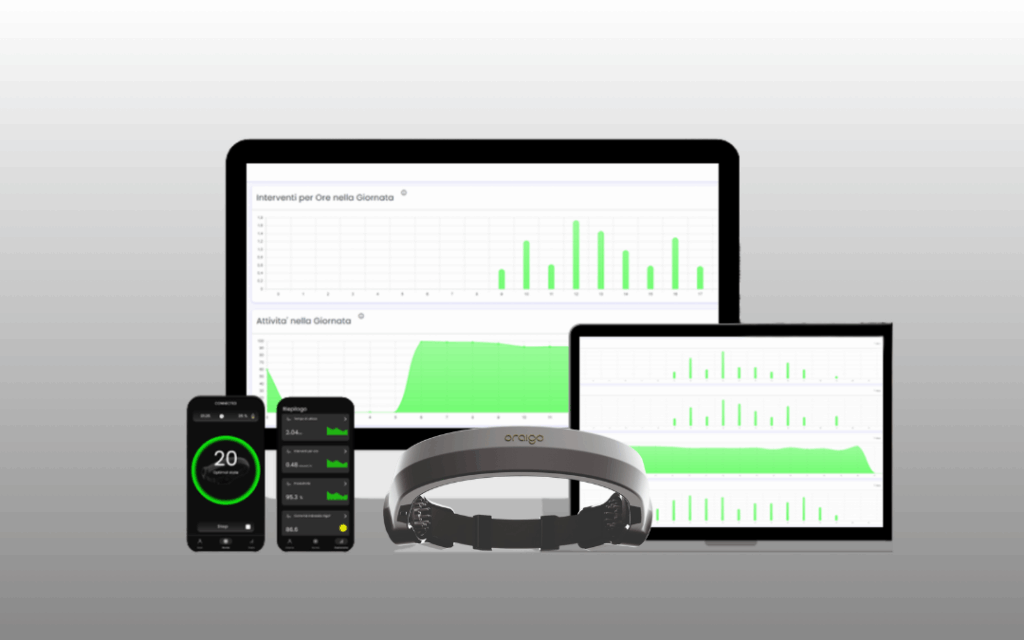
Explore Oraigo’s technology or book a free personalised demo and find out what your fleet’s fatigue pattern actually looks like, and how to tackle it.