

Transpotec Logitec 2026 brought together the best of the transport and logistics world under one roof in Fiera Milano, Italy, and Oraigo was there to make its mark. As one of the most anticipated events in the European freight and road transport calendar, Transpotec Logitec 2026 provided the perfect stage for Oraigo to showcase its brainwave-based fatigue detection technology to an audience that understands, more than most, just how urgent the challenge of driver fatigue has become.
What Is Transpotec Logitec and Why Does It Matter?
Transpotec Logitec is Italy’s leading international exhibition dedicated to road freight transport, logistics, and infrastructure. Held at the Fiera Milano exhibition centre, it draws tens of thousands of professionals from across Europe and beyond, including fleet operators, transport managers, technology providers, regulators, and industry associations. The event covers everything from commercial vehicles and telematics to warehouse automation and supply chain innovation.
What makes Transpotec Logitec unique is its dual identity as both a commercial showcase and a professional forum. Alongside the exhibition floor, the event hosts a rich programme of conferences, roundtables, and demonstrations where the industry’s most pressing challenges are debated and where genuine solutions gain traction. In 2026, driver safety and fatigue management featured prominently across the event agenda, reflecting the growing urgency that European transport professionals attach to these issues.
For technology companies operating in the road safety space, Transpotec Logitec 2026 represented an unmissable opportunity to engage directly with the decision-makers who are shaping the future of fleet operations across the continent.
Oraigo’s Presence at Transpotec Logitec 2026
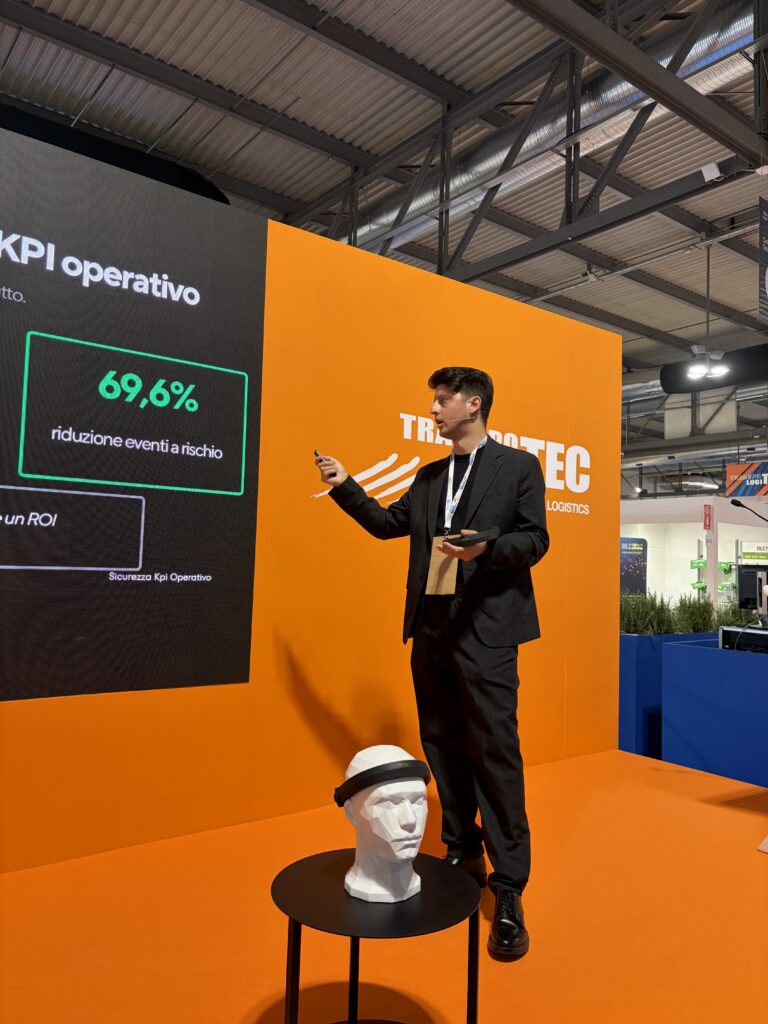
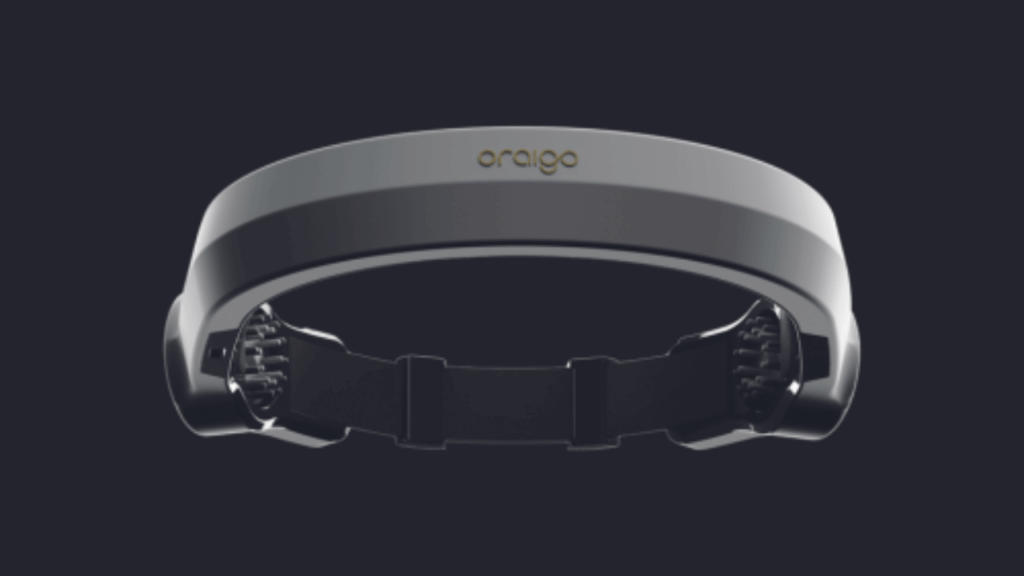
Oraigo’s stand at Transpotec Logitec 2026 drew consistent interest throughout the event, attracting fleet managers, safety officers, transport associations, and logistics directors eager to understand what genuine fatigue prevention looks like in practice. The centrepiece of the Oraigo exhibit was a live demonstration of the Aigo headband, the company’s flagship EEG-based wearable device that monitors driver brainwave activity in real time to detect the earliest neurological signs of fatigue.
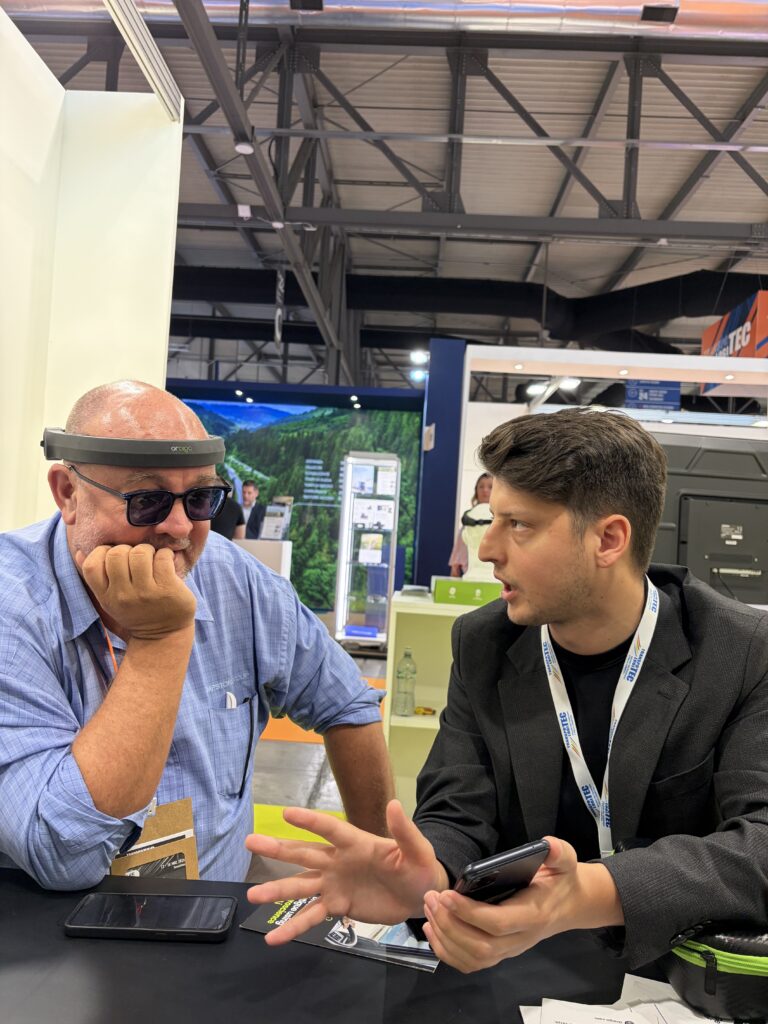
Visitors had the opportunity to experience the technology firsthand, wearing the Aigo headband and seeing how the device would react to fatigue in real-time.
The Oraigo team used the event not only to demonstrate the product but to engage in substantive conversations with fleet professionals about the specific fatigue challenges they face in their operations. These exchanges reinforced a finding that Oraigo has consistently encountered in the field: the transport industry is acutely aware of the fatigue problem but has until now lacked access to a technology that addresses it at the neurological level rather than waiting for visible behavioural signs to appear.
The Case for Wearables in Driver Fatigue Detection
One of the central themes of Oraigo’s presence at Transpotec Logitec 2026 was the broader argument for wearable technology as a category in driver fatigue management. While camera-based systems and vehicle telematics have dominated the market for the past decade, wearables represent a fundamentally different approach, one that monitors the driver rather than the vehicle or the driver’s face.
The distinction matters enormously in practice. Camera systems and vehicle sensors can only detect fatigue after it has produced observable symptoms, whether that is eye closure, head drooping, or lane deviation. By that point, a driver is already significantly impaired. The detection has come too late to be truly preventative and is better described as an emergency alert than a safety tool.
EEG-based wearables like the Aigo headband operate on a completely different timeline. Brainwave patterns associated with drowsiness begin to shift well before any physical signs of fatigue appear. The neurological transition from alertness to the early stages of drowsiness is measurable and consistent, and it is precisely this transition that Oraigo’s technology is designed to detect. The result is an alert that reaches the driver while they still have the cognitive capacity and reaction time to respond safely, pull over, take a break, and avoid a dangerous situation entirely.
At Transpotec Logitec 2026, this distinction resonated strongly with experienced fleet safety professionals who have worked with existing technologies and understand their limitations. The conversation repeatedly returned to the same core insight: prevention requires acting before fatigue becomes dangerous, and that requires monitoring the driver’s physiological state, not their driving behaviour.
Wearables also offer advantages in terms of data richness. The continuous stream of neurological data generated by the Aigo headband provides fleet managers with a detailed picture of fatigue patterns across their workforce. Over time, this data enables more intelligent scheduling, targeted driver wellness interventions, and the identification of structural risk factors within fleet operations that might otherwise go unnoticed.
Conversations That Defined the Event
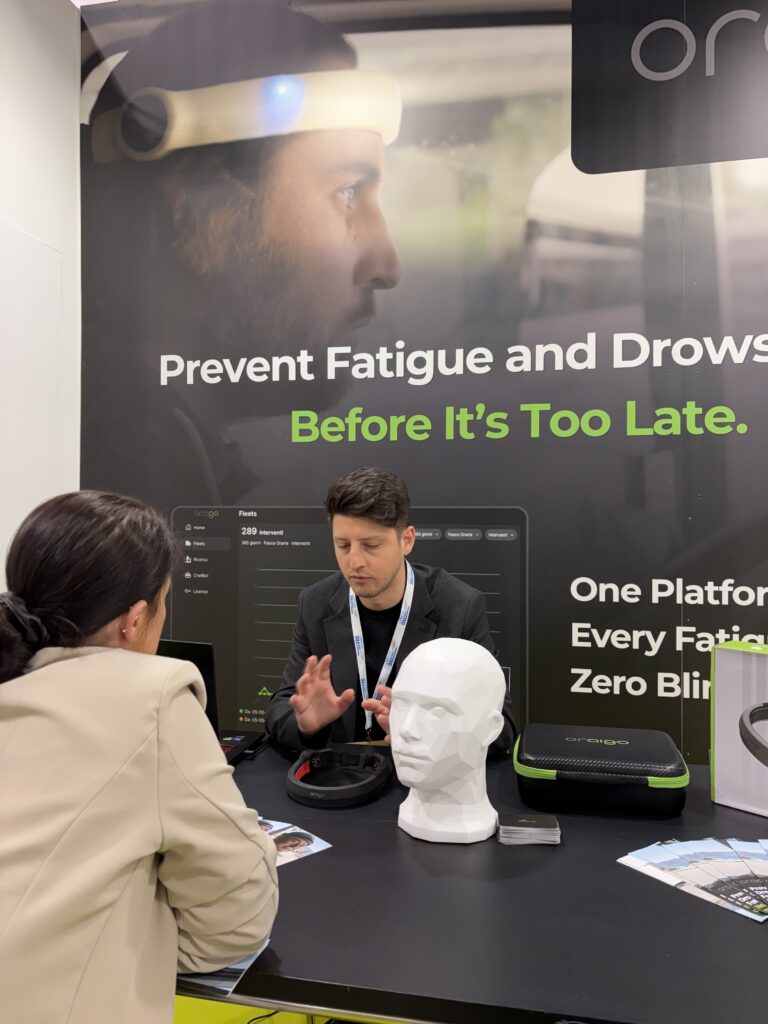
Some of the most valuable outcomes of Oraigo’s participation in Transpotec Logitec 2026 came not from formal presentations but from the conversations that took place at the stand and in the corridors of the exhibition. Transport professionals from across the world stopped to engage with the Oraigo team, and the themes that emerged from those conversations were remarkably consistent.
Transport managers were particularly interested in the fleet management dashboard that accompanies the Aigo system. The ability to monitor fatigue levels across an entire fleet in real time, receive alerts when individual drivers show early signs of drowsiness, and access historical fatigue trend data proved highly compelling for operators managing large numbers of drivers across complex route networks.
Privacy was also a recurring topic. European transport professionals are rightly attentive to data protection obligations under the General Data Protection Regulation (GDPR), and several visitors raised questions about how Oraigo handles the sensitive biometric data generated by EEG monitoring. The answer reassured many: Oraigo anonymises driver data and operates in full compliance with GDPR requirements, ensuring that the safety benefits of neurological monitoring come without the privacy risks that might otherwise create barriers to adoption.
Driver Fatigue as a European Priority
Oraigo’s participation in Transpotec Logitec 2026 took place against a backdrop of growing regulatory and policy attention to driver fatigue across Europe. The European Road Safety Observatory has estimated that fatigue contributes to up to 20% of all road traffic accidents, and the figure is higher for heavy vehicle crashes on motorways and long-distance freight routes.
The European Commission has continued to develop its framework for intelligent transport systems and connected vehicle safety, and fatigue detection is increasingly part of that conversation. The General Safety Regulation, which came into force for new vehicle types in 2022 and is being progressively extended, already mandates driver drowsiness and attention warning systems for new heavy vehicles. As the technology available under this regulation evolves, the standards for what counts as adequate fatigue detection are expected to rise.
Transpotec Logitec 2026 was an opportunity for Oraigo to position its technology within this evolving regulatory context, demonstrating not only that EEG-based wearable monitoring exceeds the capabilities of the systems currently mandated but that it represents the natural next step in the progression of driver safety standards. Several transport association representatives at the event expressed interest in exploring how wearable physiological monitoring might be incorporated into future guidance and best practice frameworks.
Looking Ahead: What Transpotec Logitec 2026 Means for Oraigo
For Oraigo, Transpotec Logitec 2026 was a significant milestone in the company’s European growth journey. The quality and volume of interest generated at the event reflected a transport industry that is ready to move beyond the limitations of first-generation fatigue detection technologies and embrace approaches grounded in real physiological data.
The connections made at Transpotec Logitec 2026 are already translating into pilot programme discussions with fleet operators across several European markets. These pilots will allow operators to experience the impact of EEG-based fatigue monitoring in their own operational environments, generating the real-world evidence that drives wider adoption and builds the business case for fleet-wide deployment.
Oraigo also came away from Transpotec Logitec 2026 with a richer understanding of the specific challenges facing European fleet operators in different national contexts. The regulatory environments, infrastructure conditions, and workforce dynamics vary considerably across the continent, and this insight will inform how Oraigo continues to develop and localise its offering for different markets.
The broader significance of the event extends beyond Oraigo as a company. The level of engagement with wearable fatigue monitoring technology at Transpotec Logitec 2026 signals a genuine shift in how the transport industry is approaching driver safety. The question is no longer whether physiological monitoring has a role to play in fatigue management. The question is how quickly and at what scale it will be adopted.
A New Standard for Driver Safety
The road transport industry has spent decades managing driver fatigue through scheduling rules, self-reporting, and increasingly through camera systems and telematics. These tools have value, but they share a fundamental limitation: they address fatigue after it has already developed to a dangerous level. Oraigo’s participation in Transpotec Logitec 2026 was a demonstration that a better approach is available, one that monitors the driver’s neurological state continuously and intervenes before impairment becomes a risk.
The interest generated at Transpotec Logitec 2026 confirms that the transport industry is ready for this shift. Fleet operators who have lived with the limitations of existing technologies and who understand the true cost of fatigue-related incidents are actively looking for solutions that genuinely prevent accidents rather than merely responding to them.
Oraigo is proud to have been part of Transpotec Logitec 2026 and grateful to the many professionals who visited the stand, engaged with the technology, and shared their experiences and ambitions for a safer road transport industry. The conversations held in Verona will continue in meeting rooms, operations centres, and pilot vehicles across Europe in the months ahead.
If you were not able to visit Oraigo at Transpotec Logitec 2026 and would like to learn more about how the Aigo headband and its integrated fleet management platform can transform driver fatigue management in your operation, visit oraigo.com or book a call with one of the Oraigo team today.
